Tile Trends 2026 for Beautiful, Practical Rooms
A tile choice now has to work harder than simply looking good on a showroom board. It must suit the light in the room, feel right underfoot, stand up to daily use and coordinate with the sanitaryware, worktops, joinery and fittings around it. The strongest tile trends 2026 answer all of those requirements, with an emphasis on warmer finishes, convincing natural detail and formats that make rooms feel considered rather than busy.
For homeowners, the direction is towards interiors with depth and permanence. For designers, installers and commercial specifiers, it is equally about selecting surfaces that are practical to source, straightforward to install and fit for their intended setting. The result is a more thoughtful approach to tile: less driven by a fleeting colour of the year, and more focused on materials, scale and finish.
Tile trends 2026: warmth, texture and scale
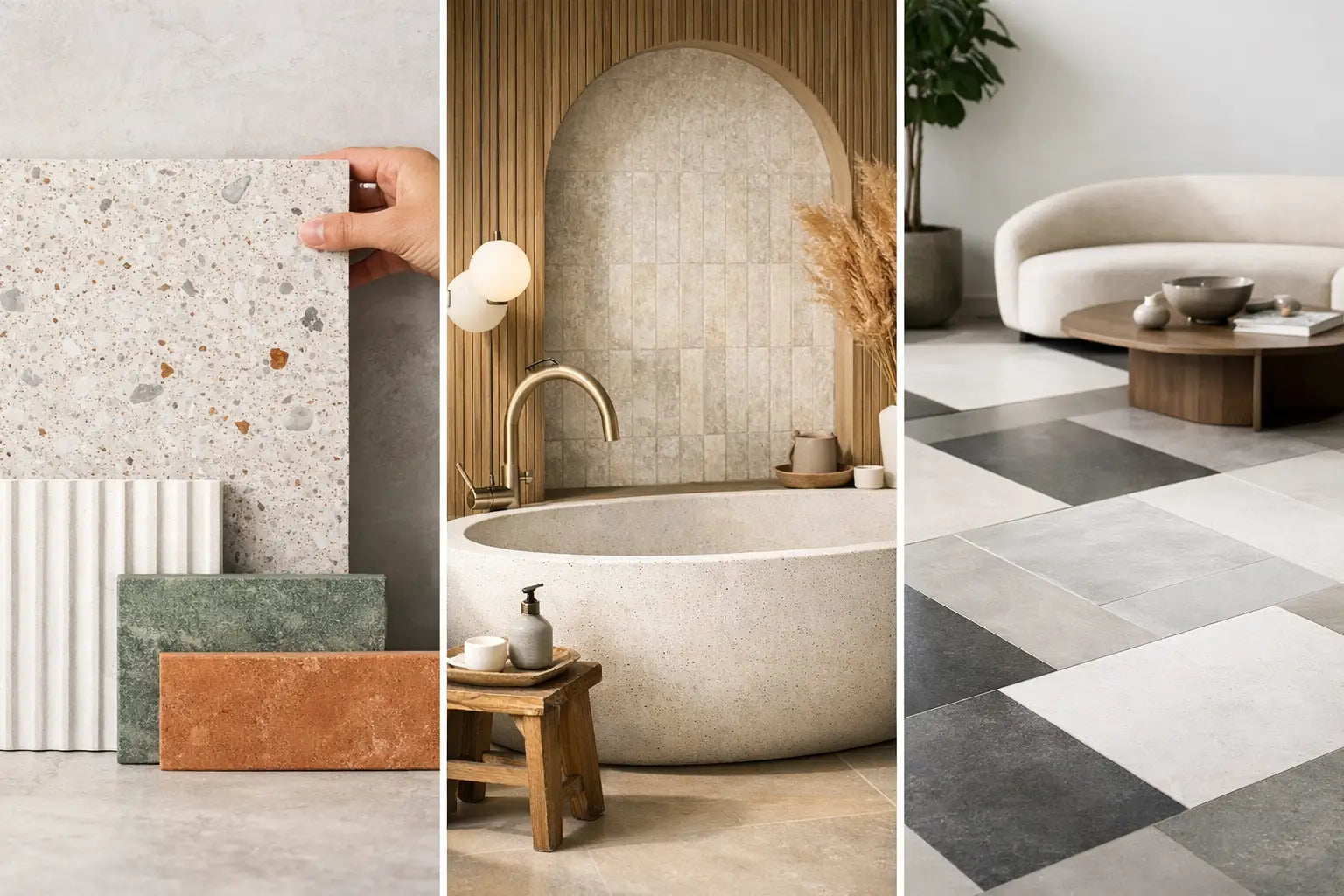
Cool grey schemes have not disappeared, but they are no longer the automatic starting point. In 2026, limestone shades, soft taupes, chalky creams, warm greiges and clay-based neutrals are leading the conversation. These colours give bathrooms, kitchens and open-plan living areas a calmer base, especially when paired with brushed brass, walnut, oak or painted cabinetry.
The key is variation. A plain beige tile can look flat in a large space, whereas a well-designed stone-effect porcelain with gentle movement, fossils or mineral markings brings visual interest without becoming overpowering. Natural stone looks remain especially useful where a project needs the character of limestone, travertine or marble but requires the consistency, easy maintenance and moisture resistance of porcelain.
Larger formats continue to be specified across floors and walls. Rectified 600 x 600mm, 600 x 1200mm and larger porcelain tiles create a more open visual field with fewer grout joints. In a modern bathroom, a large-format stone-effect tile can run from floor to wall for a refined, hotel-inspired finish. In hallways and kitchens, it gives a robust, continuous surface that complements contemporary joinery.
That said, bigger is not always better. Large tiles can involve more cuts in compact rooms, and they demand a sufficiently flat background for successful installation. They can also be harder to handle on upper floors or restricted-access sites. A smaller format may produce less waste, be easier to lay and better suit an older property with uneven walls. The best format is the one that works with the room dimensions and installation conditions, not simply the one with the biggest visual impact.
Stone effects become more authentic
Stone-effect porcelain remains one of the most dependable choices for 2026, but the look is becoming softer and more nuanced. Expect less high-contrast veining and fewer exaggerated patterns. Instead, the most versatile ranges have gentle tonal shifts, subtle surface texture and matt finishes that feel close to the real material.
Travertine-inspired tiles are particularly influential. Their linear pores, warm sandy tones and relaxed Mediterranean character work well in bathrooms, kitchens and living spaces. A porcelain interpretation avoids many of the concerns associated with natural stone, including sealing requirements and susceptibility to staining, while still delivering an architectural look.
Marble effects are also evolving. White marble remains a classic choice, particularly for bathrooms, but warmer marbles with tobacco, burgundy, green, caramel or deep brown veining are becoming more prominent. Used sparingly, perhaps on a shower wall, fireplace surround or reception area, they add a tailored finish. In a small room, consider whether the scale of the veining suits the space. A dramatic slab design can be striking, but it needs careful planning around cuts and pattern matching.
Tactile surfaces add depth
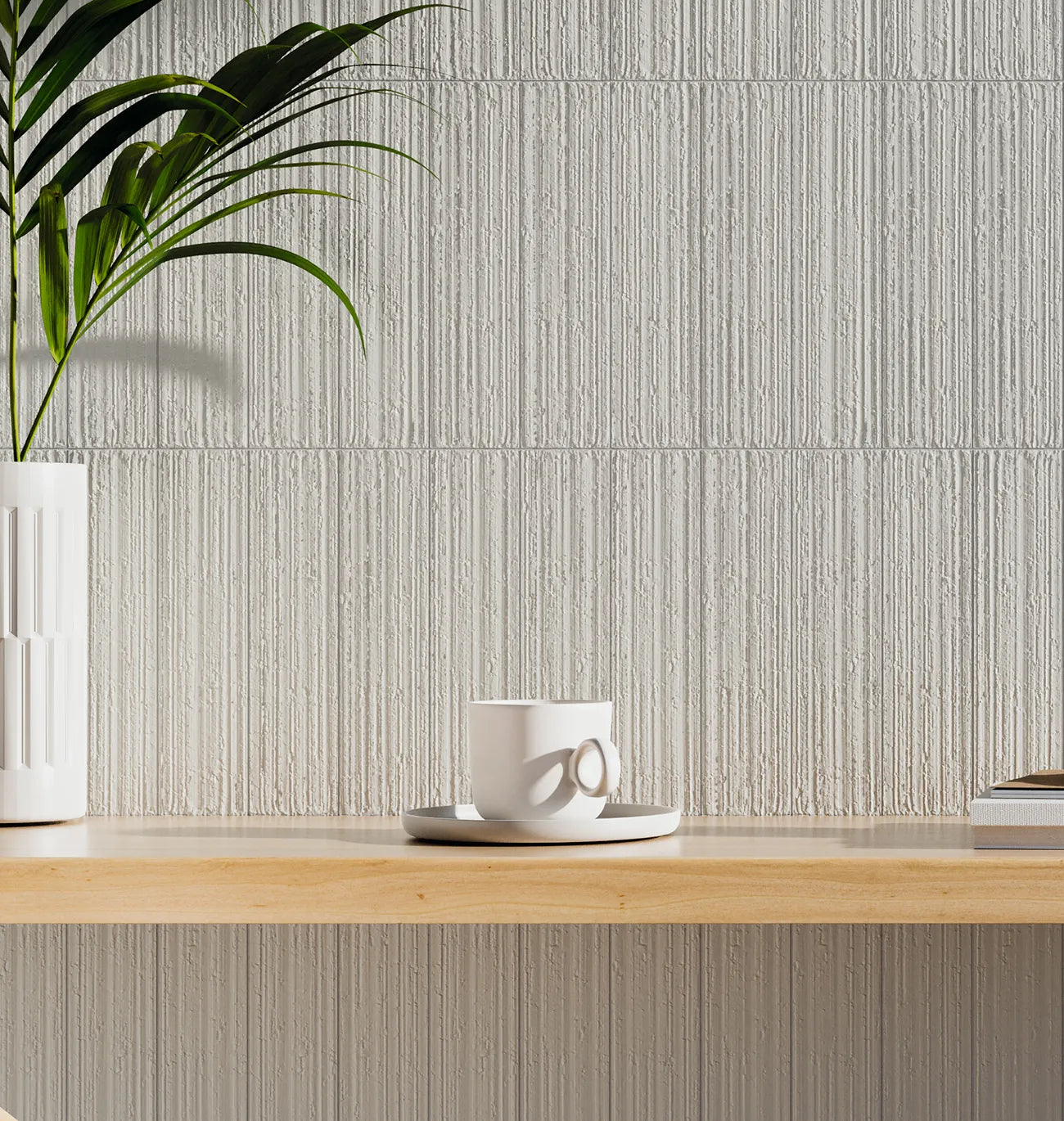
A room does not need strong colour or pattern to have character. Surface finish is increasingly doing that work. Honed, matt, sugar-effect and gently structured tiles offer a more tactile alternative to a polished surface, while still being practical for everyday interiors.
Matt porcelain is a particularly strong all-round option. It softens reflected light, disguises water marks better than high-gloss finishes and suits the natural, understated direction of current interiors. For floors, a textured finish can also provide useful slip resistance. This matters in entrance halls, utility rooms, wet rooms, commercial washrooms and outdoor-adjacent spaces, where the visual appeal of a tile must be balanced against safety and cleaning needs.
Always check the intended application before specifying a textured surface. A heavily structured tile may be ideal for a shower floor or external terrace but less convenient on a kitchen floor where spills and daily cleaning are likely. Likewise, a polished tile can look exceptional on a wall but may not offer the practical grip needed for a busy floor.
Decorative tiles return with restraint
Decorative tiles are not returning as a full-room commitment. The 2026 approach is more selective: a handmade-look metro tile behind a basin, a fluted feature in a shower niche, or a patterned porcelain section used to frame a kitchen splashback. These smaller moments bring personality without making a space difficult to update later.
Glossy ceramic wall tiles in irregular, zellige-inspired shapes remain popular, particularly in deep greens, inky blues, warm whites and earthy terracotta shades. Their slight variation in tone and edge creates a crafted appearance that works beautifully with timber, brushed metal and natural stone-effect flooring.
Colour is becoming more confident, but it is rarely loud for its own sake. Forest green, oxblood, muted cobalt and clay are often used as anchoring tones against neutral walls and floors. In residential bathrooms, a coloured tile can make the shower area or vanity wall the focal point. In hospitality settings, it can distinguish a bar, washroom or reception zone without relying on excessive decoration.
Smaller formats and considered layouts
Alongside large slabs and oversized porcelain, smaller tiles have an important role in 2026. Kit Kat mosaics, finger tiles, squares and slim brick formats bring rhythm and detail to spaces where a larger tile would feel too plain. They are especially effective on curved walls, splashbacks, niches and shower enclosures.
Layout is as important as the tile itself. Stacked vertical tiles can make a low ceiling appear higher, while a horizontal arrangement may visually widen a narrow room. Herringbone and basketweave patterns add movement, though they require more planning, more cuts and usually a higher installation allowance. If a pattern is central to the design, factor this into both the tile quantity and labour cost from the outset.
Grout is also becoming a more intentional design choice. A close tonal grout creates a calm, continuous finish, while a contrasting grout draws attention to the format and laying pattern. For most projects, mid-tone grout remains the practical middle ground: it defines the tile without showing every mark as readily as bright white.
Wood looks and mixed-material schemes
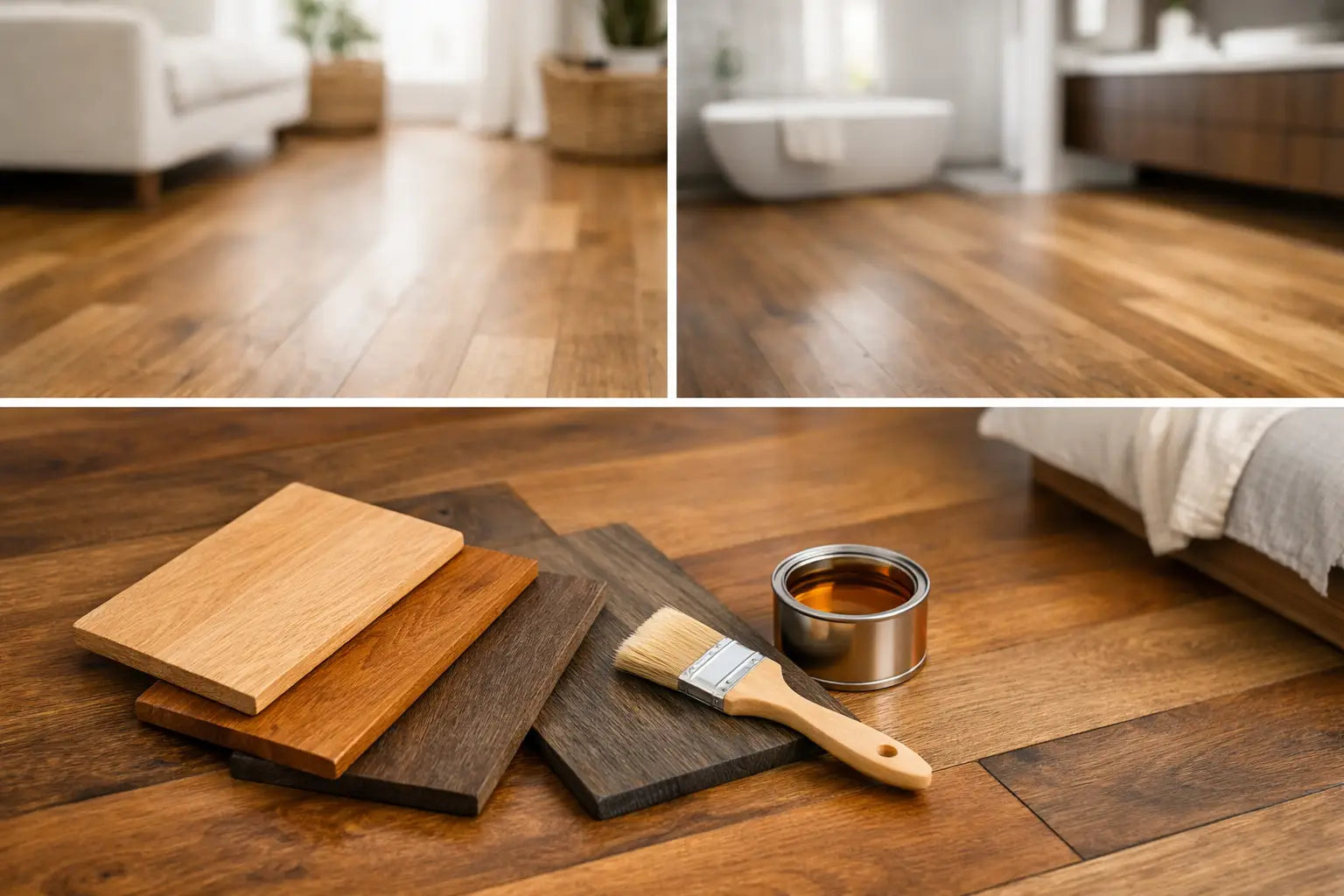
Wood-effect porcelain is continuing to earn its place in 2026 schemes, particularly where homeowners want the warmth of timber in a bathroom, kitchen, utility or ground-floor extension. Modern plank formats have more believable grain, shade variation and matt texture than earlier versions, allowing them to sit comfortably beside real wood flooring in adjoining spaces.
Mixed-material schemes are also gaining ground. A limestone-effect floor paired with glazed wall tiles, or a wood-effect porcelain floor with a marble-look vanity wall, can create a layered interior that feels collected rather than overly matched. The important consideration is to keep the undertones compatible. A warm oak effect and a cold blue-grey stone effect can clash, even if each tile is attractive on its own.
For projects combining tile and wood flooring, think carefully about transitions, finished floor heights and expansion requirements. A well-chosen trim or threshold gives the change of material a deliberate, professional finish rather than making it appear like an afterthought.
How to choose a trend that will last
The most successful trend-led spaces do not copy a showroom image exactly. They use a current direction as a starting point, then make choices based on the building, the amount of natural light and how the room will be used. Before finalising a tile, consider four practical questions:
- Is the tile suitable for the wall, floor, wet area or commercial setting where it will be installed?
- Does its size work with the room dimensions, doorways and likely cutting pattern?
- Will the finish be manageable for the expected level of traffic, water exposure and cleaning?
- Have the correct adhesive, grout, levelling products, trims and waterproofing materials been allowed for?
At Smart Tiles, the most reliable starting point is to choose the surface feeling first: warm limestone, tactile ceramic, crafted colour, refined marble or natural wood effect. Then match it to the right format, finish and installation system. That approach leaves room for a fashionable finish, while ensuring the completed space is practical enough to enjoy for years.