Best Wood Flooring Finishes for Every Room
A pale oak floor can look beautifully understated in a kitchen, while a rich smoked timber brings depth to a hotel lounge. Yet the surface treatment is what determines how that floor handles muddy shoes, chair legs, spillages and day-to-day cleaning. Choosing between the best wood flooring finishes is therefore about more than appearance: it affects maintenance, repairability, sheen and how the timber develops over time.
For most projects, the right answer comes from balancing the room's use with the desired character of the wood. A busy family hallway needs a different level of protection from a low-traffic bedroom, and a design-led commercial space may prioritise a natural, low-sheen appearance alongside a clear maintenance plan.
The best wood flooring finishes compared
The main finish types for wood flooring are lacquer, oil and hardwax oil. Each can look premium when specified well, but they protect the timber in different ways.
Lacquered wood flooring
Lacquer creates a protective film across the top of the board. It is commonly supplied in matt, satin or gloss sheens, with matt and extra-matt finishes particularly popular for contemporary interiors. A good-quality lacquered floor is straightforward to clean and offers dependable resistance to everyday stains and surface moisture.
This makes it a practical option for living rooms, bedrooms, hallways and well-used kitchens. It also suits projects where a consistent, clean-looking surface and low-maintenance routine are priorities. For landlords, hospitality settings and commercial interiors, lacquer can be an efficient choice where regular cleaning needs to be simple for several users.
The trade-off is repair. If the lacquer becomes deeply scratched or worn through in one area, a local touch-up can be more noticeable than it would be on an oiled floor. Depending on the product and extent of damage, the floor may need professional sanding and refinishing rather than a small spot repair. A matt lacquer helps disguise light marks, but it is not immune to abrasion from grit or dragged furniture.
Oiled wood flooring
An oil finish penetrates the surface of the timber rather than forming the same sealed layer as lacquer. It enhances the grain and gives wood a warm, natural appearance, often making the texture and variation of oak more visible. The result can feel less formal and more tactile underfoot, particularly on brushed or character-grade boards.
Oiled flooring is a strong option for homeowners who value an authentic timber look and are comfortable maintaining it. Small scratches and worn patches can often be refreshed locally after appropriate cleaning and preparation, which is a valuable advantage in homes with pets, children or active entertaining spaces.
However, oil needs a more considered maintenance routine. The floor should be cleaned with products designed for oiled timber and periodically refreshed as recommended by the manufacturer. Neglecting that routine can leave the surface more vulnerable to staining and water marks. Oil is not a reason to treat a timber floor as waterproof, so standing water and frequent saturation should always be avoided.
Hardwax oil flooring
Hardwax oil sits between traditional oil and lacquer in both appearance and performance. It penetrates into the timber while waxes build additional protection at the surface. This produces a natural, low-sheen finish with better resistance to everyday moisture and marking than many standard oil systems.
For many high-end residential schemes, hardwax oil offers an attractive balance. It retains the depth and grain definition people expect from real wood, while being practical enough for open-plan living areas, kitchens and hallways with the right care. It is also valued where the ability to repair a small section is important, rather than refinishing the whole room after isolated damage.
As with any oiled system, maintenance matters. Use the specified cleaner, fit entrance mats to reduce grit, and follow the supplier's guidance on refresher products or re-oiling intervals. The finish is durable, but it performs best when it is treated as a maintained surface rather than a fit-and-forget one.
Choosing a wood flooring finish by room
Room conditions should narrow the choice early in the specification process. The finish should support the intended use of the space, but so should the construction of the flooring, the subfloor preparation and the installation system.
Kitchens and open-plan spaces
A lacquered or hardwax-oiled engineered wood floor is usually a sensible starting point for a kitchen or kitchen-diner. Both offer practical protection while allowing the warmth of timber to soften cabinetry, stone and porcelain surfaces. A matt or brushed finish is especially useful here because it is less likely to highlight every light scuff and footprint than a high-gloss floor.
Wipe up spills promptly and use felt pads beneath dining chairs and movable furniture. Around sinks, dishwashers and external doors, consider the risk of repeated moisture. Timber can work well in a kitchen, but it is not normally the right material for a wet room or any location with persistent water exposure.
Hallways and entrances
Entrances carry grit, moisture and concentrated footfall. A durable matt lacquer or well-maintained hardwax oil finish can work effectively, but a proper barrier mat system is just as important as the finish itself. Fine grit acts like sandpaper under shoes, gradually dulling any wood floor surface.
For a period property or a home where a naturally aged appearance is welcome, oiled or hardwax-oiled oak can be particularly forgiving. Minor marks can become part of the floor's character, and local renovation is generally more achievable. For a crisp, uniform appearance with minimal maintenance, lacquer remains the safer choice.
Living rooms and bedrooms
These are the rooms where aesthetics can lead the decision. A natural oil or hardwax oil will complement wide-plank oak, herringbone and textured boards, allowing tonal movement and grain to take centre stage. In quieter bedrooms, even a softer-looking finish can remain in excellent condition for many years.
Lacquer is equally appropriate if a more protected, easily cleaned surface is preferred. The important decision is sheen. A matt finish creates a restrained, contemporary result; satin offers a little more light reflection; gloss makes a statement but will show dust, scratches and unevenness more readily.
Commercial and hospitality interiors
For retail, hospitality and office projects, the finish must be selected alongside expected traffic, cleaning regimes and the ability to carry out maintenance without disrupting operations. Commercially rated lacquered systems can be highly practical for predictable, regular cleaning. Hardwax oil can be specified where the natural look is central to the design concept and planned maintenance is realistic.
It is worth confirming the manufacturer's warranty, recommended cleaning products and suitability for the proposed environment before ordering. High heels, castor chairs, entrance traffic and frequent furniture movement all affect the specification. In some heavy-use areas, a wood-look porcelain tile may provide a more suitable performance profile while retaining a timber-inspired appearance.
Sheen, texture and colour matter as much as protection
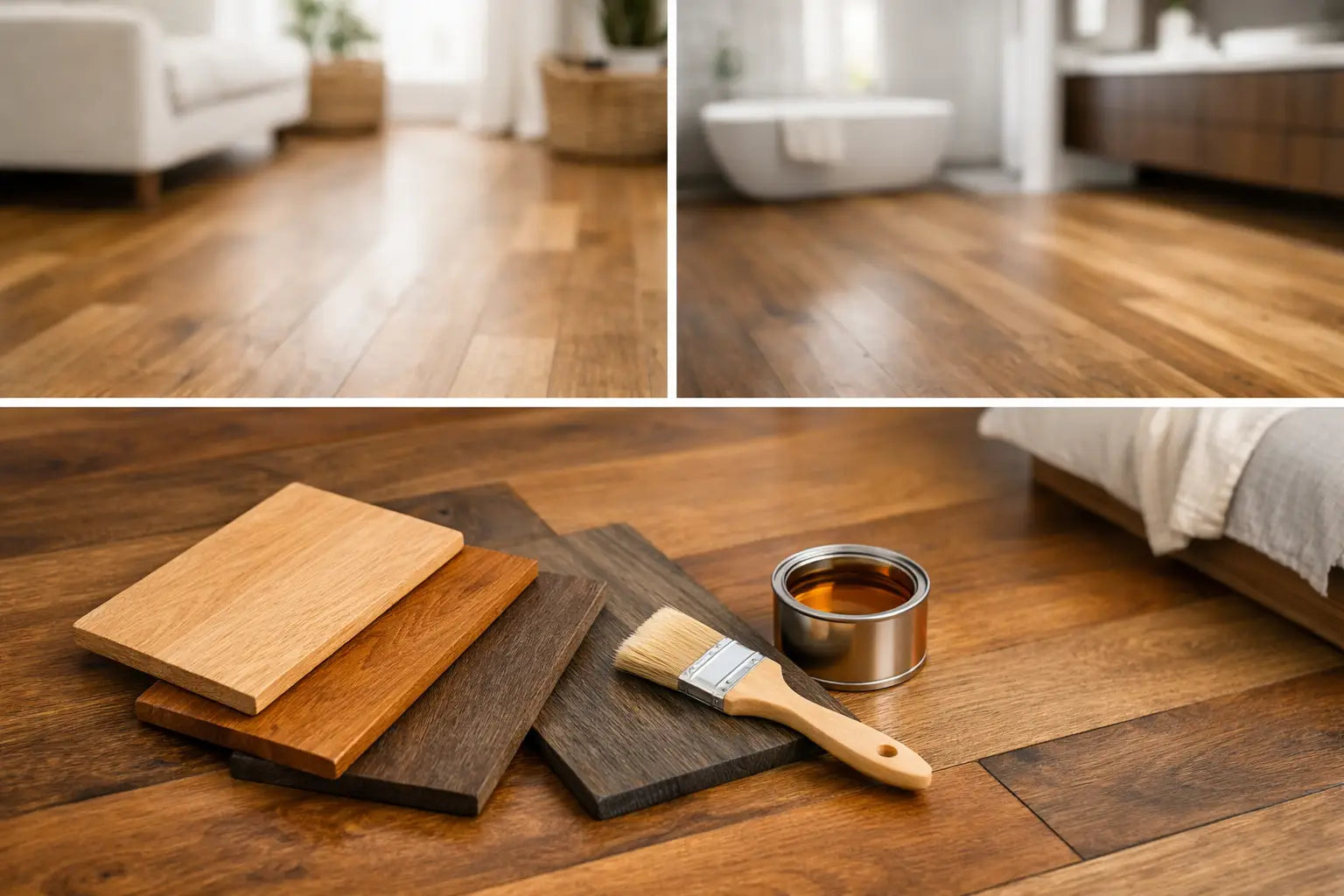
Finish type is only one part of the visual decision. The same oak can look completely different in a matt lacquer, a clear oil or a smoked hardwax oil. Samples should be viewed in the actual room, ideally at different times of day, because natural and artificial light can shift the apparent colour significantly.
Brushed, hand-scraped and character-grade boards add texture and help disguise minor everyday wear. Smooth, select-grade boards provide a more refined and uniform appearance, but can make scratches more visible. Whitewashed and pale finishes work well with Scandinavian and contemporary schemes, while warm natural oak, walnut tones and smoked finishes suit more layered, classic interiors.
Bear in mind that timber changes with light exposure. Some species and treatments mellow or deepen over time, particularly in areas uncovered by rugs or furniture. This is a normal quality of real wood rather than a defect, and it is worth discussing where a highly consistent colour is required.
Installation and aftercare protect the investment
Even the best finish cannot compensate for poor installation conditions. Wood flooring needs a dry, level and suitably prepared subfloor, with moisture testing completed before fitting. Engineered wood is generally the more stable choice over underfloor heating, but the precise product must be approved for that use and installed in line with its guidance.
Acclimatisation, correct expansion gaps and suitable adhesives or underlays all contribute to a lasting result. Once fitted, use protective pads under furniture, lift rather than drag heavy items, and avoid steam mops or excessively wet cleaning. A soft brush or vacuum attachment, followed by the correct wood-floor cleaner, is usually all that is required for routine care.
For homeowners and trade professionals comparing options, samples are particularly useful. They make it easier to judge sheen, texture and colour beside cabinetry, wall finishes and existing furniture before the full quantity is specified. Smart Tiles can help bring the flooring, preparation materials and finishing details together, so the final selection works as well in use as it does on a mood board.
The most successful wood floor is rarely the one with the hardest advertised finish. It is the one whose appearance, maintenance needs and room conditions have been matched properly from the start, leaving the timber free to look better rather than simply older with every passing year.