12 Bathroom Tile Design Examples for UK Homes
A bathroom can feel considered long before the brassware, lighting or furniture is chosen. The tile layout, scale and finish establish the room’s character, while also determining how easily it will perform in a wet, hard-working space. These bathroom tile design examples show how to combine a strong visual direction with sensible choices around slip resistance, cleaning, grout and installation.
Bathroom tile design examples to guide your scheme
1. Large-format stone effect for a calm, hotel-style bathroom
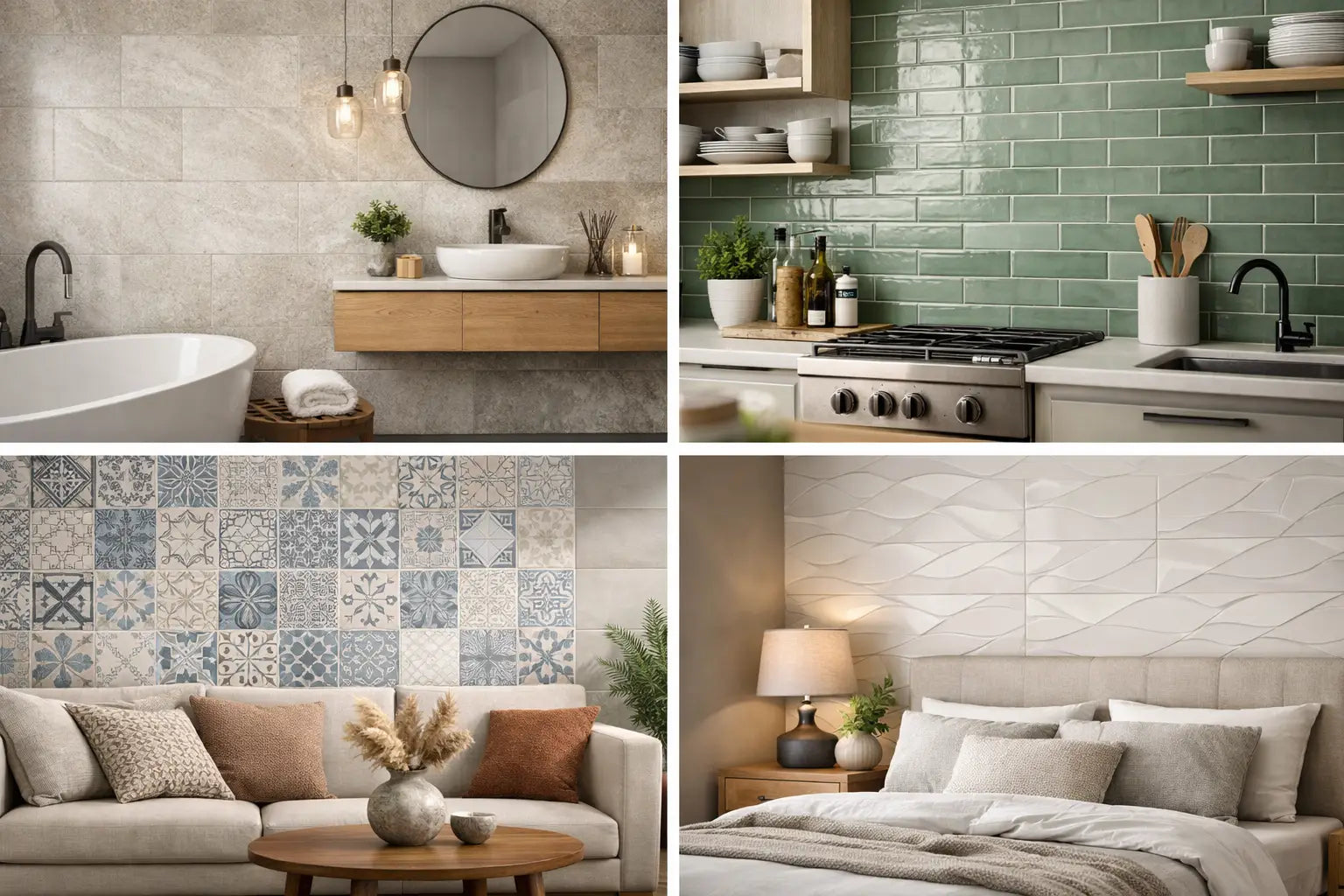
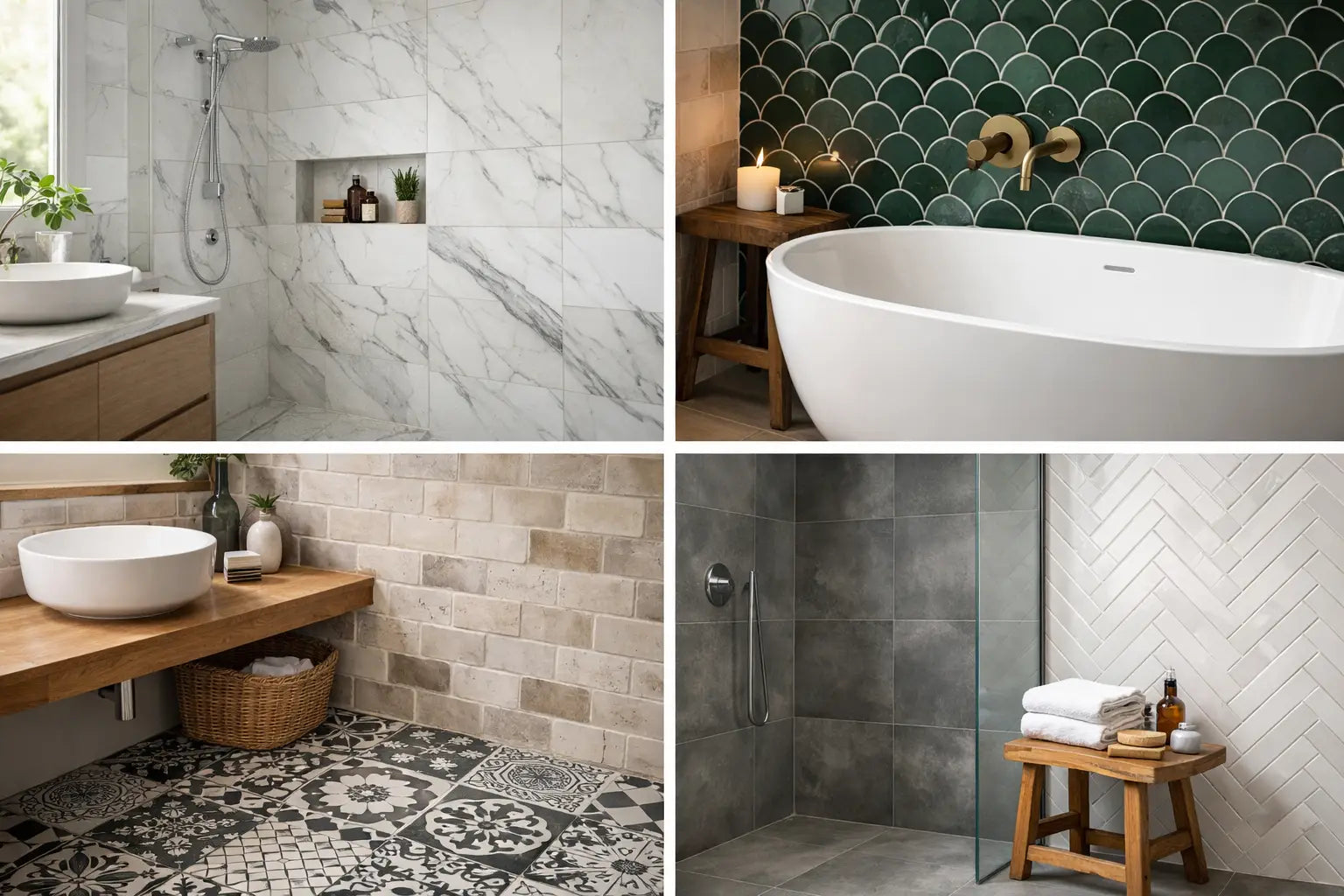
Large porcelain tiles with a limestone, travertine or pale marble effect create an expansive, refined backdrop. Used across both floor and walls, they reduce the number of grout joints and give a compact ensuite a more open appearance. Warm ivory, soft beige and gentle grey tones work particularly well with oak furniture, brushed nickel and aged brass fittings.
A 600 x 1200mm format can look especially impressive on main walls, provided the substrate is sufficiently flat and the layout has been planned before fixing. In smaller rooms, a 600 x 600mm or 300 x 600mm tile can deliver a similar look with fewer cuts and less waste. Choose a suitable floor finish for wet areas rather than assuming every polished stone-effect tile is appropriate underfoot.
2. Vertical kitkat tiles in a shower enclosure
Slim finger tiles, often called kitkat tiles, bring texture without overwhelming the room. Installing them vertically makes a low ceiling feel higher and gives the shower wall a deliberate, architectural finish. A tonal grout will allow the profile of the tile to do the work; a contrasting grout makes every joint more visible and creates a busier result.
This is a strong option for a feature wall behind a vanity or within a shower enclosure. It does involve more grout lines than large-format porcelain, so it is worth selecting a quality grout and allowing for the additional installation time. Matt sage, clay, off-white and deep blue are all effective choices, depending on whether the aim is a soft spa feel or greater drama.
3. A marble-effect statement wall behind the bath
Marble effect porcelain offers the movement and prestige of natural stone with a more predictable, lower-maintenance surface. A bookmatched or vein-matched layout behind a freestanding bath turns one wall into the focal point, particularly when paired with restrained plain tiles elsewhere.
The success of this design depends on tile selection and setting out. Ask to see samples together, as veining and shade can vary across a collection. A fine grout joint in a complementary colour helps the overall surface read as one continuous slab. For a more practical family bathroom, use a matt or satin marble effect on the floor and reserve polished finishes for walls where slip resistance is less of a concern.
4. Terrazzo-effect porcelain with a plain wall tile
Terrazzo-effect tiles are an effective way to introduce colour while keeping a bathroom scheme durable and easy to manage. The flecks can pick up tones from painted joinery, towels or a coloured basin, which makes the floor feel integrated rather than decorative for its own sake. Pair a more active terrazzo floor with a simple ceramic wall tile in white, putty or a shade drawn from the pattern.
Mid-sized formats are often the most versatile here. A 200 x 200mm or 600 x 600mm tile provides enough pattern to be interesting without making the room feel fragmented. In an ensuite, keep the wall tile quiet. In a larger family bathroom, terrazzo can continue into a shower area if the product’s slip rating and intended use are suitable.
5. Checkerboard flooring with modern fittings
A black-and-white checkerboard remains a confident choice, but it need not feel period-only. Using softer combinations such as chalk and warm grey, cream and green, or sand and brown gives the pattern a contemporary edge. Square porcelain tiles are generally the most practical route, providing the graphic look with reliable performance and straightforward cleaning.
This design benefits from balance. Keep walls plain, choose a simple vanity and let the floor carry the visual weight. A diagonal layout can make a narrow room appear wider, although it will create more cutting at the perimeter. Before ordering, calculate allowance for cuts and wastage, especially where the room has boxed-in pipework, alcoves or a curved bath.
6. One colour, three tile formats
A monochrome bathroom does not have to be flat. Choose one colour family, then use different formats to define zones: large plain tiles on the main walls, a smaller mosaic in the shower niche, and a matching floor tile with a safer finish. Deep green, inky blue and earthy rust create a richer effect than standard grey while remaining easy to coordinate.
The key is tonal control. Tiles from the same collection, or closely matched samples, will make the variation feel intentional. This approach is particularly useful where a bathroom needs interest but there is limited room for a separate feature colour or bold patterned floor.
7. Soft neutral herringbone around a vanity
Herringbone is best used where it can be appreciated at close range, such as behind a basin or around a bath. A slender rectangular tile in warm white, pale taupe or muted green provides movement and a crafted appearance, while a larger tile on adjacent walls prevents the design becoming too intricate.
The pattern requires careful setting out. Centre it on the vanity, mirror or bath where possible, rather than beginning from one side and accepting an uneven finish at the other. Allow extra tiles for cuts, and discuss the layout with the installer before ordering. The visual payoff is high, but herringbone generally takes longer to fit than a straight stack bond.
8. Earthy zellige-style wall tiles
Handmade-look and zellige-style ceramic tiles have tonal variation, uneven edges and a gentle reflected sheen. They suit cloakrooms, splashbacks and feature walls where a little irregularity adds warmth. A pale clay, moss green or smoky blue surface can make a simple basin and timber vanity feel far more individual.
Expect variation rather than uniformity. This is part of the appeal, but it means samples and batch checking matter. A grout colour close to the tile will keep the finish relaxed; a bright white grout gives a crisper grid and can make the variation more pronounced. Use them mainly on walls unless the specific product is rated for floor use.
9. A fully tiled walk-in shower room
In a shower room, continuity is as practical as it is attractive. Taking the same porcelain tile from the bathroom floor into the shower area can make the space feel larger and reduce visual interruptions. A smaller format or mosaic is often useful on the shower floor because the additional grout joints help the surface follow falls towards the drain.
This is not simply a tile decision. Falls, tanking, drainage, substrate preparation and compatible adhesives all need to be right before tiling begins. Select a floor tile with appropriate wet-area slip performance and avoid polishing the design so heavily that safety becomes secondary to appearance.
10. Patterned porcelain in a compact cloakroom
A cloakroom is an ideal place for a bolder tiled floor. Decorative porcelain patterns add personality in a room that does not need to match the quieter approach of a main bathroom. Use the pattern across the floor and take a plain wall tile to dado height or full height, depending on the proportions of the space.
Because floor area is limited, this can be a cost-effective way to specify a more detailed design. It also rewards accurate layout: dry-lay a few tiles first to decide whether a centred motif, border or more casual arrangement looks best at the doorway.
11. Fluted tiles for a tactile feature wall
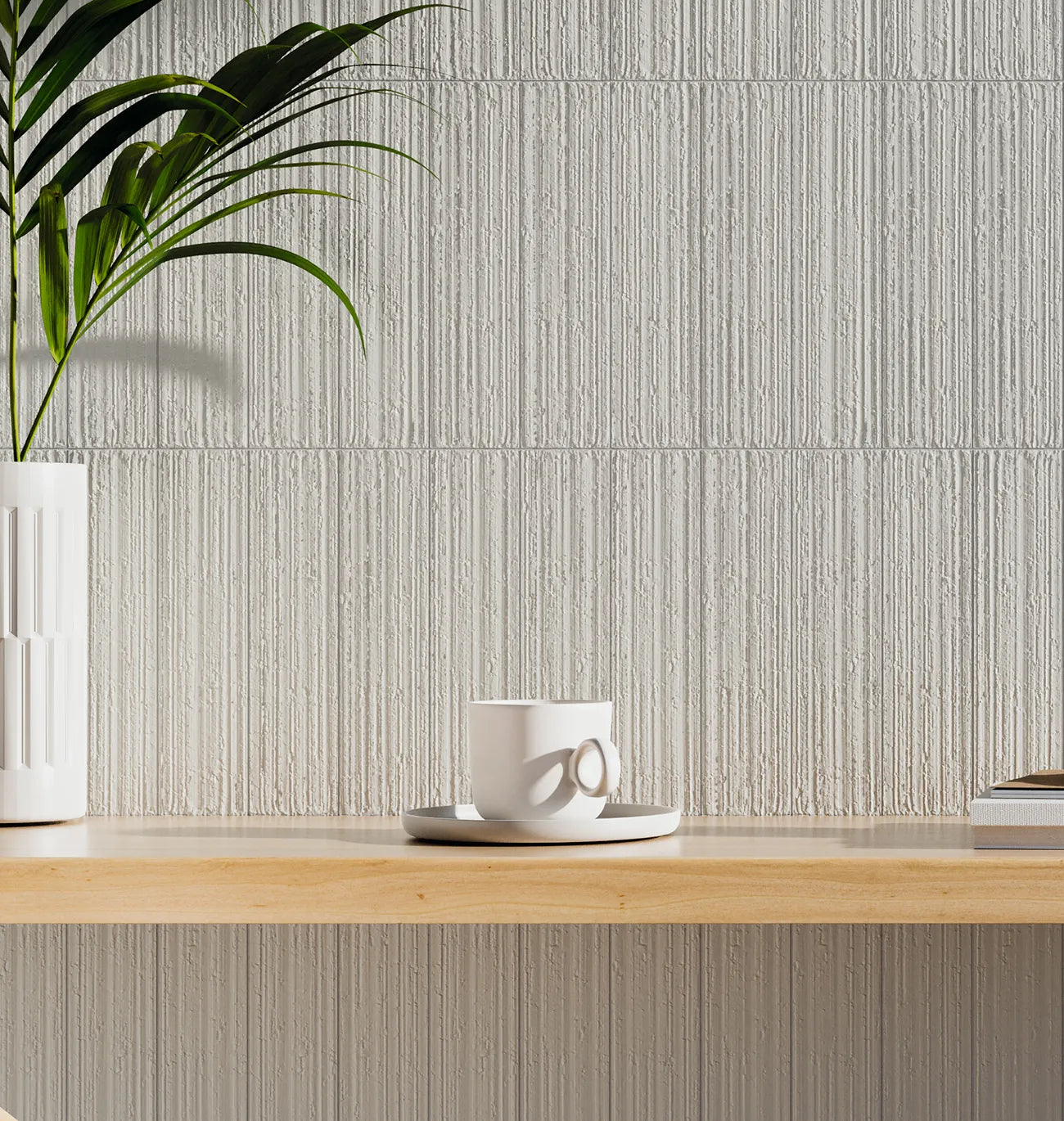
Fluted and ribbed wall tiles introduce shadow and depth, particularly under side lighting. In a neutral bathroom, they provide a premium finish without relying on a strong colour or busy pattern. A vertical fluted tile behind twin basins can visually organise a wide wall and create a striking backdrop for a large mirror.
Use this finish selectively. Full-room fluting can feel overly busy and will take longer to clean than a flat tile. Combining one textured wall with plain porcelain floor tiles and smooth side walls keeps the result balanced and commercially sensible.
12. Timber-look porcelain for warmth without compromise
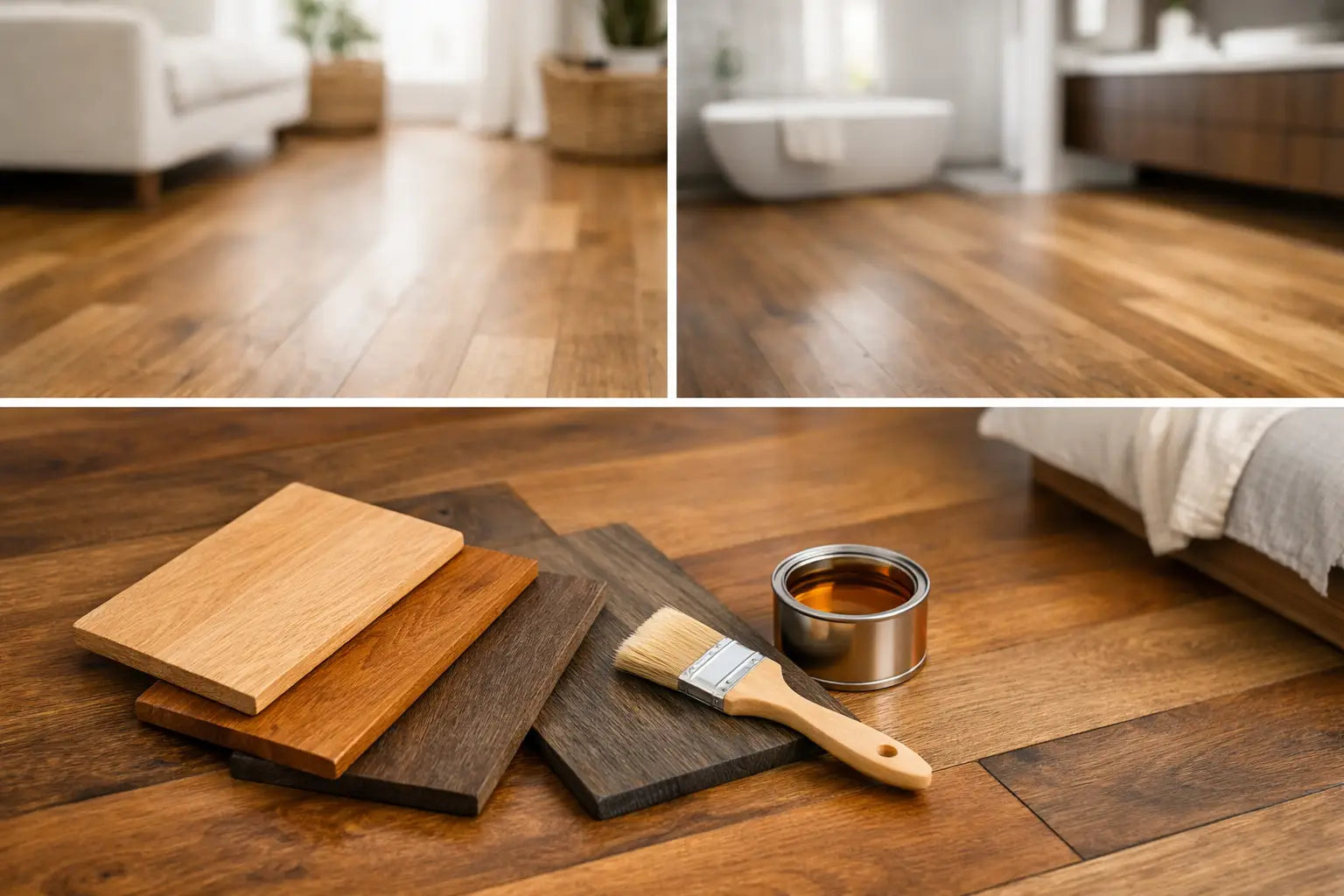
Wood-effect porcelain is a practical alternative where homeowners want the warmth of timber but need a surface that can cope with splashes, humidity and regular cleaning. Plank tiles work well in bathrooms connected to bedrooms, as they can soften the transition between spaces. Light oak, smoked oak and weathered timber effects all sit comfortably alongside stone, concrete and coloured ceramic wall tiles.
Lay the planks in the direction that supports the room’s proportions, usually along its longest line. Check the manufacturer’s recommended offset pattern, as long plank tiles may require a staggered layout that avoids lipping. A grout close to the tile tone gives the most convincing timber appearance.
Choosing the right design beyond the sample
The strongest bathroom tile design examples are not just visually appealing in a showroom or on a screen. They work with the room size, natural light, shower arrangement and level of daily use. Large tiles can make a room calmer but demand flatter walls; small tiles offer grip and flexibility around falls but add more grout to maintain. Glossy wall tiles can brighten a dark bathroom, while matt finishes often feel softer and more forgiving of water marks.
Order samples and view them in the bathroom at different times of day. Check quantities from a measured plan, including cuts, pattern matching and a sensible wastage allowance. Then specify the full system - suitable boards or preparation materials, waterproofing where required, adhesive, grout, silicone and trims - so the finish is supported by an installation designed to last.
A well-chosen tile should earn its place every day: it should suit the room, feel right underfoot and still look considered long after the renovation is complete.