Should I Choose Oiled or Lacquered Wood Flooring?
A wood floor can look completely different depending on its finish. The same oak board may feel calm and natural with oil, or crisp and more uniform with lacquer. If you are asking, should I choose oiled or lacquered wood flooring, the right answer comes down to more than colour. It depends on how you want the floor to look over time, how the room is used, and how much maintenance you are prepared to carry out.
Both finishes can be excellent choices for quality engineered wood flooring. Neither is automatically more premium or more durable in every setting. The key is to specify the finish that suits the project, rather than choosing on appearance alone.
Oiled or lacquered wood flooring: the essential difference
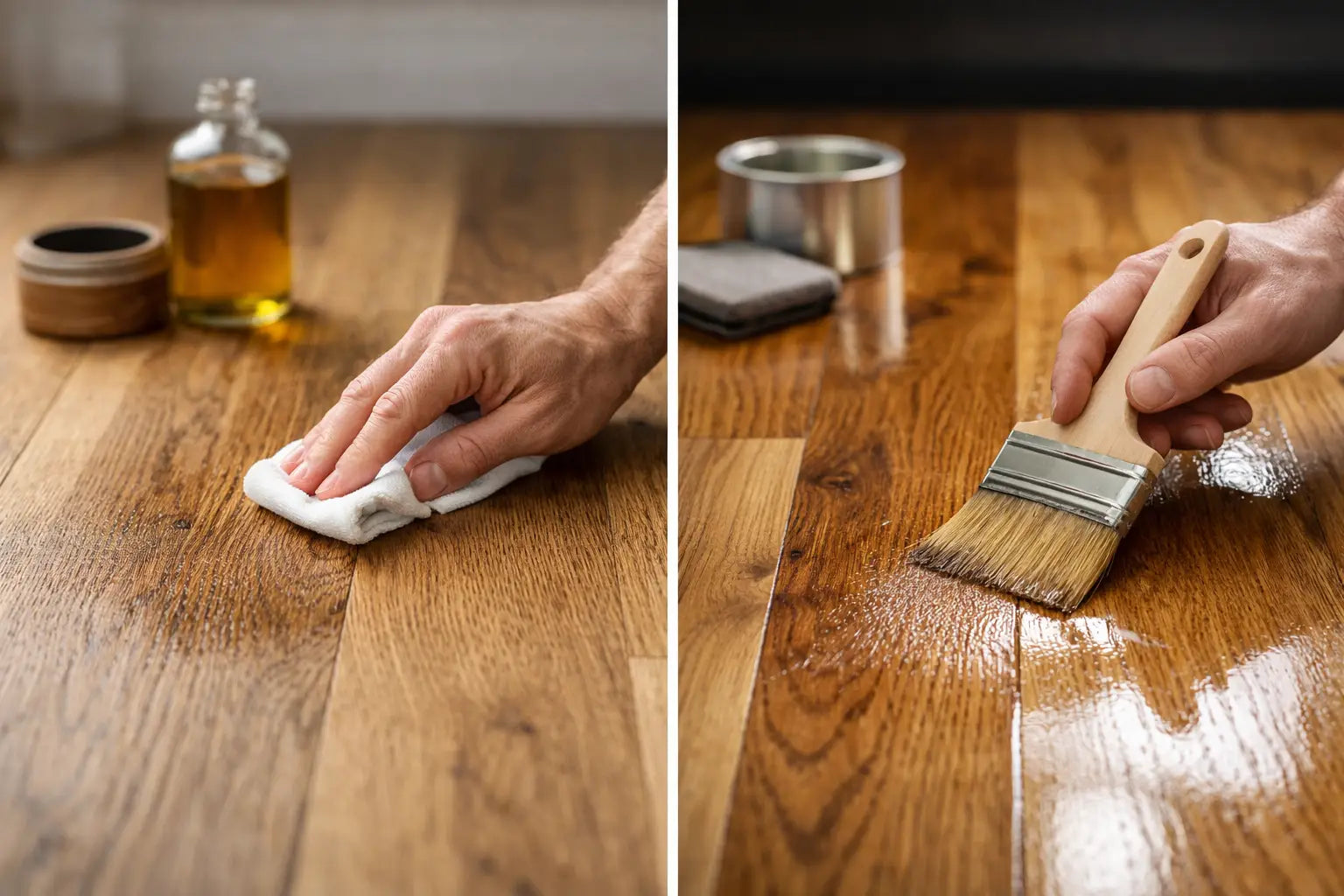
An oiled finish penetrates the timber surface and enhances its grain, texture and natural variation. It leaves the wood with a low-sheen, tactile appearance that is particularly suited to characterful oak, wide boards and interiors where an authentic material feel is central to the design.
Lacquer, sometimes called a varnished finish, forms a protective coating across the top of the wood. Modern matt lacquers can still look convincingly natural, but the surface is generally more sealed and consistent. This makes lacquered flooring a practical option where easy day-to-day care and a more protected initial surface are priorities.
The distinction matters most once the room is lived in. Oil tends to wear gradually and can be refreshed locally. Lacquer resists everyday marking well, but deeper damage usually requires a broader repair to make the finish look even again.
Choose oiled flooring for a natural, repairable finish
Oiled wood flooring is often chosen for its depth of colour and understated finish. Rather than sitting on top of the timber, oil works into the grain, allowing the natural features of the board to remain visible. Brushed or textured boards feel especially effective with oil because the finish complements the contours of the wood rather than covering them.
This is a strong choice for design-led homes, period properties, country houses and high-end schemes where the floor should develop character rather than remain completely uniform. An oiled floor can gain a gentle patina with use, which many homeowners and designers consider part of its appeal.
The major practical advantage is repairability. Small scuffs, worn traffic paths and isolated marks can often be cleaned, lightly abraded and re-oiled in the affected area. This is valuable in hallways, kitchens and open-plan living spaces, where a floor is expected to work hard for years. You do not normally need to sand and refinish the whole room just because one section has been damaged.
That flexibility does come with a maintenance commitment. Oiled floors need suitable cleaning products and periodic re-oiling to retain their protection. The interval varies according to the product, footfall and cleaning routine. A lightly used bedroom may need little attention for some time, while a busy entrance or commercial environment will require a more planned maintenance schedule.
Oil is not a licence to leave spills sitting on the surface. Wipe up water, wine, oil and other liquids promptly, particularly in the first weeks after installation or following re-oiling. A correctly maintained oiled floor is highly practical, but it rewards regular care.
Where oiled flooring works particularly well
Oiled finishes suit rooms where visual warmth and a natural surface are more important than having a perfectly sealed appearance. They are well suited to living rooms, dining areas, bedrooms and open-plan spaces. They also make sense for projects where future spot repairs are likely, such as family homes with pets or hospitality interiors with ongoing maintenance support.
For kitchens, an oiled engineered wood floor can work well if the construction is suitable, the room is properly ventilated and spills are dealt with quickly. It is not the best choice for areas exposed to repeated standing water. Bathrooms, wet rooms and shower areas need a surface designed for that level of moisture exposure.
Choose lacquered flooring for straightforward daily care
Lacquered wood flooring is popular because it provides a durable, factory-applied protective layer that is easy to clean. Dust, everyday dirt and minor spills are less likely to penetrate the wood when the coating is intact. For many households, this makes lacquer the simpler option from the day the floor is fitted.
A quality matt lacquer is a particularly useful middle ground. It reduces shine while retaining a clean, contemporary appearance, making it suitable for modern extensions as well as more traditional interiors. Satin lacquer offers a slightly more reflective finish and can make the grain appear richer, although it may show surface scratches more readily in strong light.
Lacquered boards are often a sensible specification for rental properties, busy family homes, offices and commercial spaces where cleaning needs to be quick and predictable. A routine of dry sweeping or vacuuming with a suitable hard-floor head, followed by a well-wrung damp mop and approved cleaner, will usually keep the floor looking smart.
The trade-off is that lacquer is harder to repair invisibly when it is scratched through or chipped. A local touch-up may protect the timber, but it can leave a visible difference in sheen. If the coating becomes heavily worn over a large area, the floor may eventually need a more comprehensive sand and refinish rather than a simple local refresh.
Consider light, pets and traffic
No wood flooring finish is entirely scratch-proof. Grit brought in on shoes, moving furniture and pet claws can mark both oiled and lacquered surfaces. Lacquer often offers stronger resistance to light scuffing at first, while oil makes later local repair more achievable.
Natural light also affects the decision. Large south-facing windows can highlight sheen, dust and surface scratches. In these settings, a matt lacquer or natural oil tends to be more forgiving than a high-sheen finish. Entrance matting, felt pads beneath furniture and regular removal of grit will make a bigger difference to long-term appearance than many buyers expect.
What to consider before specifying either finish
Start with the room, not the sample board. A sample is essential for assessing colour and grain, but it cannot show how the finish will respond to muddy boots, kitchen activity, sunlight or a busy commercial entrance. Think honestly about daily use, cleaning routines and whether the property will have someone responsible for ongoing floor care.
The grade and texture of the timber matter too. Rustic or character-grade oak with knots, mineral streaks and tonal movement is naturally at home with an oiled finish. Select-grade boards and clean contemporary schemes can look excellent with lacquer, especially when a consistent finish is desired. These are not rules, but they are helpful design starting points.
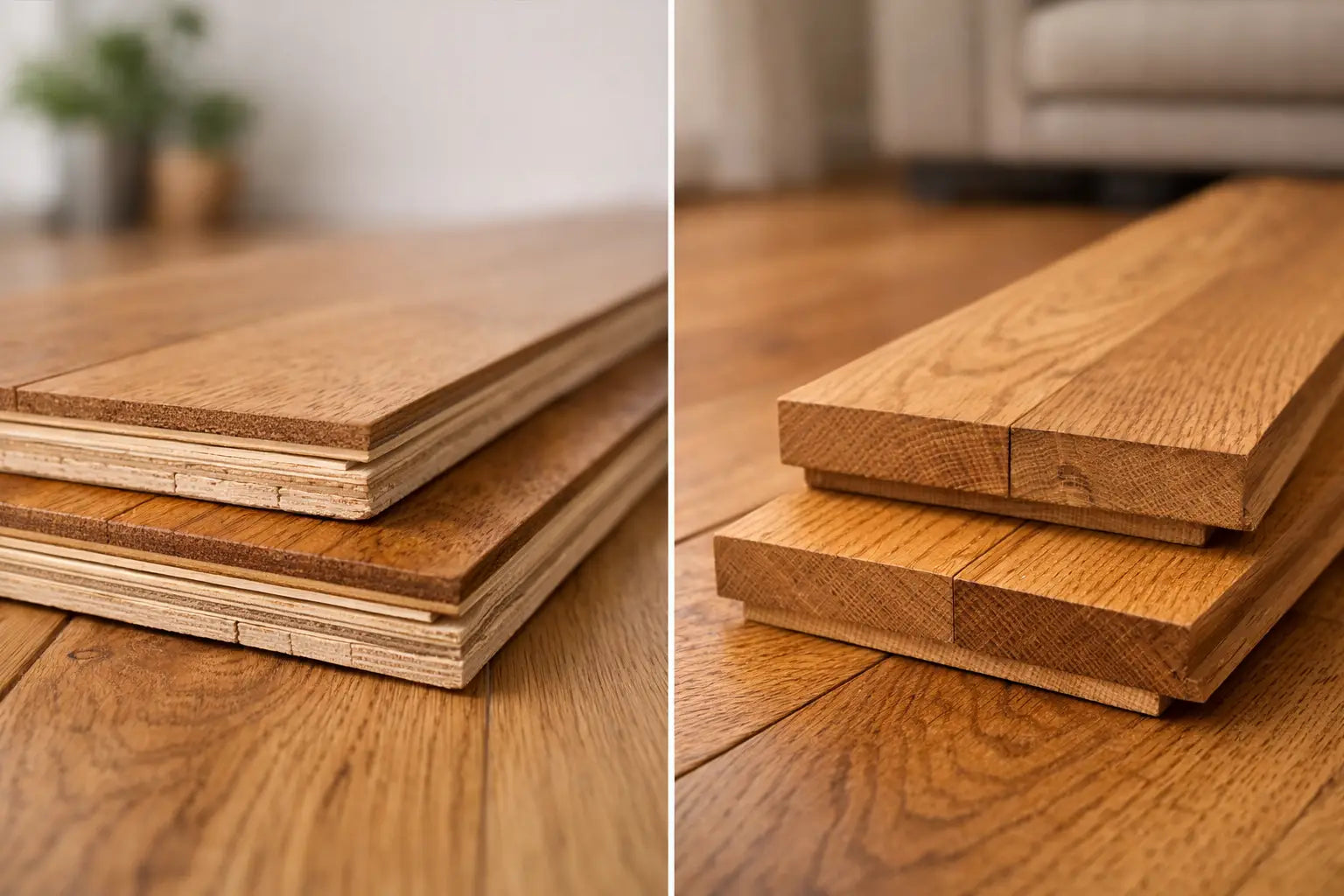
Engineered wood flooring is generally the more stable choice for most UK renovation projects, particularly over underfloor heating where the product has been approved for use. The finish does not replace correct installation. Subfloor moisture testing, acclimatisation where required, the right underlay or adhesive, expansion provision and suitable room conditions all protect the floor investment.
If underfloor heating is involved, keep surface temperatures within the flooring manufacturer's stated limits and bring the heating up gradually. Stable conditions help prevent unnecessary movement in the boards, regardless of whether the finish is oiled or lacquered.
Maintenance should influence the purchase
The best finish is one you will maintain properly. An oiled floor should be cleaned with products made for oiled timber and refreshed before it becomes dry, grey or vulnerable to staining. A lacquered floor should not be washed with excessive water or harsh cleaners, as these can dull or compromise the coating over time.
Avoid steam mops on wood flooring unless the flooring manufacturer specifically confirms they are suitable. They can force heat and moisture into joints and may affect both the timber and the finish. Use protective mats at exterior doors, but choose breathable options and move them occasionally so the floor ages evenly in natural light.
For larger projects, it is worthwhile ordering a little additional material from the same batch. This allows for installation cuts and provides spare boards for possible future repairs. Matching trims, profiles, underlays, adhesives and cleaning products should be considered at the same stage, not after the floor has arrived on site.
The practical answer: which finish is right for you?
Choose oiled wood flooring if you value a rich, natural look, like the idea of a floor developing character and are happy to carry out periodic maintenance. It is especially compelling where local repairability will be useful over the life of the floor.
Choose lacquered wood flooring if you want a more sealed surface and a simpler day-to-day care routine, particularly in busy households or projects where a consistent appearance is the priority. Select a matt lacquer if you want the practicality of a coating without an overly polished look.
Before making the final selection, view samples in the intended room and assess them in daylight as well as artificial light. Smart Tiles can help you compare wood flooring finishes alongside the installation materials needed for a professionally planned result. The right floor should not only suit the scheme on installation day - it should continue to suit the way the space is used for years to come.