Porcelain Tile Buying Guide for Every Room
A porcelain tile can look exceptional in a sample box yet feel entirely different once it covers a large kitchen, bathroom or reception area. The right choice is not simply a matter of colour. This porcelain tile buying guide focuses on the decisions that affect the finished result: format, finish, slip resistance, suitability, quantity and the installation materials behind a professional surface.
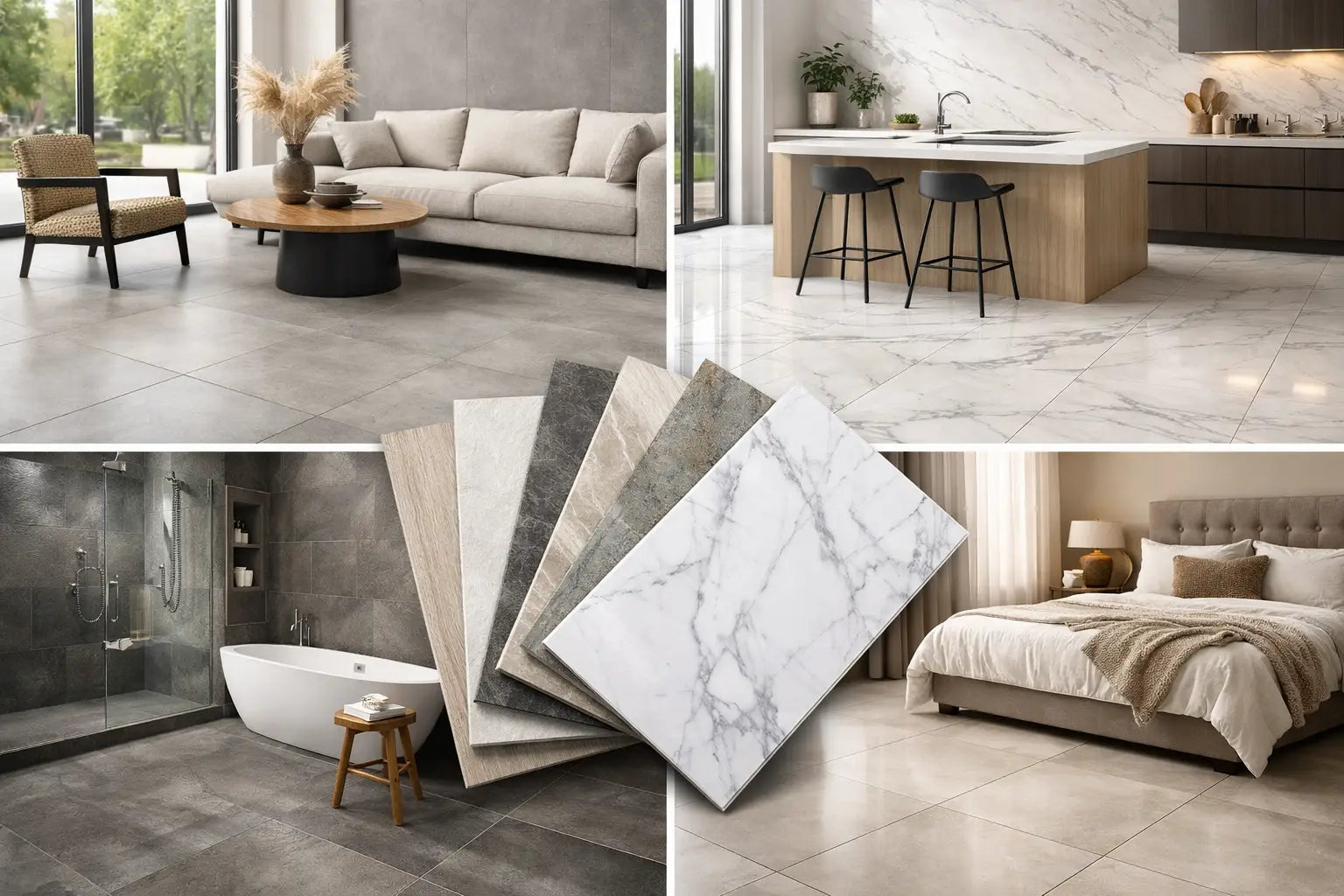
Porcelain is one of the most versatile choices for contemporary interiors. It can create the calm, continuous look of stone, the character of timber, the depth of natural marble or a more decorative statement wall, while offering the practical benefits expected in busy homes and commercial settings. The best specification is always the one that suits both the visual brief and the demands of the room.
Why choose porcelain tile?
Porcelain is a dense, fired ceramic material with very low water absorption. In practical terms, this makes it a strong option for floors and walls in bathrooms, kitchens, hallways, utility rooms and open-plan living spaces. It is also well suited to many retail, hospitality and commercial projects where durability and easy maintenance matter.
Unlike some natural materials, porcelain does not generally require sealing. It is resistant to staining, moisture and everyday wear when correctly selected and installed. That does not mean every porcelain tile is interchangeable. A polished wall tile, for example, may be visually suitable for a cloakroom but not the sensible choice for a wet, heavily used entrance floor. Always select according to location, traffic and finish rather than appearance alone.
Porcelain tile buying guide: start with the room
The room should lead the specification. Consider how the space is used, how often it gets wet, whether people enter wearing outdoor footwear, and how much natural light it receives.
For bathrooms, a matt or textured porcelain floor is often preferable to a highly polished finish, particularly in shower areas and family bathrooms. Large-format tiles can minimise grout joints and create a clean, spacious effect, but smaller formats may be more practical where falls to a drain are required.
Kitchens benefit from porcelain’s resistance to spills and marks. Stone-effect tiles in warm greige, sand or soft grey tones work particularly well with painted cabinetry, timber details and contemporary worktops. A more forgiving matt surface can be an excellent choice in an active family kitchen, where fingerprints and water marks are less noticeable than on a high-gloss tile.
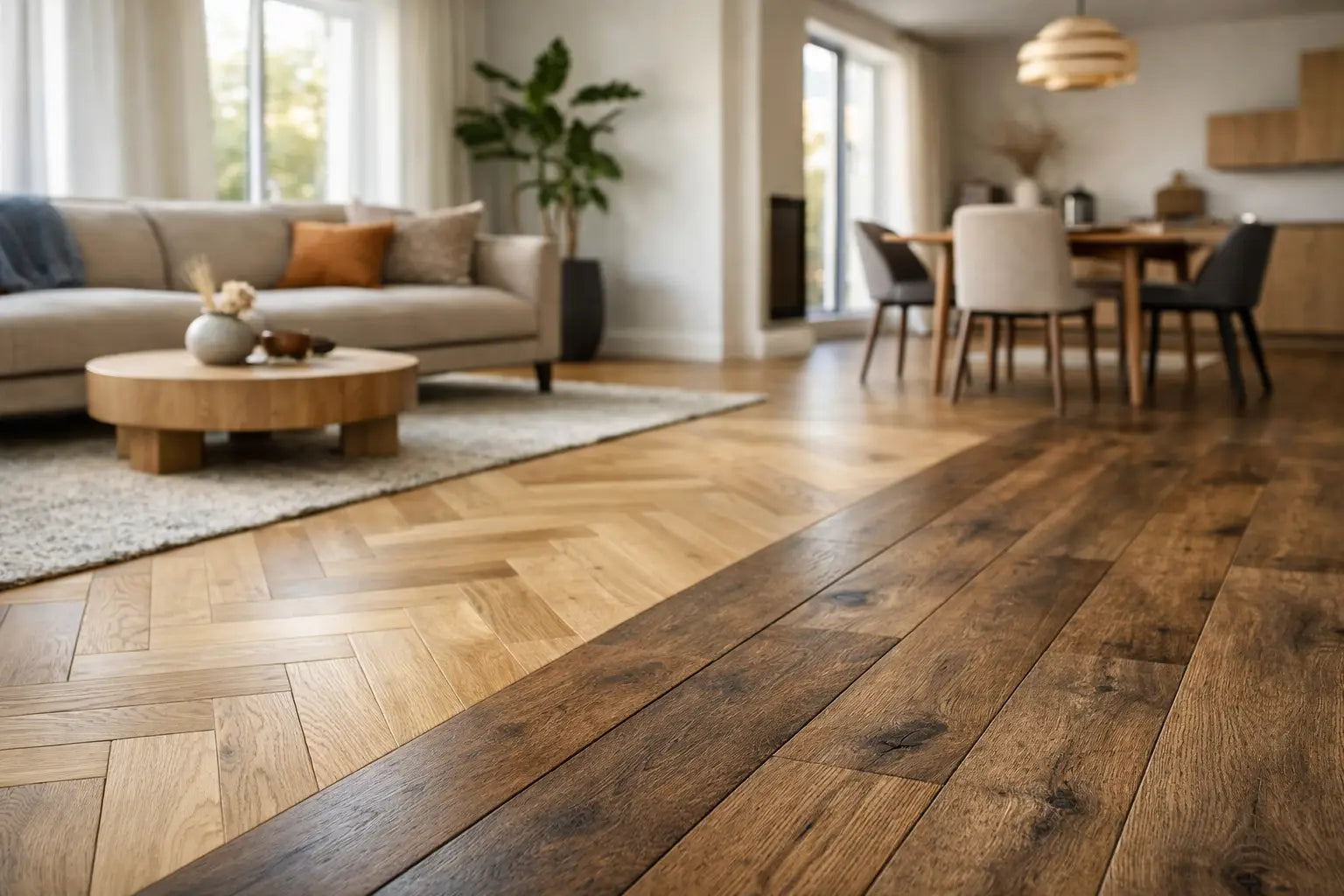
Hallways need to cope with grit, moisture and frequent foot traffic. Choose a floor tile with an appropriate slip rating and a finish that will remain practical through wet British winters. Wood-effect porcelain brings warmth to this setting without the maintenance considerations of a real timber floor.
In living areas, the decision is often led by scale and visual flow. A 600 x 600 mm tile, 600 x 1200 mm format or plank-style porcelain can give an open-plan scheme a more considered, architectural finish. Larger tiles create fewer grout lines, although they require a suitably flat substrate and careful handling during installation.
Check whether the tile is wall-only or floor-rated
Many porcelain tiles can be used on both walls and floors, but this should never be assumed. Confirm the manufacturer’s intended application before ordering, especially for polished, decorative or slim-format products. Floor tiles must be suitable for the level of traffic expected, while wall tiles may have different weight, thickness or surface characteristics.
For commercial interiors, establish the expected footfall and cleaning regime early. Hotel entrances, restaurant washrooms and retail floors can all require a more technical approach than a domestic bathroom. A tile’s appearance remains vital, but performance requirements should be agreed before finalising the design.
Choose the finish with care
Finish changes both the mood of a room and the way a tile performs. Matt porcelain has a contemporary, understated quality and is usually the most forgiving day to day. It works well across floors and walls, particularly where a natural stone or concrete effect is desired.
Polished porcelain reflects light beautifully and can make smaller rooms feel brighter. It is often selected for feature walls, elegant bathrooms and lower-traffic spaces. The trade-off is that polished surfaces can show smears, water spots and marks more readily. They may also be less suitable for wet floor areas unless the product’s specification confirms otherwise.
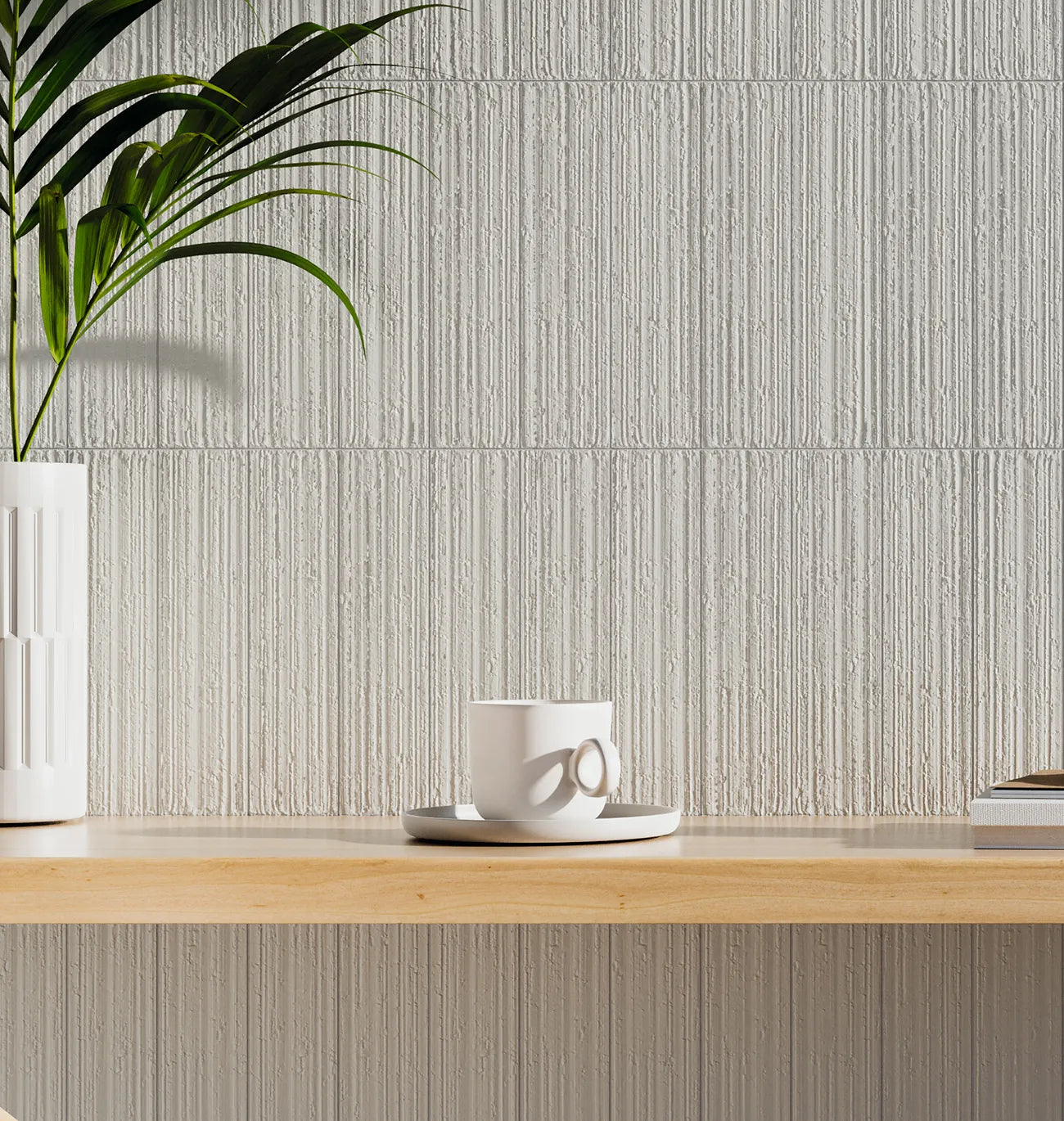
Structured, grip and textured finishes provide more surface traction. These are particularly useful in entrances, wet rooms and areas that transition towards external spaces. Texture can require more attention when cleaning, so balance slip resistance with the maintenance expectations of the project.
Slip resistance is commonly expressed through an R rating. A higher R rating generally indicates greater slip resistance, but the correct requirement depends on the application. It is worth discussing this with an installer or project specifier rather than selecting the highest available rating by default. More grip can mean a more textured surface, which may not be necessary or desirable in every interior.
Size, shape and grout lines
Tile size should support the proportions of the room rather than follow a trend blindly. Large formats can make a compact room appear less busy because there are fewer joints, while smaller tiles can bring rhythm and detail to a feature wall, splashback or shower enclosure.
Rectified porcelain is cut after firing to achieve more precise edges. This allows for narrower grout joints and a crisp, contemporary layout. It is a popular choice for large-format installations and minimalist schemes. Narrow joints still need suitable grout and accurate installation - they do not remove the need for movement accommodation or a properly prepared background.
Plank-format porcelain is particularly effective where the design calls for a timber look. Lay direction matters. Running planks towards a window, along a corridor or through an open-plan space can emphasise length and make the layout feel intentional. For realistic timber-effect tiles, check the recommended offset pattern. A half-bond layout is not always appropriate for long planks, as slight natural bowing can become more visible.
Grout should be selected as part of the scheme, not as an afterthought. A close colour match creates a quieter, more continuous surface, while a contrasting grout can define pattern and geometry. In high-use floor areas, practical mid-tones are often easier to maintain than brilliant white.
Order samples and view them in the right light
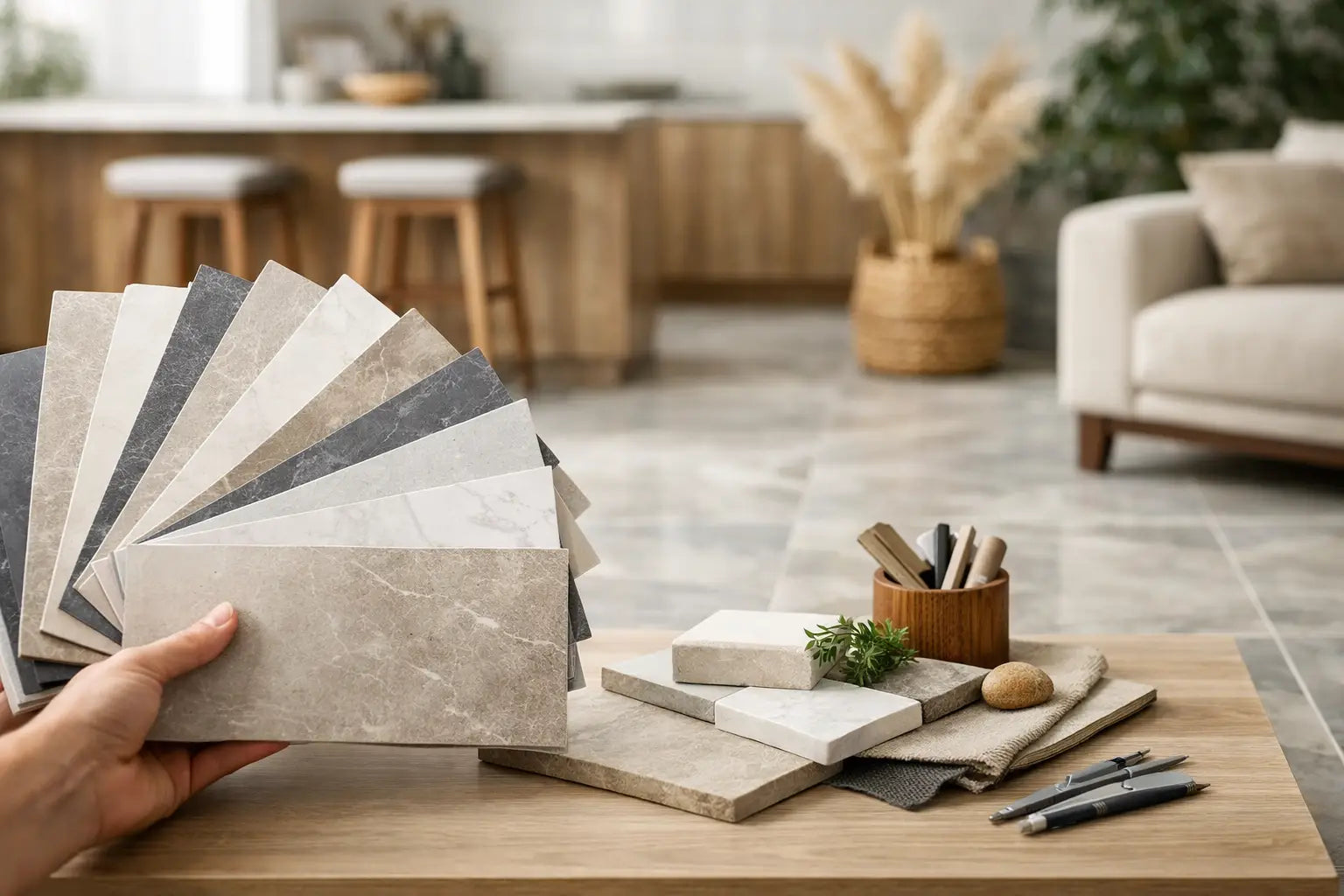
Digital images are useful for narrowing the choice, but they cannot fully show texture, shade variation or surface reflection. Order samples before committing to a full quantity, then view them in the actual room at different times of day. North-facing spaces can make cool greys feel bluer, while warm artificial lighting can change the appearance of beige, cream and wood-effect designs.
If the tile has noticeable variation, ask to see several pieces where possible. Stone-effect and marble-effect porcelain are designed to reproduce the movement found in natural materials, so the pattern will not look identical from tile to tile. That variation is often the feature that gives a finished floor or wall its depth.
Calculate quantities with installation in mind
Measure the net area of each wall or floor in square metres, then add an allowance for cuts, breakages and future repairs. For a straightforward room with a simple layout, an extra 10 per cent is often sensible. Complex layouts, diagonal patterns, large formats, many corners or small rooms with numerous cuts may require 15 per cent or more.
Do not forget skirting details, steps, niches, boxing, window reveals or splashbacks. A quantity calculator is helpful, but a scaled drawing and an installer’s check are valuable for more detailed projects. Ordering sufficient material from the same batch also helps maintain consistent tone and calibre across the installation.
A tile project is only as dependable as the surface beneath it. Large-format porcelain requires a flat, stable substrate. Depending on the background, the installation may need tile backer boards, levelling compound, decoupling matting or suitable preparation before adhesive is applied. Using the correct flexible adhesive, grout, trims and movement joints is part of the specification, not an optional extra.
Smart Tiles can help bring these elements together, from samples and design-led European porcelain collections to the installation materials needed to complete the scheme professionally.
Make the final choice with the whole scheme in view
Before placing the order, look beyond the individual tile. Consider cabinet finishes, paint colours, sanitaryware, lighting, door thresholds and adjacent flooring. A premium result comes from these relationships as much as the tile itself. Confirm the tile’s intended use, finish, rating, batch quantity and required fitting products, then give the installer a clear layout plan before work begins.
The most successful porcelain surfaces feel effortless once installed. That confidence is created earlier, through a tile choice that works beautifully in the room and is practical enough to keep working for years.