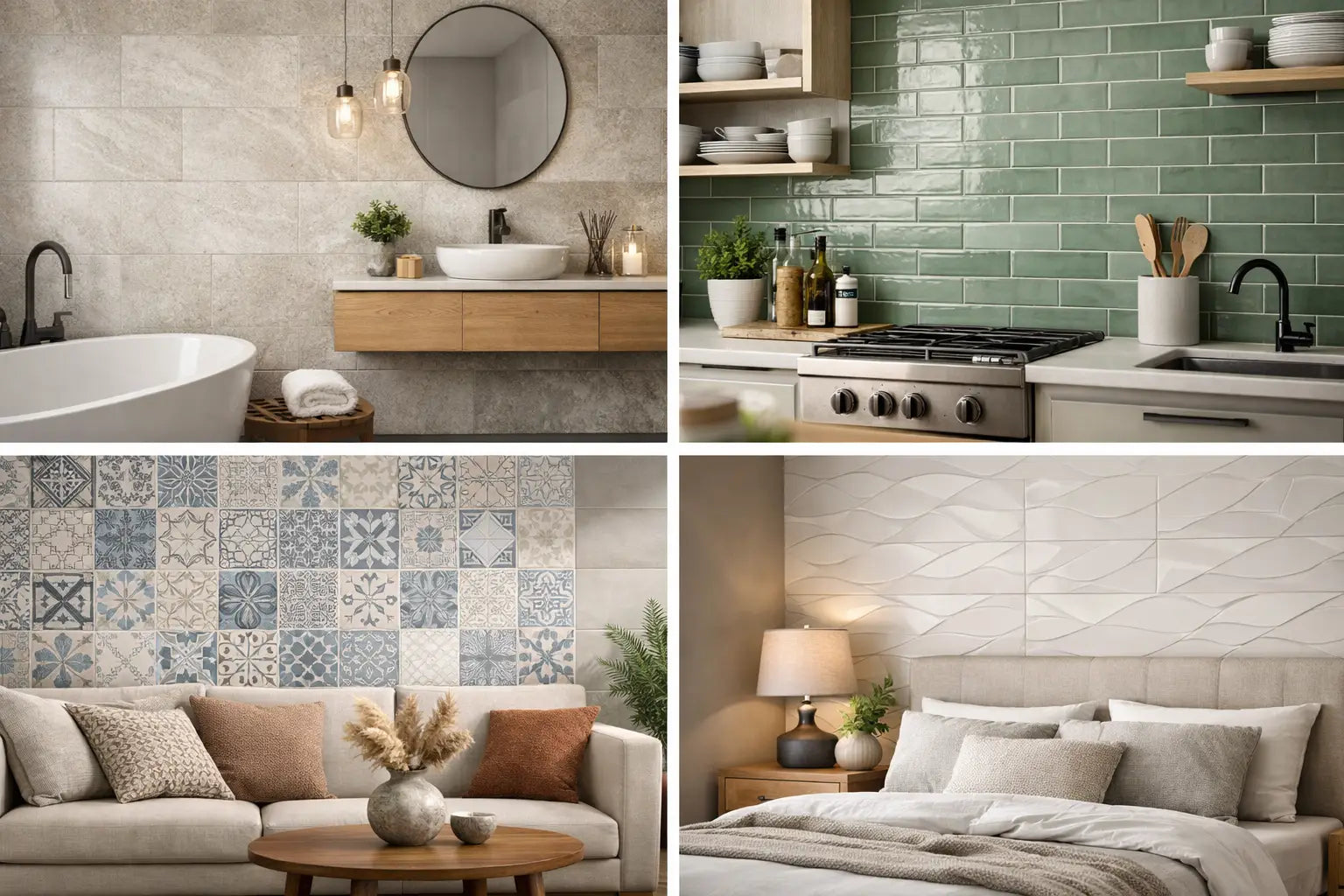
How to Choose Porcelain Floor Tiles for Your Home
A porcelain floor can make a narrow hallway feel composed, give a kitchen a more architectural finish, or bring the calm, continuous look of stone into a bathroom without stone’s maintenance demands. But the best choice is rarely just the tile that looks right on a display board. To understand how to choose porcelain floor tiles, start with the room’s daily use, the light it receives, the format that suits its proportions and the installation conditions beneath it.
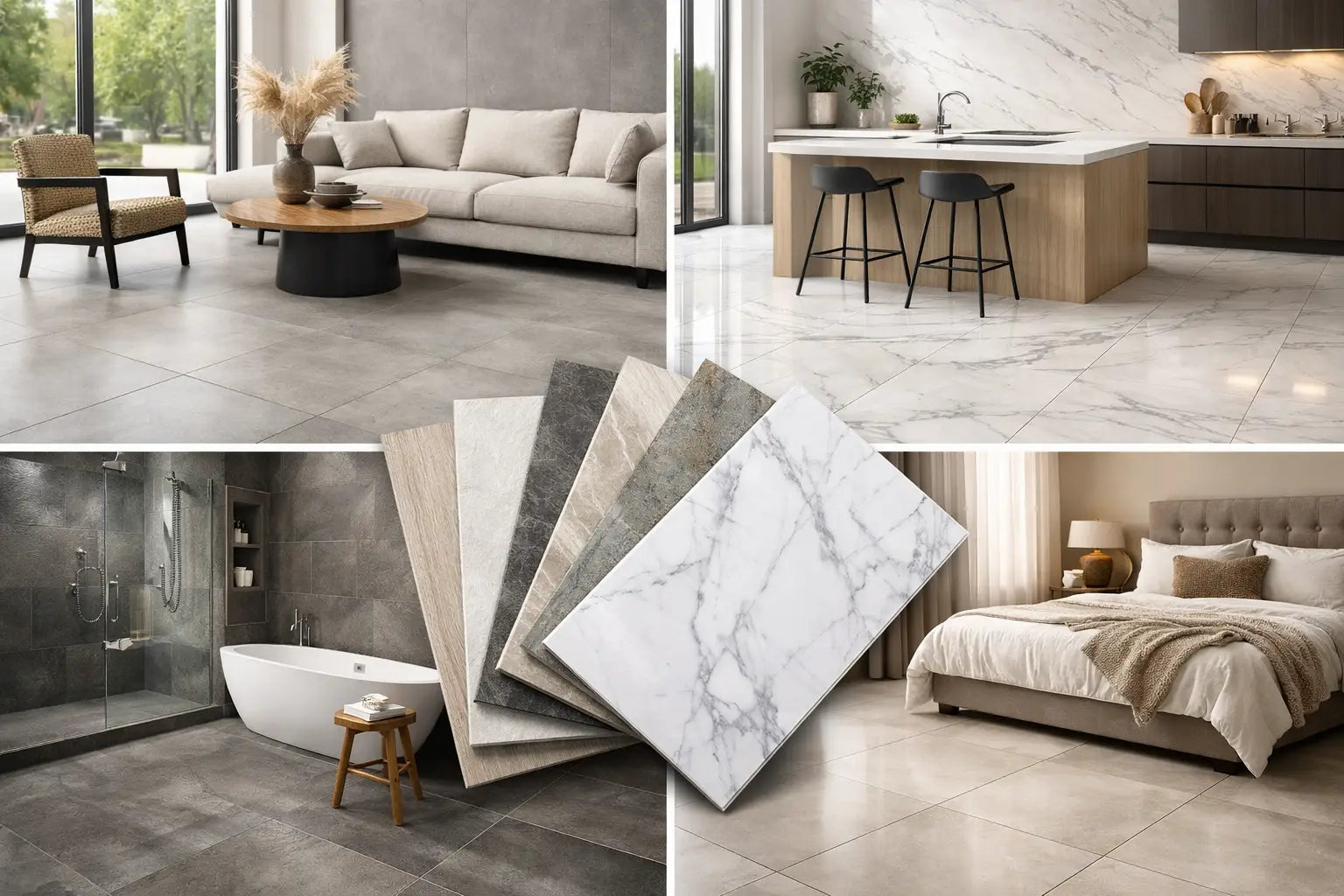
Porcelain is a highly practical material for busy homes and commercial interiors. It is dense, low-porosity and hard-wearing, with designs ranging from understated concrete effects to richly veined marble, warm limestone and convincing timber looks. The selection becomes much easier when design and performance are considered together rather than as separate decisions.
Start with the room, not the sample
Every room places different demands on its floor. A guest cloakroom may allow you to prioritise decorative impact, while a family kitchen needs a finish that remains practical around cooking, dining and regular foot traffic. Entrance halls need to cope with grit, wet shoes and heavier wear. For a hotel lobby, restaurant or retail setting, traffic levels, cleaning regimes and slip resistance require even more careful specification.
Think about how the room is used at its busiest, not only how it will look when newly finished. A pale polished tile can be striking in a formal living area, but may show splash marks and footprints more readily in a kitchen with children or pets. A softly textured matt porcelain can be more forgiving in these settings, while still delivering a refined, high-end appearance.
Bathrooms deserve particular attention. Floor tiles should provide suitable grip when wet, especially in walk-in shower areas or rooms used by young children and older family members. Check the product’s stated slip-resistance rating and ask whether it is appropriate for the intended area. A tile suitable for a bathroom floor is not automatically suitable for a continuously wet shower floor.
Choose the right porcelain finish
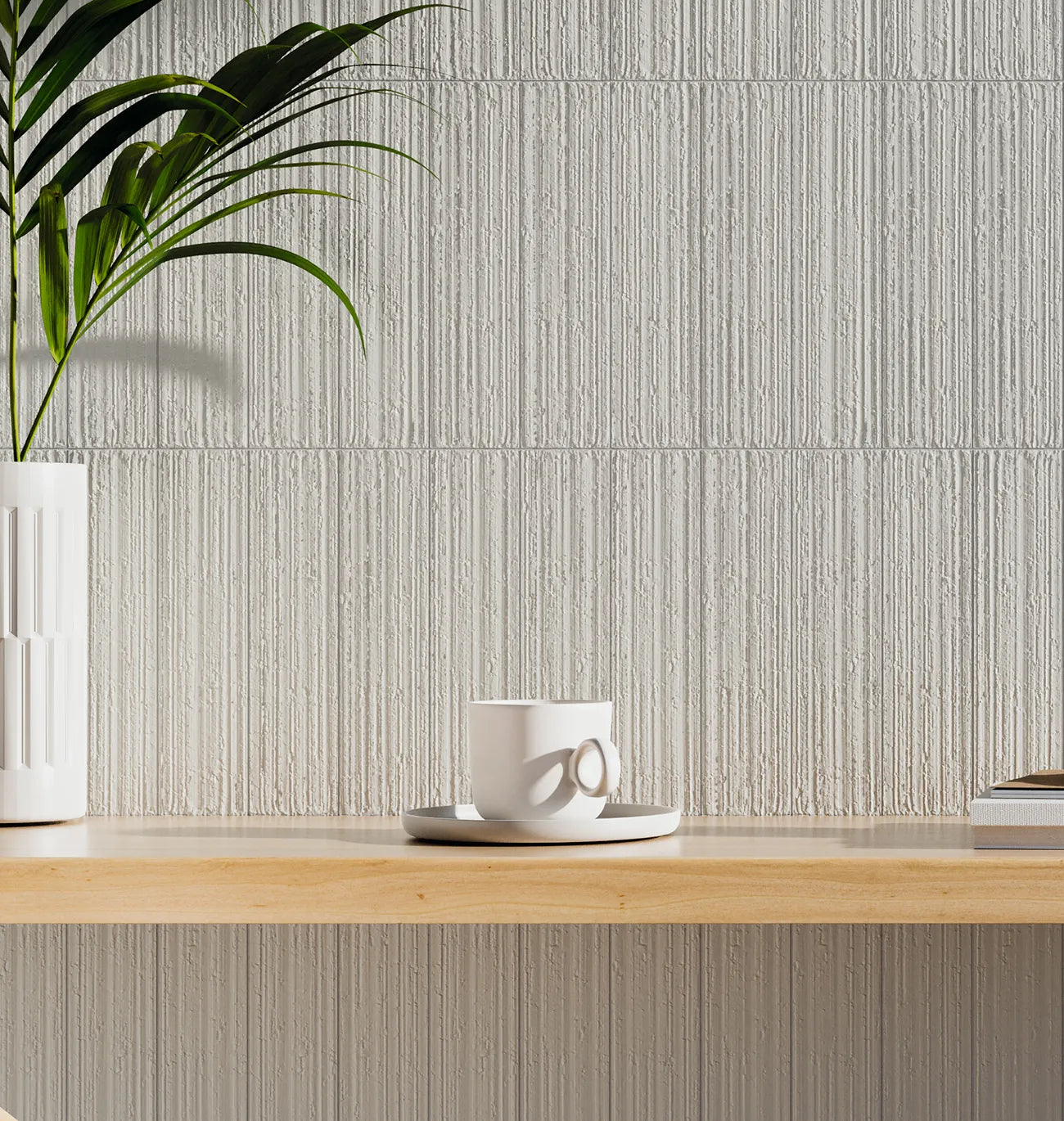
The finish has a direct effect on both appearance and everyday upkeep. Matt porcelain is a dependable choice for most floors. It gives a contemporary, understated surface, conceals smudges well and is often available with a degree of texture that improves underfoot grip.
Polished porcelain reflects light beautifully and can make a darker room feel more expansive. It works particularly well in low-traffic spaces, elegant reception areas and carefully maintained interiors. The trade-off is that polished surfaces can show water spotting, dust and scratches more easily than matt alternatives. They may also be less suitable where floors regularly become wet.
Lappato, satin and sugar finishes sit between matt and polished. They provide a gentle sheen or tactile texture without the full reflectivity of a polished surface. These are worth considering when you want more depth than a standard matt tile but still need a practical floor for day-to-day living.
For external thresholds, utility rooms and wet zones, a structured or grip finish may be the better option. Texture improves safety, although more pronounced surfaces can take longer to clean. This is a worthwhile compromise in areas where performance matters more than a perfectly smooth feel.
Check slip resistance in context
Slip ratings should be treated as a specification point, not a styling detail. Ask for the rating relevant to the tile and consider the likely contaminants: clean water in a bathroom, rainwater and grit in an entrance, or food and grease in hospitality settings. The required level depends on the space, its users and how it will be cleaned.
A highly textured tile is not always necessary indoors, and choosing one without need can make maintenance harder. Equally, selecting a very smooth finish for a wet entrance or shower area simply because it matches the design scheme can create an avoidable risk.
Select a tile size that suits the space
Large-format porcelain tiles create fewer grout lines, giving floors a cleaner and more continuous appearance. Formats such as 600 x 600mm, 600 x 1200mm and larger can make open-plan kitchens, living spaces and principal bathrooms feel calm and considered. They are also particularly effective with stone-effect and concrete-effect designs, where a larger tile allows the pattern to read more naturally.
That does not mean larger is always better. In a small room with numerous corners, pipe boxing or door openings, oversized tiles can increase cutting and waste. A well-proportioned 300 x 600mm or 600 x 600mm tile may look more balanced and be more efficient to install. Small mosaics or smaller formats remain useful on shower floors where additional grout joints can improve grip and allow the surface to follow falls towards a drain.
Before finalising a format, consider access as well as room dimensions. Large tiles require careful handling, a very flat substrate and sufficient space to move them into the property. In upper-floor flats, tight staircases and complex refurbishments, this can influence the most practical choice.
Think about layout and direction
Rectangular tiles can change how a room reads. Laid lengthways, they can visually extend a corridor or galley kitchen; laid across it, they can make the width feel more generous. Timber-effect porcelain is often laid in a staggered pattern, but the manufacturer’s recommended offset must be followed, particularly with long plank formats where natural bowing can make lippage more visible.
A straight grid layout is timeless and efficient, especially with large square or rectangular tiles. More decorative patterns, including herringbone and modular arrangements, can be highly effective but require additional planning, cutting and labour. Allow for this in both the budget and programme.
Get colour and variation right
Porcelain does not need to imitate natural stone exactly to feel premium. Warm greige, chalky limestone tones and soft sand colours bring comfort to north-facing rooms, while cool grey concrete effects suit contemporary schemes with black metalwork, timber joinery or crisp white walls. Deep charcoal and dark stone finishes can be dramatic, but need adequate light and may show pale dust more readily.
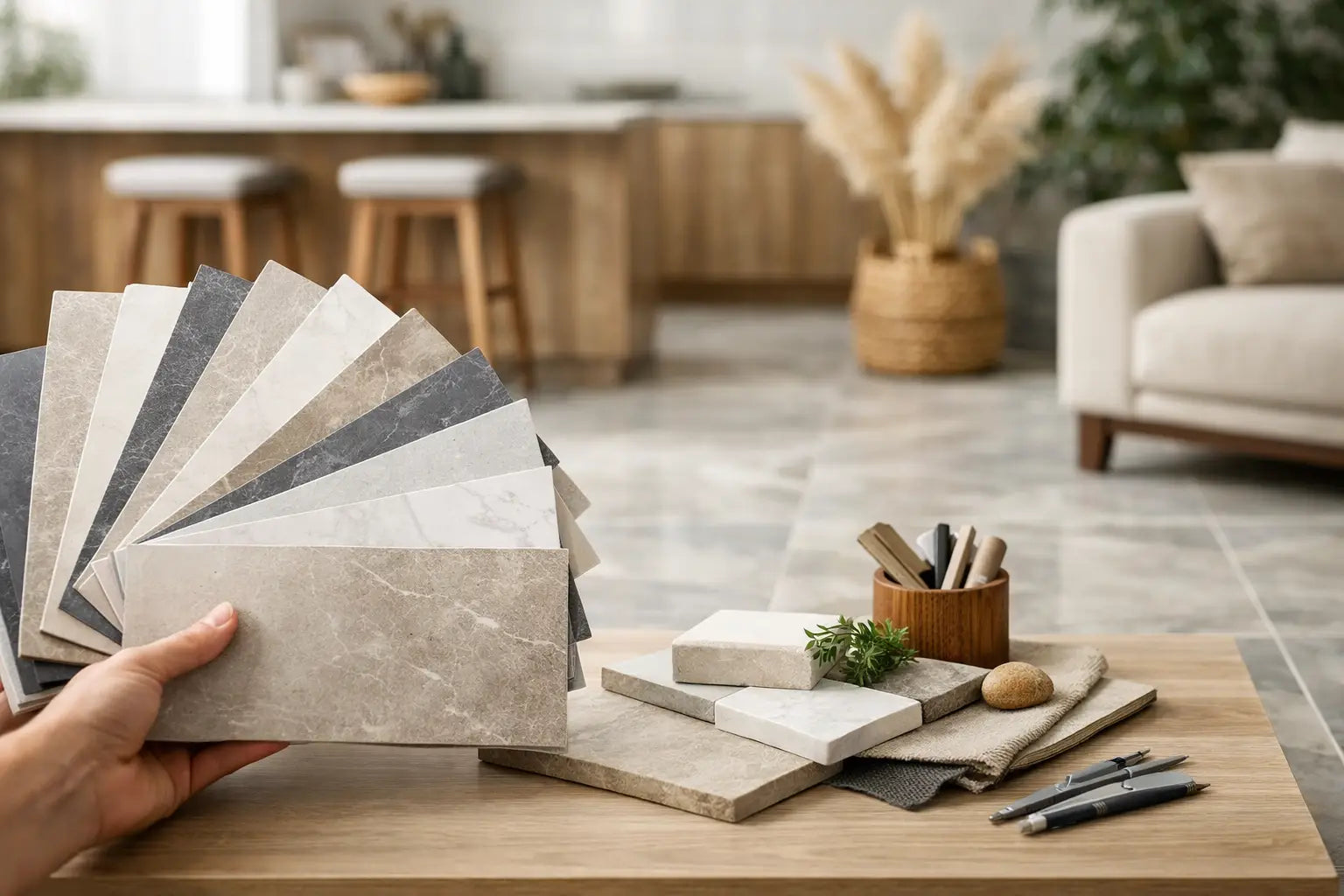
Order samples and view them in the actual room at different times of day. Showroom lighting is useful for comparing products, but natural daylight, warm LED lighting and surrounding paint colours can change how a tile appears. Place samples next to cabinetry, worktops, sanitaryware and flooring transitions rather than judging them in isolation.
Also check the level of graphic variation. A tile with a strong marble vein or dramatic stone pattern may have multiple different faces in each box. This can create an authentic, varied floor, but it needs dry laying and thoughtful distribution before fixing. If a more uniform appearance is preferred, choose a collection with a quieter design and lower variation.
Confirm durability, suitability and installation requirements
Not every porcelain tile is intended for every floor. Check that the product is rated for floor use and appropriate for the expected traffic level. Domestic bedrooms and light-use bathrooms have different requirements from kitchens, hallways, shops and hospitality projects. For commercial specifications, confirm technical data early, including wear performance, slip resistance, thickness and any project-specific requirements.
The substrate is equally important. Porcelain is unforgiving of movement and unevenness, particularly in larger formats. Floors should be sound, clean and sufficiently flat before tiling begins. Timber subfloors may require suitable tile backer boards or a specified uncoupling system, while uneven screeds may need preparation or levelling compound. Underfloor heating can work very well with porcelain, but the heating system, adhesive and movement joints must all be planned correctly.
Use an adhesive designed for porcelain and the substrate involved. Flexible adhesive is commonly required where there is underfloor heating or minor movement, while large-format tiles often need a system suited to their weight and size. Full adhesive coverage is essential, particularly on floors and with large tiles, to reduce the risk of hollow spots or cracking under load.
Grout and trims should be chosen as part of the same decision. A closely colour-matched grout creates a quieter, more continuous surface; a contrasting grout makes the layout more visible. In high-use areas, a quality grout with appropriate stain and moisture resistance can make a meaningful difference to long-term appearance. Matching trims provide a clean finish at exposed edges, steps and transitions.
Calculate quantities with realistic wastage
Measure the floor area accurately, then add an allowance for cuts, pattern direction and future repairs. For a straightforward square room with a simple layout, around 10% wastage is often sensible. Complex rooms, diagonal layouts, herringbone patterns, large-format tiles and heavily veined designs may need more. It is generally safer to order enough from the same production batch at the outset than to rely on a later match.
Check the number of tiles per box, coverage per pack and whether the product is sold by the square metre or full box. Your order should also account for skirtings, upstands or tiled thresholds where required. Keep a small quantity of spare tiles after installation, labelled with the product name and batch details, for any future repair work.
Smart Tiles can support this process with samples, coverage calculations and the installation materials needed to complete the floor as a coordinated system.
The most successful porcelain floor is one that still feels right after the first impressions have faded: proportionate to the room, comfortable underfoot, safe where it needs to be and practical to live with. Give the sample time in your space, confirm the technical details before ordering, and choose a finish that suits the way the room will genuinely be used.