Oak Flooring Finish Review for Busy Homes
A new oak floor can look remarkably different from one sample to the next, even when the timber species and board dimensions are identical. In this oak flooring finish review, the focus is on what sits at the surface: the treatment that shapes the colour, texture, sheen, daily maintenance and long-term character of the floor.
For homeowners, the decision often comes down to the appearance they want to live with. For designers, installers and commercial buyers, it also affects cleaning routines, repairability, traffic resistance and the suitability of the product for the space. There is no single best finish for oak. The right choice depends on how the room is used, how much natural light it receives and whether a pristine or naturally evolving appearance is preferred.
Oak flooring finish review: the key choices
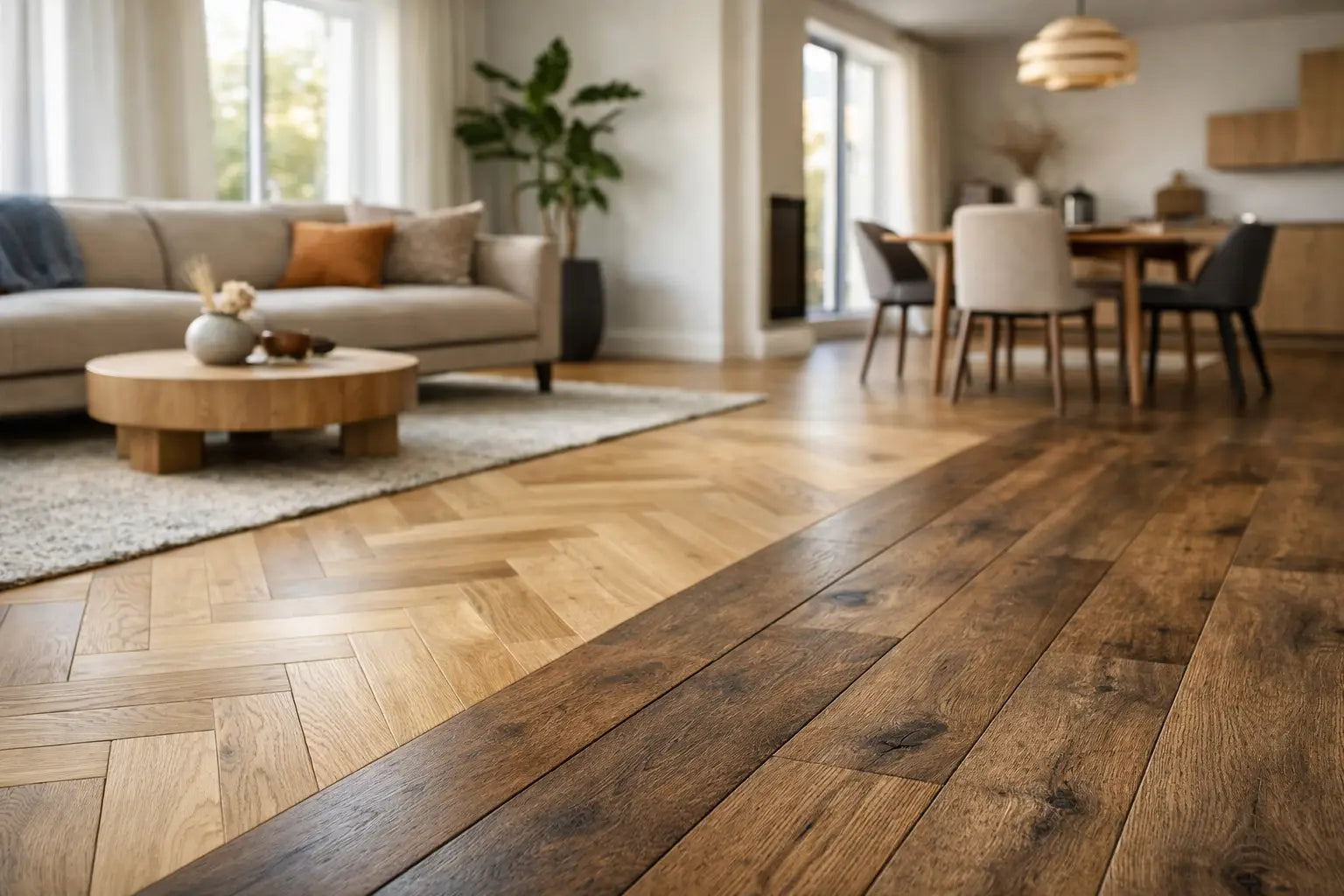
Oak is valued for its grain, knots and warm tonal variation. A finish can either soften those features for a refined, contemporary look or draw them forward for a more tactile, character-led floor. It is useful to separate the finish type from the visual treatment. Lacquered and oiled describe the protection system, while brushed, smoked, stained and matt describe the surface appearance or preparation. Many boards combine several of these treatments.
A brushed, smoked and matt lacquered oak board, for example, has a textured surface, darker colouration and a protective top layer. Understanding this combination avoids choosing a floor based on a photograph alone. Samples should always be viewed in the room, alongside cabinetry, paint colours and upholstery, because oak responds noticeably to daylight and artificial lighting.
Lacquered oak flooring
Lacquered oak has a factory-applied protective coating that sits over the timber surface. It is one of the most practical options for busy family homes, rental properties, hospitality areas and projects where straightforward cleaning is a priority. A good-quality matt lacquer protects the board from everyday spills and surface marking while keeping the look restrained rather than glossy.
The principal advantage is low routine maintenance. Dust and grit should still be removed regularly, and a suitable wood-floor cleaner used as required, but the finish does not need periodic oiling to remain protected. This makes lacquered flooring especially appealing in kitchens, hallways and open-plan living areas where life is less forgiving of a careful maintenance schedule.
The trade-off is local repair. If a lacquered surface suffers a deep scratch or impact, spot repairs can be more visible than they would be on an oiled floor. In some cases, sanding and refinishing a larger area is the better route. A textured or matt board is generally more forgiving than a smooth, high-sheen finish, but no timber floor is completely immune to dents from dropped objects or grit carried in from outside.
Oiled oak flooring
Oiled finishes penetrate and protect the oak while retaining a close connection to the timber. They tend to enhance the depth of the grain and create a natural, soft-matt appearance that suits both period properties and design-led contemporary interiors. The finish feels less like a film on top of the wood, which is why many clients favour it for living rooms, bedrooms and spaces where material character is central to the scheme.
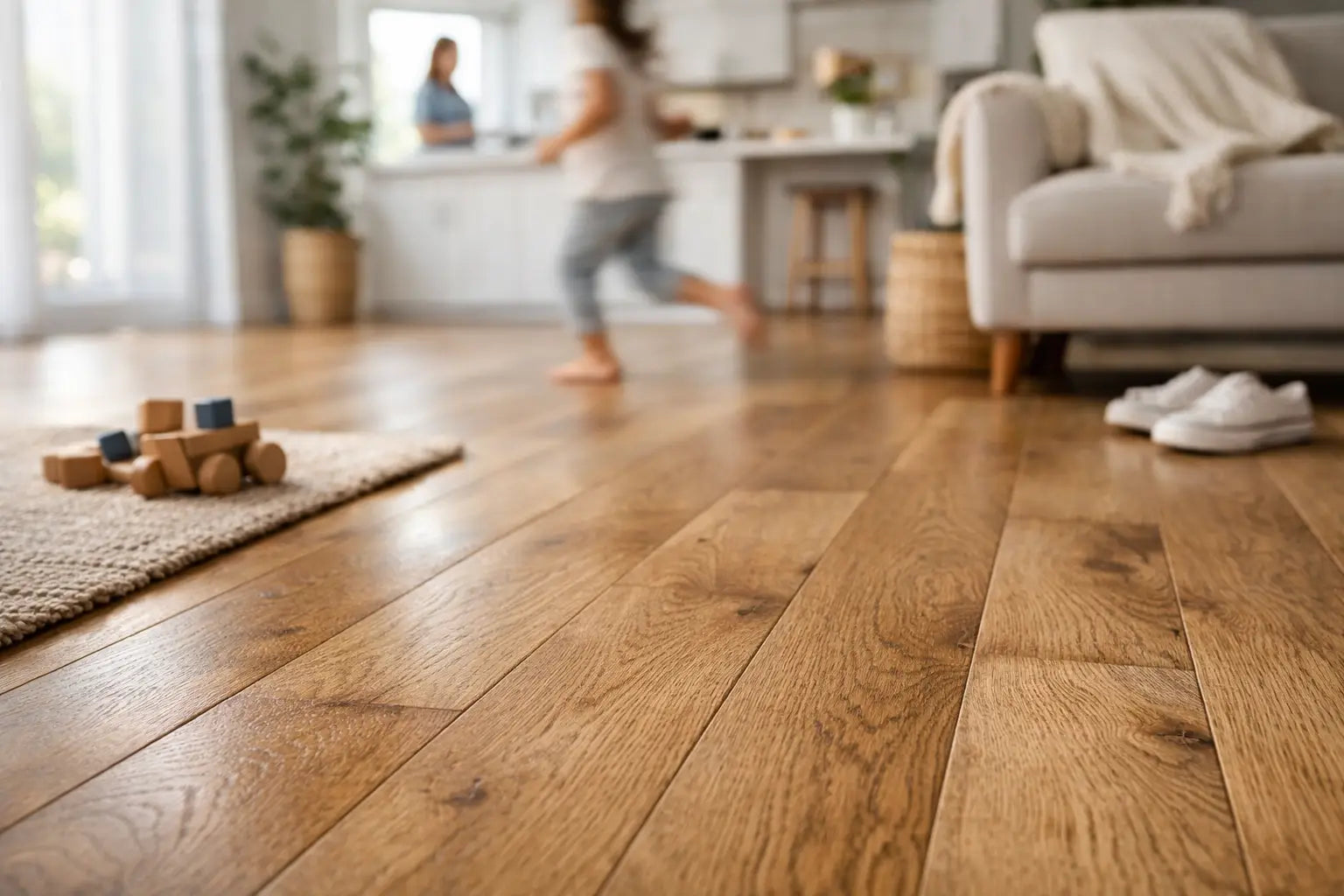
Its strongest practical benefit is repairability. Small worn areas, light scratching and local marks can often be cleaned, lightly abraded and re-oiled without refinishing the entire floor. This is valuable in homes with pets and children, and in commercial interiors where a floor needs to retain its appearance over years of use rather than simply look immaculate on handover.
Oiled oak asks more of the owner. It needs the correct cleaning products and periodic maintenance oil, with frequency determined by footfall, cleaning habits and the original finish system. A lightly used bedroom may need little attention, while an entrance from a garden, terrace or wet-weather route will require more regular care. The maintenance is manageable, but it should be considered before specifying the floor.
Brushed, planed and smooth surfaces
Surface texture changes both the visual effect and how a floor wears. Brushed oak has the softer grain removed from the surface, leaving the denser grain slightly raised. It offers an attractive tactile finish and gives the board more depth, particularly in wide planks. It is also a practical choice for active households, as fine scratches and everyday marks are less apparent than on very smooth flooring.
Hand-planed or distressed oak carries stronger undulation, saw marks or aged detailing. This can bring warmth to country homes, heritage renovations and hospitality settings that need an established feel from day one. It is less suited to schemes seeking crisp minimalism, and cleaning requires a little more attention around pronounced texture.
Smooth oak offers a cleaner, more uniform result. In pale, matt tones it works well with contemporary kitchens, tailored joinery and calm, architectural interiors. The consideration is that a smooth surface can reveal scratches, dust and changes in sheen more readily, particularly in dark colours or rooms with strong sunlight.
Colour treatments: natural, smoked, stained and white-washed
Natural oak is rarely one single colour. Boards can include honey, biscuit, tan and occasional darker grain, which is part of their appeal. A clear finish allows this variation to remain visible and gives flexibility when furnishings change over time. It is a dependable choice where the aim is to make the most of the timber rather than make the floor a dominant feature.
Smoked oak is treated to deepen and enrich the natural tones. Depending on the process, it may range from gently mellowed brown to a pronounced dark, moody shade. Smoked finishes can look exceptionally sophisticated with brass, stone, dark-painted joinery and rich fabrics. However, darker flooring tends to show pale dust, pet hair and surface scratching more readily, so a brushed texture and matt finish are often sensible companions.
White-washed, limed or pale stained oak gives a lighter, more contemporary direction. It can make hallways and open-plan spaces feel more expansive while retaining grain and warmth that a plain white surface would lack. The best examples avoid a flat grey cast and instead retain enough oak tone to feel natural. Always assess a full sample in situ, as pale finishes can appear cooler under north-facing light and warmer under LED lighting.
Grey and coloured stains deserve particular care. They can be effective in a tightly controlled interior palette, but they are less flexible than natural oak if wall colours or furniture are likely to change. When specifying a large area, check variation between boards and batches so the completed floor has the intended balance of consistency and character.
Matching the finish to the room
Hallways need a finish that manages grit, moisture and high footfall. A brushed matt lacquered oak is often a strong all-round choice, provided entrance mats are used and spills are wiped promptly. An oiled floor can work equally well, but owners should be comfortable with its maintenance programme.
Kitchens benefit from the same pragmatic approach. Engineered oak is generally preferred where temperature and humidity fluctuate, and a durable lacquered or properly maintained oiled finish can both perform well. Standing water should never be left on a wood floor, regardless of finish. In areas directly around sinks or external doors, practical detailing and matting matter as much as the product selection.
Bedrooms and low-traffic lounges allow greater freedom. Here, a natural oiled board, a pale white-washed finish or a distinctive smoked oak can be chosen primarily for atmosphere. Commercial spaces require a more specific assessment of traffic, cleaning chemicals, access, maintenance responsibility and expected service life. A finish that looks excellent in a private drawing room may not be the right answer for a hotel corridor or retail environment.
Underfloor heating is another specification point. Many engineered oak floors are suitable when installed and operated within the manufacturer’s guidance, but the finish does not remove the need for correct subfloor preparation, gradual heat commissioning and stable room conditions. Boards, adhesives, underlays and moisture-control products should be selected as one system rather than as separate purchases.
What to check before placing an order
The appearance on a screen is only a starting point. Order samples and place them flat in the proposed room for several days. Look at them in morning light, evening light and alongside the materials that will remain in the scheme. A small sample cannot show every knot, grain line or tonal shift, but it will reveal whether the finish reads warmer, cooler, more matt or more textured than expected.
Confirm whether the product is lacquered, oiled or hardwax oiled, then ask what ongoing care it requires. Check the board construction, wear layer, grade, bevel detail and compatibility with the intended installation method. Quantity planning should include a sensible allowance for cuts and selection, particularly with herringbone layouts, diagonal fitting or rooms with multiple doorways.
For a project where surface quality and installation outcome both matter, Smart Tiles can help bring the flooring, preparation materials and finishing accessories into one considered specification. That makes it easier to plan the complete floor rather than treating the boards as an isolated purchase.
The most rewarding oak floors are not necessarily the ones that stay looking brand new. They are the ones whose finish suits the light, use and rhythm of the space, allowing the timber to develop with confidence rather than becoming another surface to worry about.