Matte Kitchen Floor Tiles for Modern Homes
A kitchen floor has to deal with more than most surfaces in the home: dropped pans, muddy shoes, moving chairs and regular cleaning all leave their mark. Matt kitchen floor tiles offer a refined answer, combining a low-sheen appearance with a practical surface that suits busy family kitchens, contemporary extensions and high-specification projects alike.
In the UK tile market, this finish is often described as matt rather than matte. Both refer to the same understated, non-reflective look. The appeal lies in its ability to bring depth to a scheme without the glare and maintenance demands associated with highly polished floor tiles.
Why choose matt kitchen floor tiles?
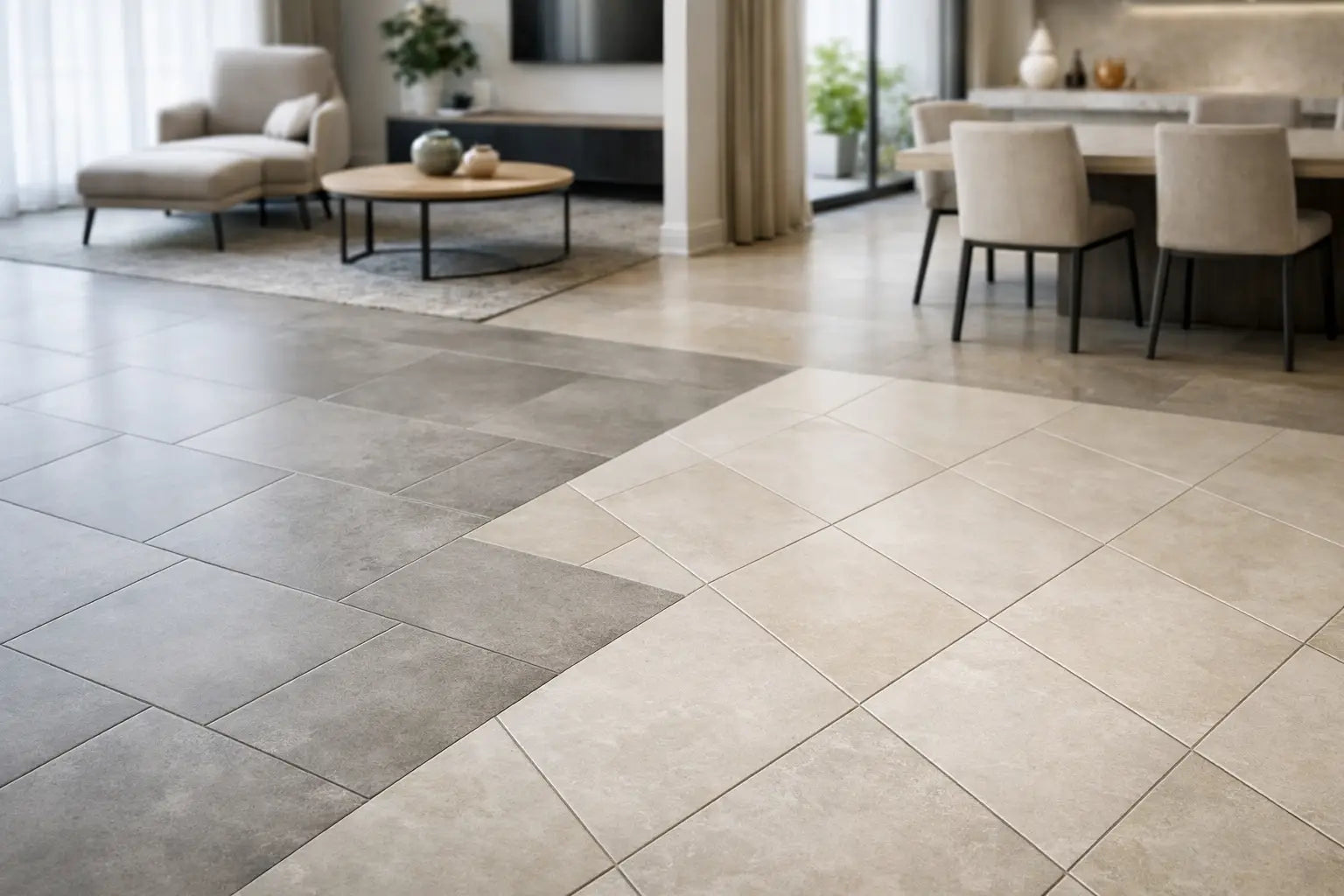
A matt finish diffuses light rather than bouncing it around the room. This creates a calmer, more grounded effect, particularly in open-plan kitchens where large areas of flooring are visible from several angles. It works especially well with textured cabinetry, timber details, painted units and natural stone-look worktops.
From a practical perspective, matt tiles are generally more forgiving of everyday marks. Water spots, dust, crumbs and light smudges tend to be less obvious than they are on a polished surface. That does not make them maintenance-free, but it can make the kitchen feel presentable between cleans - a useful consideration in homes with children, pets or frequent guests.
Many porcelain floor tiles with a matt finish also offer useful slip resistance. This is not automatic, however. The level of grip depends on the individual tile, its texture and its stated performance rating. A very smooth matt porcelain may feel quite different underfoot from a structured, stone-effect option, so check the product specification rather than choosing solely by appearance.
Matt porcelain is usually the strongest all-round choice
For most kitchen floors, porcelain is the preferred material. It is dense, hard-wearing and has very low water absorption, making it well suited to cooking spaces, utility areas and entrances. Modern inkjet production also gives porcelain convincing stone, concrete, terrazzo and timber-effect designs, with a matt surface that feels considered rather than flat.
Ceramic tiles can be suitable for lighter-use domestic floors where the product is specifically rated for flooring. However, porcelain is usually the more dependable option for a kitchen that needs to stand up to regular use over many years. For commercial kitchens, hospitality settings or high-traffic spaces, technical suitability should be assessed against the precise project requirements, including safety, cleaning regime and expected footfall.
Choosing the right colour and pattern
Colour affects how the kitchen feels, but it also influences how often the floor appears to need cleaning. Mid-toned greys, soft taupes, warm beiges and gentle greige shades are popular because they balance contemporary style with day-to-day practicality. They can soften bright white units and bring warmth to black, navy, sage or oak cabinetry.
Pale matt porcelain makes an excellent choice for kitchens that need more visual space and light. A limestone-effect ivory or pale sand tile can give a calm, architectural finish without looking clinical. In rooms with limited natural light, avoid selecting a very dark tile from a small sample alone. The same charcoal surface that looks striking in a bright showroom or kitchen extension may absorb a great deal of light in a compact room.
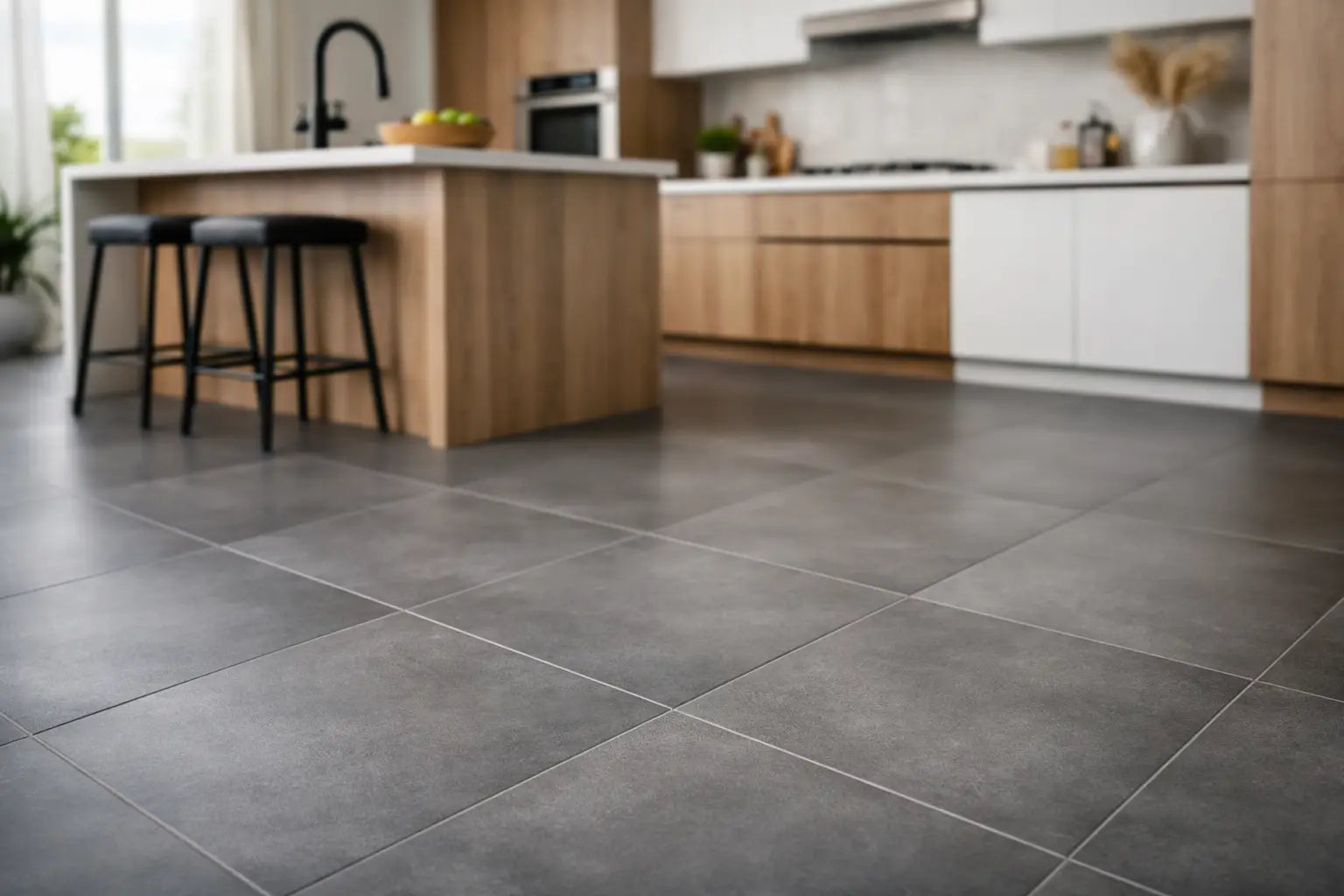
Darker floor tiles can still be highly effective, especially in larger kitchens with warm lighting, pale joinery or strong natural daylight. They bring definition to contemporary schemes and can provide a useful visual anchor beneath statement islands. Look for variation in the pattern or a subtle stone-effect face to avoid a uniform, featureless finish across a large floor area.
Patterned matt tiles deserve a place in kitchen design too. They can define a dining zone, add character to a period property or create a focal point in a compact galley kitchen. The trade-off is that a decorative floor often benefits from simpler cabinetry and restrained wall finishes. Consider where the room naturally draws the eye before introducing several competing surfaces.
Tile size, layout and grout make the difference
Large-format tiles are frequently chosen for modern kitchens because fewer grout joints can create a cleaner, more expansive look. Formats such as 600 x 600mm, 600 x 1200mm and plank-style porcelain work well in open-plan layouts, provided the subfloor is suitably flat. Larger tiles show up undulations more readily, and they may require more cutting, handling and planning during installation.
Smaller formats are not a compromise. They can be the better technical choice in older properties where rooms are less square, floors have more changes in level or intricate cuts are unavoidable. They also suit traditional kitchen styles and can create a more detailed, tactile result. A rectangular tile laid in a brick-bond or herringbone pattern adds movement, while a straight lay feels more ordered and contemporary.
Grout should be selected as part of the floor, not as an afterthought. A close tonal grout creates a quieter, more continuous surface and reduces the visual emphasis on the joint. A contrasting grout makes the tile shape more prominent, which can be effective with small-format designs but may make a larger kitchen feel busier. For kitchens, choose a quality grout designed for floor use and consider a shade that is practical for the amount of traffic the area receives.
Consider rectified edges and joint width
Rectified porcelain tiles are cut after firing to achieve more precise edges. This allows for narrower, more consistent joints and suits the clean-lined appearance many customers want from a contemporary kitchen. Standard pressed-edge tiles may need wider joints, which can be equally attractive in rustic, handmade-look or traditional schemes.
Narrow joints are not a substitute for good preparation. The floor must still be sound, level and suitable for tiling, with movement and perimeter details properly considered. A professional installer will assess the substrate before work begins and advise where levelling compounds, tile backer boards or an uncoupling system are needed.
Check performance before finalising the design
The best-looking tile is only the right tile when it meets the demands of the room. Ask about floor suitability, slip resistance, thickness, wear characteristics and whether the finish is appropriate for the intended setting. A kitchen leading directly to the garden may need a more grippy surface than a formal kitchen in a low-traffic flat.
Underfloor heating is another key consideration. Porcelain conducts heat efficiently and works well with compatible electric or water-based systems, giving an even warmth that is particularly welcome in large open-plan spaces. The heating system, adhesive, grout and substrate preparation must all be specified as a complete system. Switching on underfloor heating too soon after fitting can compromise the installation, so follow the curing guidance carefully.
Natural stone can also provide a beautiful matt kitchen floor, but it requires a different level of commitment. Stone may need sealing and periodic resealing, while some varieties are more susceptible to staining or etching than porcelain. For homeowners who want the visual character of limestone, slate or travertine with easier care, a high-quality stone-effect porcelain is often the more practical specification.
Plan for quantities, fitting and care
Measure the floor area accurately, then allow for cuts, layout direction and a sensible level of wastage. The percentage required varies: a simple square room with a straightforward layout needs less allowance than a kitchen with islands, doorways, bay windows or a diagonal pattern. Ordering too tightly can create avoidable delays if matching batches are no longer available.
It is worth ordering samples before making a final choice. View them beside cabinetry, worktops and wall colours, then look at them in morning light and under evening lighting. A matt finish can show its undertone differently throughout the day, particularly with beige, grey and stone-effect designs.
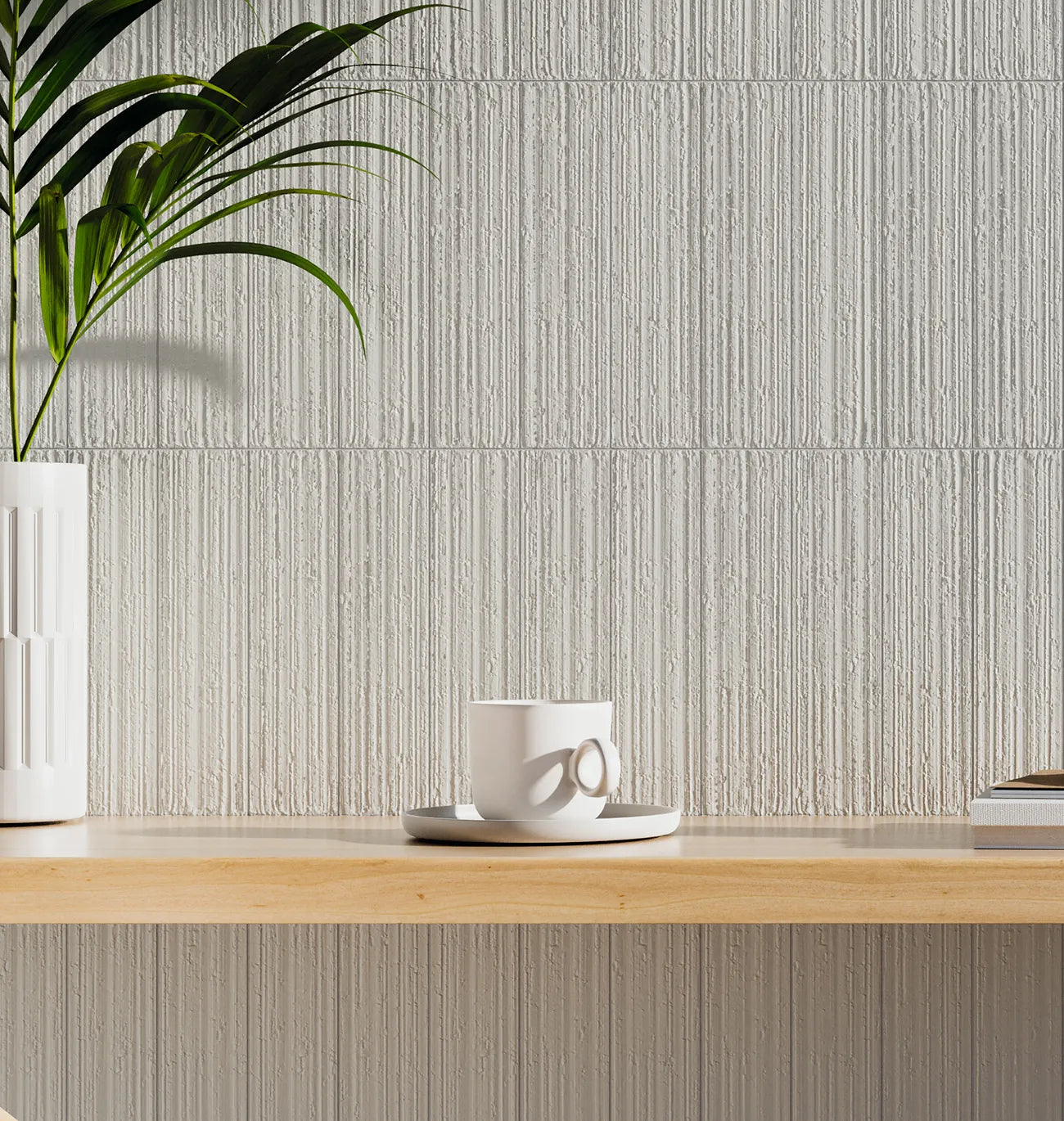
Once fitted, routine care is uncomplicated. Sweep or vacuum with a suitable hard-floor attachment to remove grit, then clean with a pH-neutral tile cleaner and clean water. Avoid waxes, oil-based products and harsh residues that can leave a film on the surface or affect slip resistance. For textured tiles, occasional cleaning with a soft brush may be needed to lift dirt from the relief.
A carefully selected matt floor should support the whole kitchen rather than compete with it. At Smart Tiles, samples, coverage planning and compatible installation materials help turn that choice into a specification that looks right on day one and continues to perform through everyday life.