Do Wood Floors Scratch? What to Expect at Home
A newly fitted timber floor has a particular appeal: natural grain, warmth underfoot and a finish that gives a room real presence. But do wood floors scratch? Yes, they can. Every real-wood surface is capable of picking up marks over time, particularly in hallways, kitchens and homes with pets. The more useful question is how visible those marks will be, how well the floor is protected and whether its character will improve rather than suffer with everyday use.
For many homeowners, a few fine marks are part of the appeal of a natural material. For a high-traffic family space, rental property or commercial interior, choosing the right construction, species and finish is what makes the difference between a floor that ages attractively and one that needs attention too soon.
Why do wood floors scratch?
Wood is a natural material, not a perfectly uniform manufactured surface. Shoes can carry in grit, chair legs move across the room, pets run through the kitchen and dropped objects can leave an impression. Even small particles of sand or stone under a shoe can act like abrasive paper when dragged across the finish.
Scratches fall into two broad categories. Surface scratches affect the protective lacquer, oil or hardwax oil layer. They are often light, visible only in certain light and may be reduced with appropriate cleaning or maintenance products. Deeper scratches break through the finish and into the timber itself. These are more noticeable, but on many engineered and solid wood floors they can be repaired locally or dealt with during future renovation.
Indentations are slightly different. A heavy table, a high heel or a sharp object may compress the timber rather than scrape it. This is why a floor's hardness matters, especially where the room will see regular footfall or furniture movement.
Not all timber floors scratch at the same rate
The species, construction and surface treatment all influence how a wood floor performs. Oak remains one of the most practical choices for UK homes because it offers a good balance of durability, grain detail and design flexibility. Its natural variation also helps disguise minor marks better than very smooth, uniform-looking timber.
Softer woods, such as pine, are more readily dented and marked. They can look exceptional in the right setting, especially where a relaxed, aged appearance is part of the design brief, but they are less suited to clients who want a pristine finish in a busy entrance or kitchen. Harder species are more resistant to wear, though no timber should be described as scratch-proof.
Engineered wood flooring is often the preferred specification for contemporary renovations. It combines a real timber wear layer with a stable multi-layer base, making it better suited to many modern subfloors and, in suitable formats, underfloor heating. Its resistance to scratching still depends primarily on the top layer, finish and daily care, rather than the fact it is engineered.
The finish changes what you see
A matt lacquer generally gives strong everyday protection and is simple to clean. It suits active homes and projects where straightforward maintenance is a priority. A brushed or textured surface can be especially forgiving, as light scratches tend to blend into the grain and texture rather than catch the eye.
Oiled and hardwax-oiled floors have a more natural, tactile appearance. They can be easier to spot-repair because maintenance oil can often be applied to a local area, but they need the correct cleaning products and periodic re-oiling to retain their protective qualities. A polished, dark or very smooth floor can look striking, yet it is more likely to reveal dust, scuffs and fine marks than a pale, brushed oak board.
This is a practical design trade-off. If the project calls for a deep smoked tone or sleek contemporary finish, plan for a little more regular care. If low visibility of everyday wear is the priority, a lighter oak with brushed texture and matt finish is usually a safer choice.
Where scratches are most likely to happen
Entrance halls, kitchen-diners and routes between the garden and living space are the highest-risk areas. Grit, moisture and frequent movement create more opportunity for surface damage. Dining chairs are another common source of repeated scratching, particularly where chairs are moved several times a day.
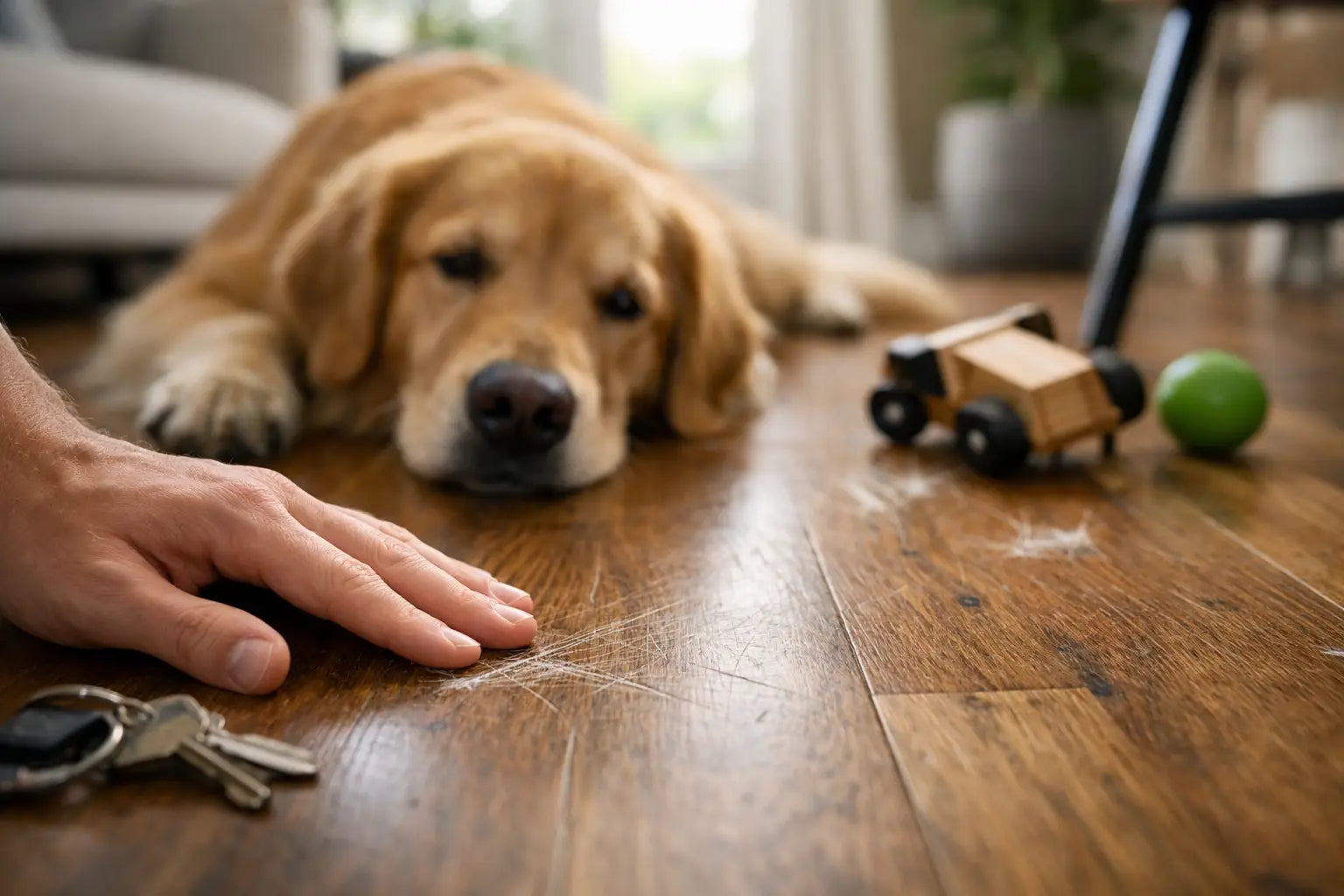
Pets do not automatically rule out wood flooring. Kept nails are less likely to cause damage than grit brought in after a walk, and a quality finish can cope well with normal domestic use. However, large active dogs, muddy garden access and a pale, smooth floor can be a demanding combination. A generous entrance mat and regular vacuuming will have more effect than choosing a slightly harder board alone.
Commercial projects require a more considered specification. A boutique hotel bedroom, a low-traffic retail display area and a busy restaurant entrance have very different demands. In spaces with intense traffic, moving equipment or a high likelihood of spills, porcelain wood-effect tiles may provide the timber look with a more scratch-resistant, easily maintained surface.
How to protect wood flooring from scratches
Good protection is not complicated, but it needs to be built into how the room is used. Start at the door. A quality barrier mat outside and an absorbent mat inside reduce the grit and water that cause much of the day-to-day abrasion. Avoid rubber-backed mats unless the flooring manufacturer confirms they are suitable, as some backings can affect finishes over time.
Fit felt pads to chair, table and sofa legs before furniture is placed in the room. Check and replace them periodically, as worn pads can trap grit. For office chairs, use suitable castors or a protective floor mat. When moving heavy furniture, lift it where possible rather than dragging it across the boards.
Clean regularly with a soft brush vacuum attachment or dry microfibre mop. Grit left on the floor does more damage than a careful cleaning routine ever will. For washing, use only a lightly damp mop and a cleaner designed for the relevant finish. Excess water should never be left on a wood floor, and steam mops are generally unsuitable because heat and moisture can affect the timber and protective layer.
Avoid harsh household chemicals, abrasive pads and general-purpose cleaners that can leave residue or strip protective oils. If a spill occurs, wipe it up promptly. This is particularly important near sinks, patio doors and pet bowls, where repeated moisture exposure can affect joints and edges as well as the finish.
Can scratched wood floors be repaired?
In most cases, yes. The right repair depends on the depth of the mark and the floor's finish. Very fine surface scratches may become far less visible after cleaning with an approved maintenance product. Small localised damage can sometimes be treated with a colour-matched repair kit, oil or lacquer system, provided the product is compatible with the original finish.
For oiled floors, a local clean and re-oil can often refresh a worn area without treating the whole room. Lacquered floors are more difficult to patch invisibly, especially if the coating has aged or changed in colour, but minor marks may still be improved by a flooring professional.
Where a floor has a sufficiently thick real-wood wear layer, sanding and refinishing can restore the surface more comprehensively. This is a long-term advantage of quality engineered and solid timber floors, although it is not an unlimited process. The suitability of sanding depends on the wear-layer thickness, board condition, fitting method and any previous renovation work.
Before using a repair product, test it in an inconspicuous area or ask the supplier or installer for guidance. Applying the wrong oil, polish or lacquer can create a patchier problem than the original scratch.
Choosing a floor that will stay looking its best
A timber floor should be selected for the room, not simply for a sample board under showroom lighting. Think about the amount of natural light, shoe traffic, pets, dining furniture and the level of maintenance the household is genuinely prepared to do. A finish that looks flawless in a quiet bedroom may not be the best choice for a family kitchen opening onto the garden.
Samples are valuable here. Place them in the intended room and look at them in daylight, evening light and beside your chosen cabinetry or paint colours. Ask how the floor is finished, whether it is suitable for underfloor heating, what cleaning regime it needs and whether matching maintenance products are available. Smart Tiles can help bring the flooring, preparation materials and finishing details together before installation begins.
Wood flooring is not a no-maintenance surface, but it offers something many alternatives cannot: the ability to develop an individual, lived-in finish over time. Choose a durable species and forgiving finish, protect it from grit and moving furniture, and the small signs of use can become part of a floor that still looks considered and premium for years.