Hotel Tile Project Specification That Performs
A hotel tile project is rarely won or lost on appearance alone. A surface may look exceptional in a bedroom visual, yet prove unsuitable once luggage wheels, wet footwear, cleaning regimes and continuous guest traffic are part of the picture. The strongest specifications bring together a clear design direction with the technical choices needed to keep public and private spaces looking considered long after opening day.
For hotel owners, designers, contractors and installers, the aim is to select wall and floor finishes that support the brand of the property while remaining practical to order, install and maintain. That means considering the whole system: tile format, finish, slip performance, substrate preparation, adhesive, grout, trims and sensible allowances for cuts and future repairs.
Start a hotel tile project by zoning the building
A hotel does not have one set of flooring requirements. Reception areas, corridors, bathrooms, restaurant spaces, spa facilities and back-of-house rooms each experience different levels of moisture, traffic and cleaning. Zoning the scheme at the outset prevents a decorative decision in one area creating an operational problem later.
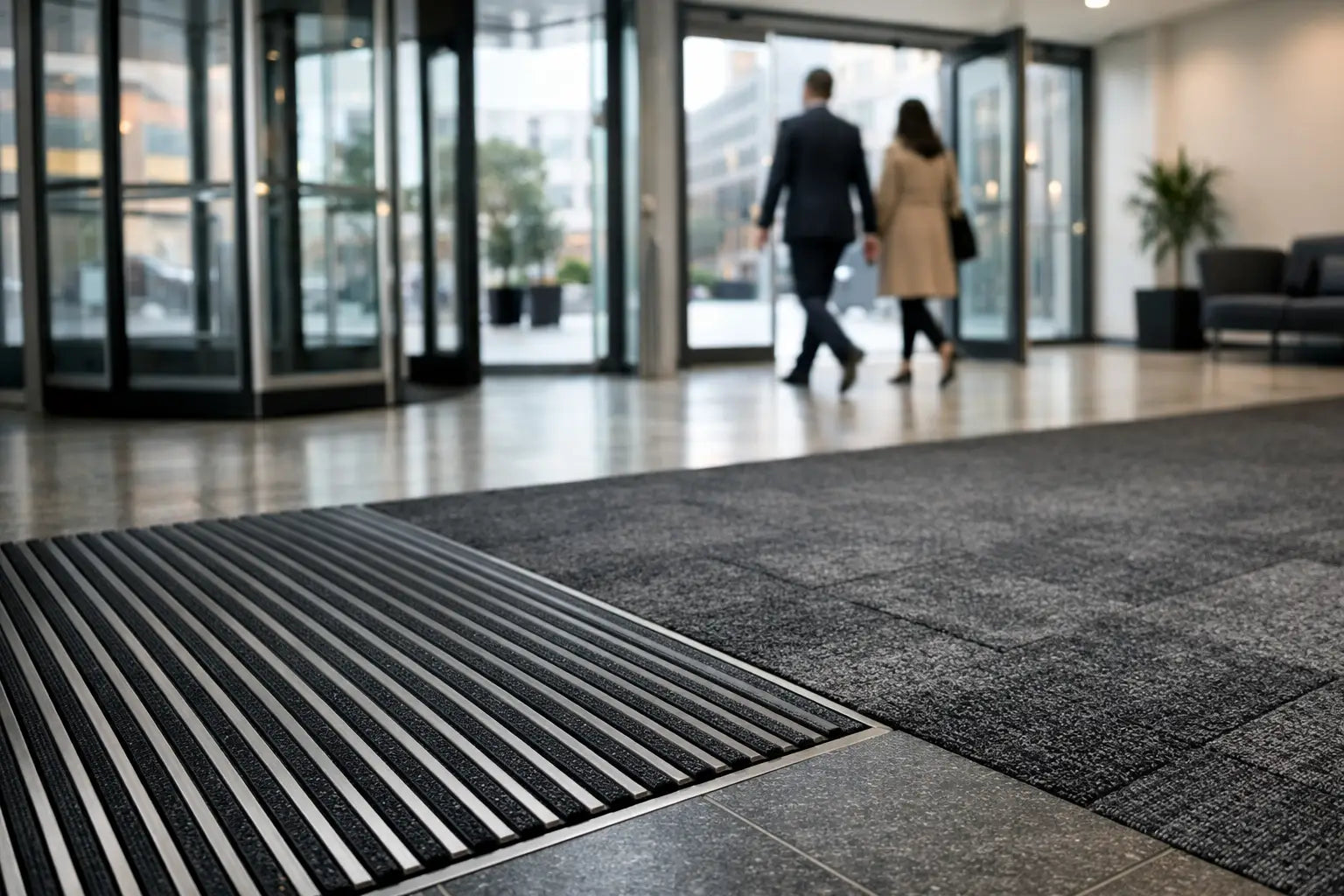
The arrival space often carries the greatest visual responsibility. Large-format porcelain in stone, concrete or terrazzo effects can create a calm, premium first impression, while providing the durability expected in a busy entrance or reception. The finish needs careful consideration. A polished tile can bring depth and reflection to a controlled, dry area, but a matt or structured surface will usually be the more dependable option near entrances where rainwater and grit are likely.
Guest bathrooms demand a different balance. Here, wall tiles may be chosen for colour, texture and ease of cleaning, while the floor must offer suitable grip in a wet environment. Smaller formats or mosaics can be particularly useful in shower areas because the additional grout joints improve underfoot traction and help accommodate falls to drainage. This is one case where a larger tile is not automatically the better design solution.
Corridors, lift lobbies and circulation areas call for hard-wearing finishes that maintain a consistent appearance under heavy footfall. Porcelain is often the practical choice, particularly in rectified formats that allow narrow grout joints and a refined, contemporary look. Back-of-house areas may require a more functional specification, prioritising slip resistance, cleanability and impact resistance over decorative detail.
Choose materials for performance, not just the sample board
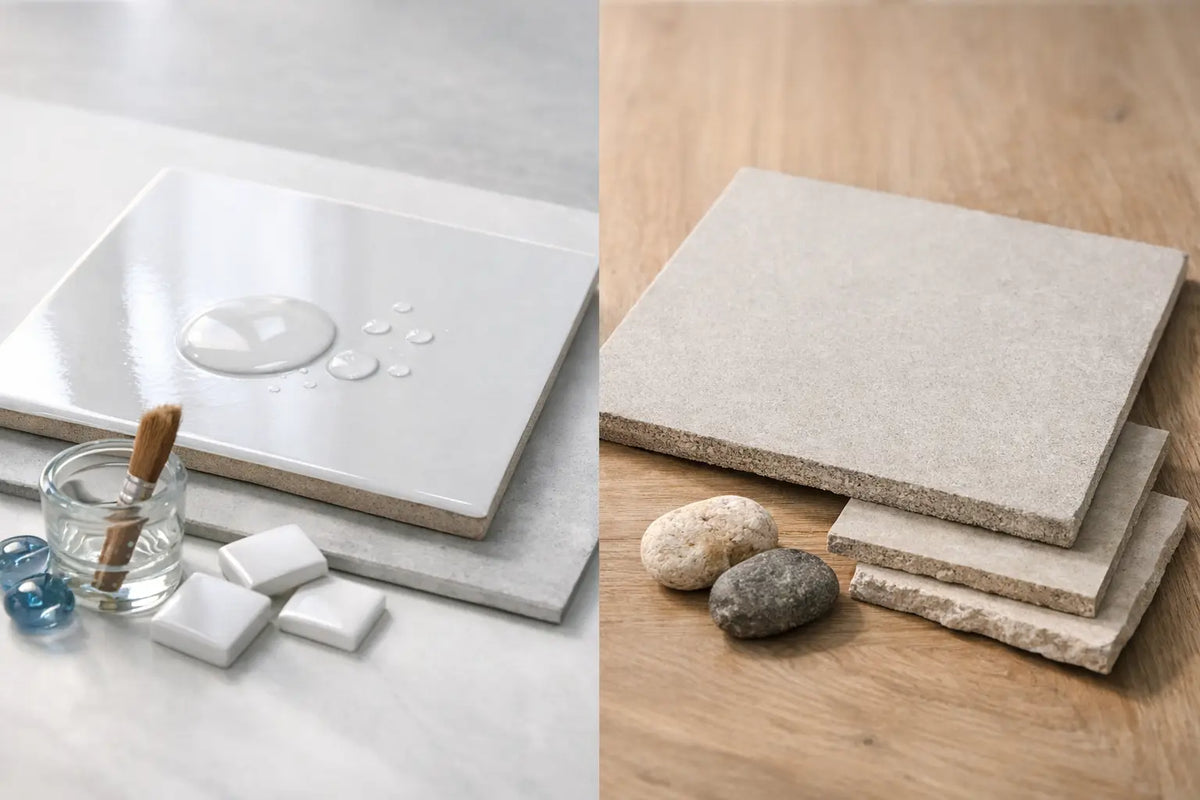
Porcelain is central to many commercial hospitality schemes because it is dense, low-absorption and available in a wide range of realistic stone, marble, timber and concrete effects. It is well suited to both wall and floor applications, making it easier to carry a material story from reception into washrooms, bedrooms and shared facilities.
Ceramic wall tile can be an excellent choice where a lighter body and decorative finish are appropriate. It offers extensive choice in gloss, handmade-look, fluted and patterned designs, particularly for bathrooms, bar fronts and restaurant walls. It should not, however, be assumed suitable for floors or high-impact locations without checking the product specification.
Natural stone brings genuine variation and character, but it also needs a more informed approach. Porosity, sealing requirements, batch variation and ongoing care should be understood before it is specified for a hotel environment. For projects seeking the visual richness of stone with lower maintenance demands, stone-effect porcelain often provides a commercially sensible alternative.
Wood-effect porcelain deserves consideration in locations where the warmth of timber is wanted but water, cleaning chemicals or high foot traffic make real wood less practical. In quieter guestroom spaces, engineered wood flooring may still be the preferred choice for comfort and authenticity. The right answer depends on the room's intended experience, expected wear and maintenance capability.
Check slip resistance in context
Slip resistance should be assessed against the actual conditions of each space, rather than selected as a universal tick-box exercise. A dry bedroom entrance and a poolside changing area do not need the same surface profile. Higher-grip tiles can be appropriate in wet or external-facing zones, but they may also hold more dirt and require more intensive cleaning.
Ask for the relevant technical data early in the process and make sure it aligns with the intended use, cleaning methods and applicable project requirements. A practical specification considers how the tile will perform when wet, contaminated or regularly treated with cleaning products, not simply how it feels underfoot in a showroom.
Scale, format and layout shape the guest experience
Tile size has a direct impact on both appearance and installation planning. Large formats can make reception floors and spacious bathrooms feel more expansive, with fewer joints interrupting the surface. They also require a suitably flat substrate, competent handling and the correct adhesive coverage. On a large commercial scheme, these requirements need to be reflected in programme planning and labour capability.
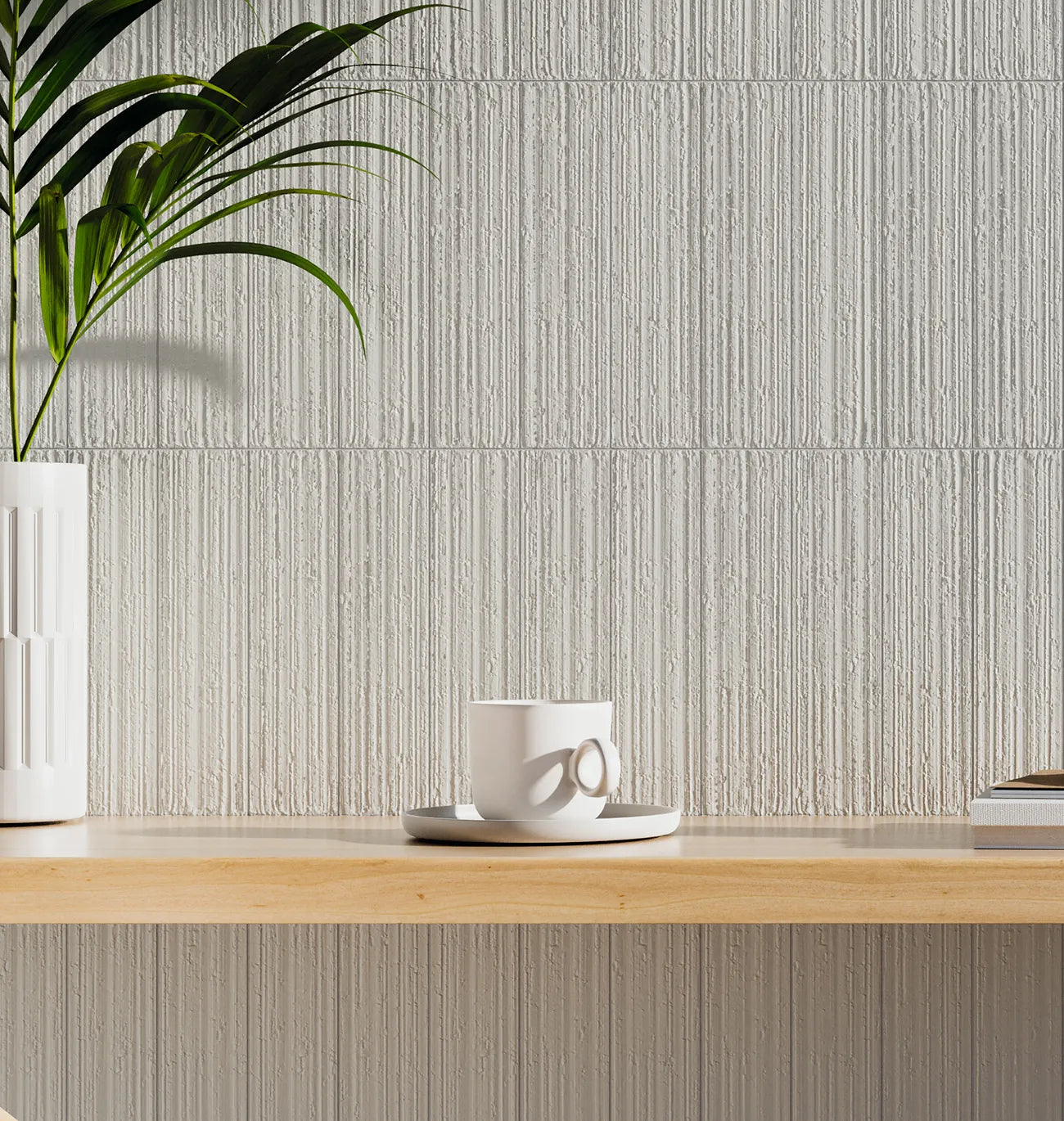
Smaller tiles can introduce rhythm, colour and texture. Mosaics, kit-kat formats and decorative ceramics are effective for feature walls, shower enclosures and bar details. They involve more joints, so grout selection and cleaning expectations matter more. A light grout can make a design feel crisp, while a mid-tone or darker grout may be more forgiving in busy areas.
Layout should be resolved before tiles are ordered. Consider where full tiles will begin and end, how cuts will land at doorways and thresholds, and whether a feature wall aligns with basins, mirrors, joinery or lighting. A centre line that works on a drawing may need adjustment once sanitaryware, access panels and service penetrations are confirmed.
It is also wise to agree the direction of veining, planks or patterned repeats. Marble-effect porcelain, for example, may be laid with a book-matched arrangement for a statement wall, while a quieter random layout may better suit a large floor. These choices affect ordering, installation time and the final visual result.
Specify the installation system alongside the tile
The tile is only one part of a successful hotel finish. The adhesive must be suitable for the tile type, format, substrate and conditions of use. Large-format porcelain, underfloor heating, timber-based backgrounds and wet areas can all require specific preparation and compatible fixing materials.
Substrate condition is especially significant on refurbishment projects. Existing floors may need levelling, decoupling or strengthening before tiling begins. Walls may require tile backer boards in wet zones rather than relying on unsuitable backgrounds. Rushing this stage can lead to cracked tiles, failed grout joints or movement issues that are expensive to remedy once rooms are occupied.
Grout should be selected for more than colour. Consider joint width, moisture exposure, staining risk and the cleaning routine. In bathrooms, kitchens and spa settings, a grout with suitable water and stain resistance supports easier maintenance. Matching silicone or sealant is equally important around sanitaryware, internal corners and changes of plane, where grout alone cannot accommodate movement.
Trims deserve early attention too. They protect exposed edges, create a neat transition between materials and can become a deliberate design detail in brass, black, stainless steel or colour-matched finishes. Leaving trims until the final order stage risks compromises in profile, finish or availability.
Quantities, samples and lead times reduce risk
Commercial tile projects need accurate measurement and a realistic allowance for cuts, breakages, pattern matching and spares. The required percentage varies with tile size, room shape and layout complexity. A straightforward rectilinear floor may need a modest allowance, whereas diagonal layouts, mosaics and heavily cut bathroom schemes need more.
Ordering an agreed quantity of spare tiles from the same production batch is a sensible safeguard. Hotels remain live environments, and having matching material available for future repairs avoids the difficulty of sourcing a later batch with slight tonal variation. Batch consistency should also be checked before installation begins, particularly with products designed to show shade variation.
Samples are useful for judging colour and texture, but they should be viewed in the intended lighting wherever possible. Warm decorative lighting, daylight from glazed entrances and bathroom downlights can all alter the perceived tone of a tile. For larger schemes, a sample panel or trial area can confirm layout, grout colour and finish before the full installation proceeds.
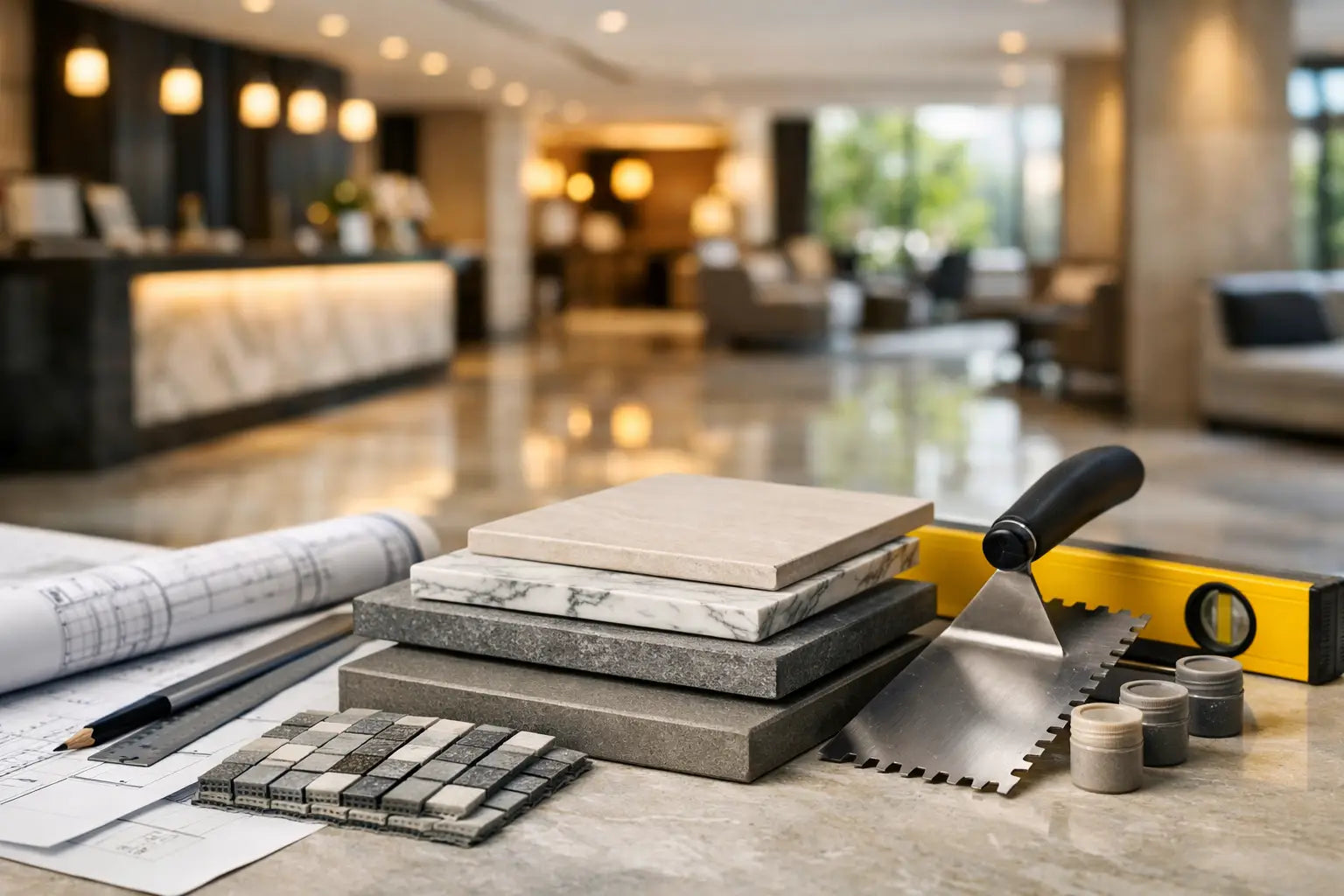
Smart Tiles can support this process with design-led European tile collections, samples, coverage guidance and the installation materials needed to complete a specification in one coordinated order. This helps keep product selection aligned with practical site requirements rather than treating the finish and fixing system as separate purchases.
A well-planned hotel surface scheme gives guests the impression of effortless quality, but that impression comes from detailed decisions made well before the first tile is fixed. Begin with the conditions of each space, test the visual choices against real maintenance demands, and give the installer a complete, clearly defined system to work with.