Article: Glazed Versus Unglazed Porcelain: Which Fits?
Glazed Versus Unglazed Porcelain: Which Fits?
A pale stone-look floor can appear beautifully calm in a showroom, yet its finish will affect how it feels underfoot, how easily it cleans and how it wears in a busy entrance. That is the practical question behind glazed versus unglazed porcelain. Both can deliver a premium, durable surface, but they achieve their appearance and performance in different ways.
For a bathroom wall, a polished glazed porcelain may be exactly right. For a high-traffic commercial lobby or an exterior threshold, an unglazed or purpose-designed grip porcelain may offer a more suitable specification. The best choice is not simply about which option is tougher. It is about matching the finish to the room, expected traffic, cleaning regime and design intent.
What is glazed porcelain?
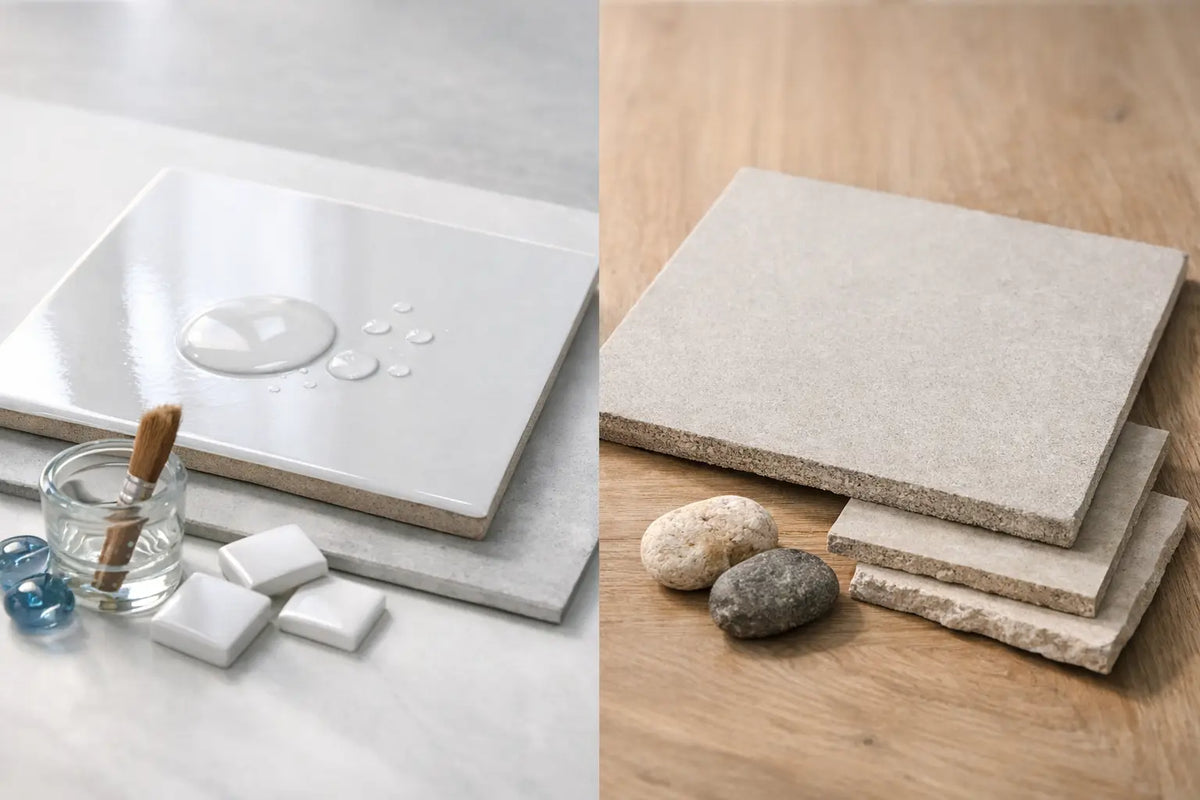
Glazed porcelain has a porcelain body with a decorative glaze applied to its face before firing. This surface layer is what creates the tile's visible colour, pattern and finish. It allows manufacturers to produce convincing marble, concrete, timber, terrazzo and decorative designs, including subtle variation between tiles.
The glaze can be matt, satin, polished, structured or high gloss. A glazed porcelain tile is therefore not automatically shiny or slippery. Many contemporary matt porcelain collections are glazed, with a refined low-sheen surface designed for everyday floors and walls.
Because the design sits in the glaze, glazed porcelain offers exceptional creative choice. It is often the preferred option where the visual surface is central to the scheme, such as a statement bathroom, kitchen splashback, feature wall or design-led open-plan floor.
What is unglazed porcelain?
Unglazed porcelain has no separate decorative glaze on its surface. Its colour and character run through the body of the tile, which is why it is sometimes described as through-body, full-body or colour-bodied porcelain. The finished face is created from the tile material itself, often with a natural matt, honed, textured or structured appearance.
This construction makes unglazed porcelain particularly practical where surface wear is a concern. If a small chip occurs, it is usually less visually noticeable than it might be on a contrasting glazed design, because the body colour is closer to the face.
Unglazed porcelain is widely specified for hard-working interior floors, retail spaces, hospitality settings, circulation areas and selected exterior applications. It tends to suit architectural schemes that call for a restrained, mineral look rather than a highly decorative printed pattern.
Glazed versus unglazed porcelain: the key differences
The most meaningful differences are visual flexibility, abrasion behaviour, grip and maintenance. Neither type is universally better.
Glazed porcelain usually gives you more design freedom. Modern digital printing can recreate veining, grain, texture and tonal movement with remarkable realism, making it well suited to projects where the floor or wall must carry a particular stone or timber effect. A quality glazed porcelain is also highly stain resistant and straightforward to maintain because its surface is closed and non-porous.
Unglazed porcelain often has the advantage in areas exposed to sustained footfall, grit or mechanical wear. Its through-body composition can be more forgiving of minor damage, particularly in commercial environments. However, its more textured finishes may hold dirt more readily than a smooth glazed surface, so cleaning requirements should be considered before specifying it for a domestic kitchen or hospitality floor.
It is also worth separating finish from construction. A matt glazed tile can provide excellent practicality, while an unglazed tile can be smooth enough to be unsuitable for wet zones. Always assess the individual product rather than making a decision based on the word glazed alone.
Appearance and design options
For high-end residential interiors, glazed porcelain usually provides the broadest palette. Large-format marble effects can create a calm, continuous bathroom scheme without the sealing and variation associated with natural stone. Timber-effect porcelain can bring warmth to a kitchen or entrance hall while offering better resistance to water and day-to-day wear than many real wood finishes.
Glazed decorative tiles also work particularly well on walls. Their printed surfaces can introduce colour, gloss, relief or pattern without demanding the heavy-duty abrasion resistance required of a floor tile. In these settings, an unglazed product may be visually understated by comparison.
Unglazed porcelain has its own design strength. It delivers a more elemental, monolithic feel that works well with contemporary architecture, commercial interiors and schemes using concrete, metal, timber or natural stone. The colour is often consistent and grounded, with a finish that feels purposeful rather than ornamental.
Wear, chips and busy areas
All porcelain tile is dense, hard wearing and suitable for demanding applications when the correct product is chosen. Yet the way each tile shows wear can differ.
On a glazed porcelain tile, the decorative face is the visible wear layer. Manufacturers provide suitability ratings for floor use, and these should be checked carefully for entrances, kitchens, shops, restaurants and other busy locations. A tile specified for a wall should never be assumed suitable for a floor simply because it is porcelain.
With unglazed porcelain, colour through the body can make minor edge damage less obvious. This is useful in areas where grit, wheeled loads, luggage, pushchairs or frequent commercial traffic are expected. Proper entrance matting remains essential, however. Most premature wear on any floor comes from abrasive dirt being walked across the surface, not from ordinary foot traffic alone.
For residential hallways, either option can work well. A glazed stone-effect porcelain offers a softer decorative finish, while an unglazed or structured porcelain may be preferable where muddy footwear, pets and regular outdoor access are part of daily life.
Slip resistance: look beyond matt or textured
Slip resistance should be assessed as a performance requirement, not judged by eye. A glossy surface may be ideal for a wall but inappropriate for a shower floor. Equally, a heavily textured tile can provide valuable grip but need more careful cleaning.
For bathrooms, utility rooms, entrances, commercial washrooms and exterior spaces, ask for the tile's stated slip-resistance information and specify it according to the use of the area. Factors such as water, soap, grease, footwear, gradients and cleaning methods all affect real-world slip risk.
A structured glazed porcelain can be an excellent choice where grip and a decorative surface are both needed. Unglazed porcelain is also available in specialist grip finishes, particularly for commercial and outdoor projects. In either case, grout joints, falls to drainage and a suitable installation system are part of the safety picture.
Cleaning and maintenance requirements
Both glazed and unglazed porcelain are far less demanding than many natural stone surfaces. They do not generally require sealing, provided the manufacturer does not state otherwise. Regular vacuuming or sweeping to remove grit, followed by cleaning with an appropriate pH-neutral product, is usually sufficient.
Smooth glazed surfaces are often the easiest to wipe down, which makes them popular for bathroom walls, kitchen floors and splashbacks. Avoid leaving detergent residue behind, as this can create a dull film or reduce slip resistance.
Textured unglazed porcelain may require a brush, scrubber dryer or more frequent cleaning in commercial settings, especially where the tile has a pronounced surface profile. This is not a drawback if the finish is right for the project, but it should be planned for. Choosing a pale, deeply textured floor for a busy café entrance without considering cleaning access can create unnecessary maintenance work.
Where each finish works best
Glazed porcelain is often the natural fit for walls, bathrooms, kitchens, living spaces and design-focused residential floors. It gives homeowners and designers access to the widest selection of effects and finishes, from soft limestone looks to dramatic bookmatched marble.
Unglazed porcelain is particularly strong in high-traffic floors, commercial settings, practical entrances and projects where a through-body finish is valued. It can also be a sensible choice for exterior areas when the tile is specifically rated for outdoor use, frost resistance and the required grip level.
For a large open-plan home, the decision may come down to atmosphere. A glazed matt porcelain can bring nuanced pattern and warmth across a kitchen-dining space. An unglazed architectural porcelain can create a quieter, more uniform floor with strong long-term practicality.
Specification details that should not be overlooked
Finish is only one part of a successful tile specification. Confirm that the tile is rated for its intended wall or floor application, then consider slip resistance, tile thickness, size, edge detail and compatibility with underfloor heating where relevant. Large-format tiles may need especially flat substrates and careful handling, while external installations require appropriate falls, movement provision and frost-suitable materials.
The adhesive, grout, trims and preparation products should be selected for the tile, background and environment, rather than treated as an afterthought. Ordering a sample is valuable too. It lets you see the true tone and texture in the project's own light, and feel how a matt, polished or structured finish will work day to day.
At Smart Tiles, this is where product selection and installation planning come together. A considered finish choice, accurate coverage allowance and compatible fixing materials help protect both the appearance of the scheme and the programme on site.
Choose the porcelain that supports the way the room will actually be used. The most successful surface is one that still looks considered after wet shoes, busy mornings, cleaning day and years of everyday life.