Article: A Practical Guide to Engineered Oak Grades
A Practical Guide to Engineered Oak Grades
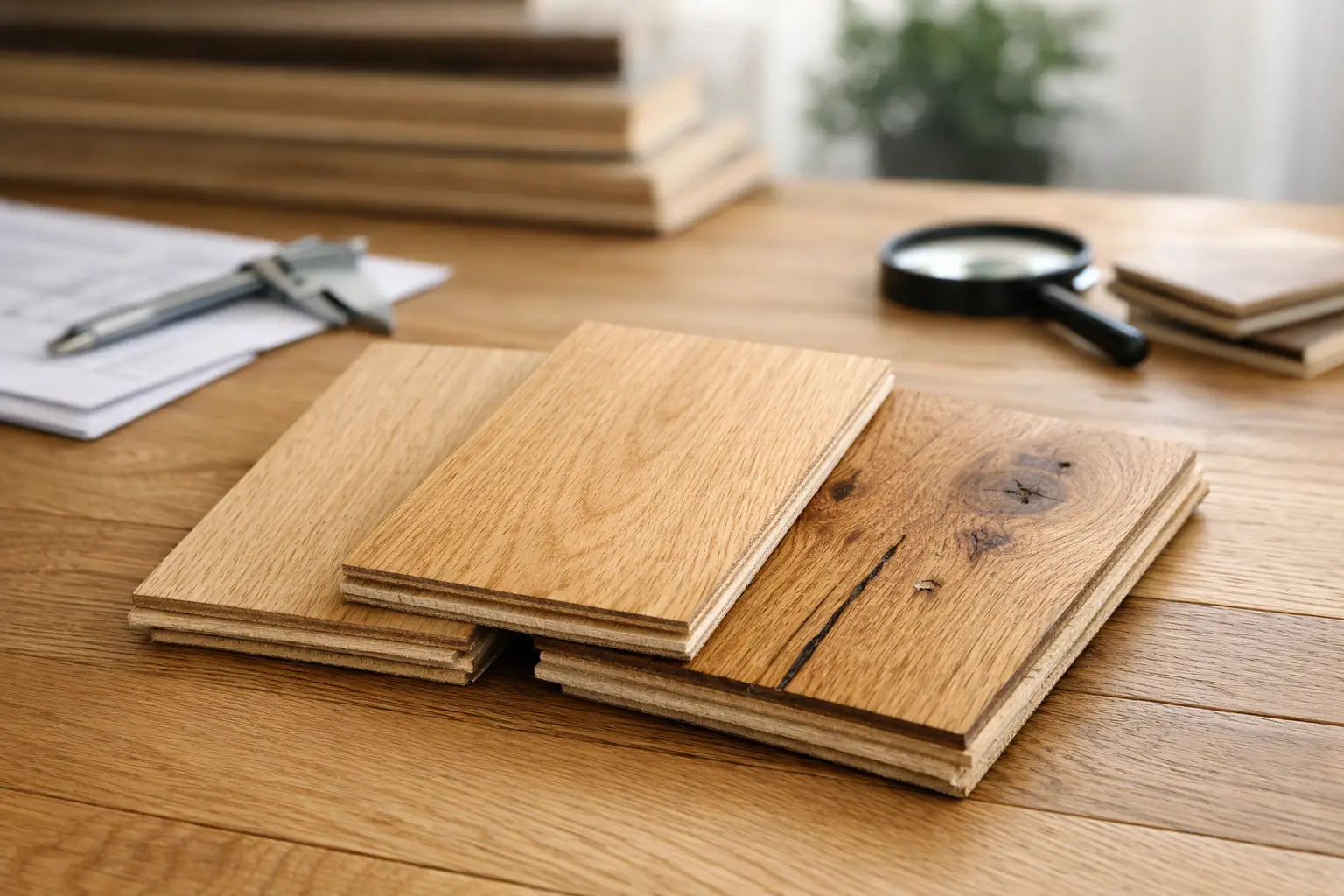
A pale oak floor can look calm and contemporary in a large open-plan kitchen, while a board with knots, filled splits and lively grain can give a period hallway the character it needs. Both may be genuine oak, both may be made to the same construction standard, and both can be suitable for busy homes. The difference is the grade. This guide to engineered oak grades will help you compare the visual character of boards before selecting a floor for your project.
What engineered oak grades actually mean
An engineered oak grade describes the natural appearance of the oak veneer on the face of each board. It is not a universal measure of quality, durability or strength. A rustic grade is not an inferior product, and a prime grade is not automatically better for every interior. Grades simply indicate how much natural variation you should expect in the timber.
Engineered oak flooring is constructed with a real oak wear layer bonded to a stable multi-layer plywood or timber base. This construction helps reduce movement compared with solid wood, making it a practical choice for many domestic and commercial settings. The grade applies to the visible oak layer, while overall performance also depends on the wear-layer thickness, board construction, finish, fitting method and the conditions within the room.
Grade names are not completely standardised across every manufacturer. One supplier's natural grade may be close to another's select grade, for example. Always review the product imagery, order samples where available and check the written description rather than relying on a name alone.
The main engineered oak flooring grades
Prime grade oak
Prime grade, sometimes called clear grade, has the cleanest and most consistent appearance. It is selected for minimal knots, fewer colour changes and a more even grain pattern. Small marks or subtle tonal movement can still occur because it remains a natural timber product, but the overall effect is refined and uniform.
This grade works particularly well in contemporary interiors where the floor is intended to create a quiet, uninterrupted backdrop. It can suit high-end flats, minimalist kitchens, boutique retail spaces and formal living areas. Wider planks in prime oak can look especially elegant, although the reduced variation means everyday scuffs and dents may be more visible over time than they would be on a characterful board.
Prime grade is usually the most selective option and may carry a higher price. It is worth considering when a clean, controlled aesthetic is central to the design, rather than simply assuming it is the right choice for every premium scheme.
Select grade oak
Select grade offers a polished appearance with more natural warmth than prime oak. Boards may include small, sound knots, gentle colour variation and occasional mineral streaking, but pronounced defects are generally limited. The grain tends to be relatively even, creating a balanced floor that still feels recognisably natural.
For many residential projects, select grade sits in the useful middle ground between uniformity and character. It complements shaker kitchens, modern extensions, bedrooms and reception rooms where homeowners want oak's authenticity without a heavily rustic finish. It is also a versatile option for designers working with mixed materials such as painted joinery, stone-effect porcelain and brushed metal details.
Natural grade oak
Natural grade is often the broadest and most versatile category. Expect a wider range of grain patterns, colour tones, knots and occasional filled features. The variation is intentional: each board contributes to a floor that looks individual rather than factory-uniform.
A natural-grade floor can work across contemporary and traditional schemes because it has enough movement to feel warm but does not usually look excessively distressed. It is a popular choice for family kitchens, hallways and open-plan living spaces, where a little tonal variation helps the floor remain visually forgiving as the room is used.
The exact level of character varies by collection. Some natural grades contain only modest knots, while others have more prominent marking and filler. A sample should be treated as an indication of colour, texture and finish, not a promise that every board will match it precisely.
Rustic grade oak
Rustic grade celebrates the features formed as oak grows. Larger knots, open or filled splits, colour variation, sapwood, lively grain and natural checking may all be visible. These details give the floor depth and a more relaxed, lived-in feel.
This grade is well suited to renovated cottages, country homes, barn conversions and hospitality spaces seeking warmth and personality. It can also create an effective contrast in a modern room with simple cabinetry and clean architectural lines. A smoked, brushed or oiled rustic oak often brings out these features even further.
Rustic boards are practical for active households because the natural variation can make minor marks less noticeable. That does not mean they require no care. A suitable maintenance routine is still essential, particularly in entrance areas, kitchens and properties with pets. But from a visual perspective, the floor is designed to develop character rather than remain perfectly uniform.
ABC and mixed grades
Some engineered oak collections use lettered grading, often described as ABC, ABCD or mixed grade. These ranges contain boards from more than one visual selection, resulting in greater variation across a pack. You may see clearer boards alongside character boards, with knots and colour changes distributed naturally throughout the floor.
Mixed grades can offer excellent value and a convincingly organic result over a large area. They are often a sensible specification for commercial projects, large residential ground floors and spaces where a deliberately consistent look would feel too formal. The key is to establish the intended appearance before installation, as installers cannot remove every character board without affecting quantities and pack yield.
Grade is only one part of the specification
Two floors in the same grade can look very different. Board width, length, surface treatment and colour all influence the finished result. A rustic 220 mm plank will show knots and grain more prominently than a narrower board, while a matt lacquer can create a quieter look than a deeply brushed hardwax oil.
The finish also affects maintenance. Lacquered engineered oak provides a protective surface that is straightforward to clean, making it a practical option for many busy interiors. Oiled finishes have a more natural, tactile appearance and can allow for localised maintenance, but they need the correct cleaning products and periodic re-oiling. Neither is universally better - the right choice depends on the desired look, expected traffic and willingness to maintain the floor.
Wear-layer thickness matters if future sanding is a consideration. A thicker oak wear layer may allow more refinishing over the life of the floor, although not every floor will need or benefit from sanding. Check the product specification rather than assuming all engineered boards offer the same refurbishment potential.
Choosing the right oak grade for each room
Start with the atmosphere you want the room to create. Prime or select grades are usually the most effective choice where calm, consistency and restrained detailing are the priority. Natural grade provides a flexible all-round appearance, while rustic and mixed grades are ideal where texture, warmth and visible timber character are part of the scheme.
Then consider light and room size. Large windows can make colour and grain variation more noticeable, particularly on wide boards. That can be beautiful, but it should be intentional. In smaller or darker rooms, lighter oak shades and less dramatic grading can help create a more open feel, although a richly characterful floor can add welcome depth in a hallway or snug.
For kitchens, dining areas and entrances, think beyond grade to practical protection. Use entrance mats to limit grit, wipe up spills promptly and protect the floor from standing water. Engineered oak is not generally the first choice for wet-room environments, where a suitable porcelain tile may offer greater reassurance. For underfloor heating, confirm that the specific engineered oak product is approved for use with the system and follow the recommended temperature limits and installation guidance.
View samples as part of the decision
A sample is valuable because oak changes significantly under different lighting. Place it beside cabinetry, paint colours, tiles and upholstery, then view it in daylight and under evening lighting. If you are choosing a character grade, ask to see a broader selection of boards or product imagery so you can assess the likely range of knots and tones.
When calculating quantities, allow for cutting waste and retain a small number of spare boards for future repairs. Before fitting, boards should be checked, sorted and blended from several packs to achieve an even distribution of shade and character across the room. This is particularly important with natural, rustic and mixed grades.
Smart Tiles can help homeowners, designers and trade customers compare samples, finishes and installation requirements before an engineered oak floor is specified. The best grade is the one that supports the wider scheme, suits the level of use and still looks considered once real life begins to leave its mark.