Article: Five Premium Hallway Flooring Ideas That Last
Five Premium Hallway Flooring Ideas That Last
A hallway has to work harder than almost any other room. It receives wet shoes, grit, dogs, bags and repeated daily traffic, yet it is also the first interior space guests see. These five premium hallway flooring ideas balance that demanding brief with the finish, scale and material quality expected in a considered renovation or high-end specification.
The right choice depends on how the entrance is used. A busy family home may prioritise a dense porcelain surface and effective matwell, while a period property may suit the character of stone or parquet. For commercial entrances, slip resistance, cleaning routines and a well-planned transition into adjoining spaces deserve just as much attention as the tile design.
Five premium hallway flooring ideas for considered interiors
1. Large-format stone-effect porcelain
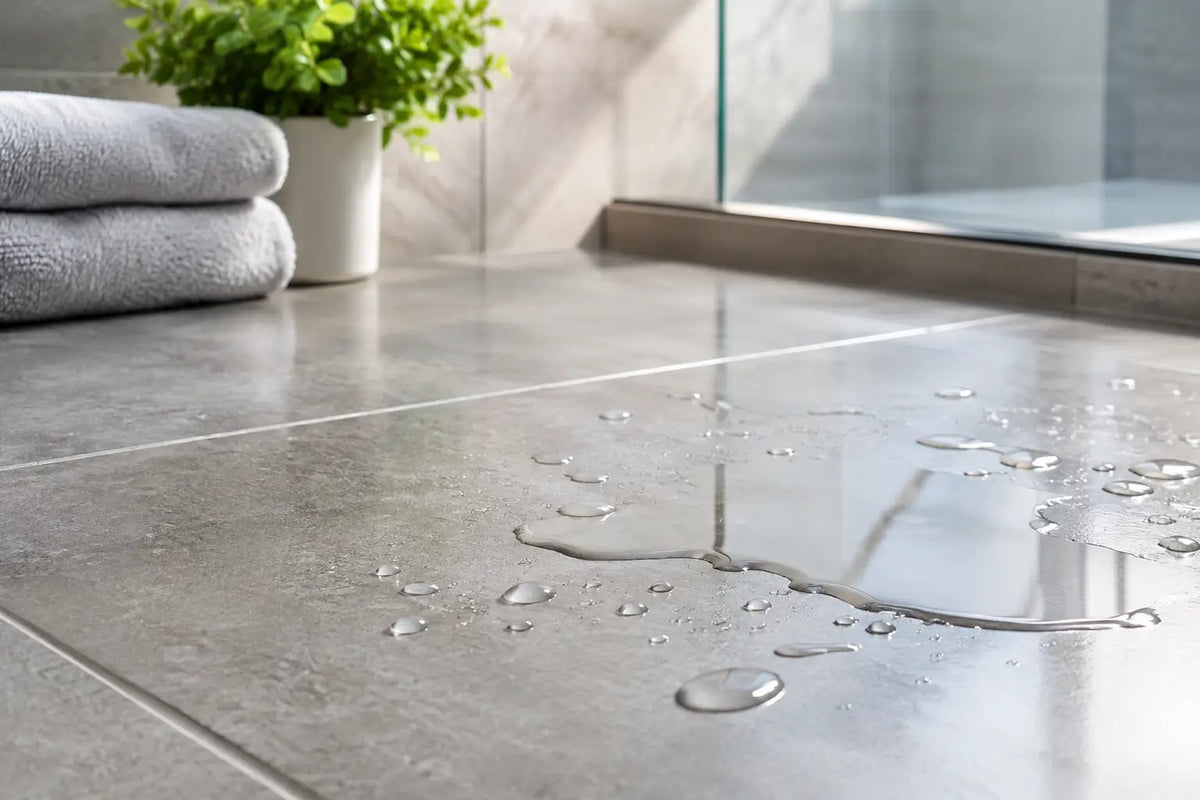
Stone-effect porcelain is one of the most versatile choices for a premium hallway. It gives the visual depth of limestone, slate, travertine or concrete while offering a hard-wearing, low-absorption surface that is suited to muddy footwear and regular cleaning. Modern European porcelain collections often use varied faces and nuanced shading, helping the floor avoid a repetitive printed appearance.
Large-format tiles create a particularly calm, architectural result. Fewer grout joints allow the hallway to feel broader and less interrupted, which can be valuable in narrow entrance corridors. A warm limestone effect works well with timber joinery and painted panelling, while pale concrete tones support a more contemporary scheme.
Format needs to be chosen with the room rather than simply selected at the largest available size. Very long, narrow hallways may benefit from rectangular tiles laid across the width, which can visually reduce the tunnel effect. In older homes, check the subfloor carefully before specifying large tiles. Flatness is essential, and appropriate preparation boards or levelling compounds may be required to prevent lipping and support a durable finish.
Choose a matt or natural surface for an entrance. Polished porcelain can look striking, but may show water marks and be less practical where rain is regularly brought indoors. A colour-matched grout will keep the overall effect refined, although a slightly deeper grout shade can be the better long-term choice in a heavily used family hallway.
2. Natural stone with authentic variation
For projects where natural character is central to the design, stone flooring brings a quality that manufactured materials cannot fully replicate. Honed limestone, brushed sandstone and tumbled marble each offer distinctive veining, fossils, tonal movement and texture. This makes stone especially effective in country houses, period renovations and entrance halls with generous natural light.
Limestone is often favoured for its restrained colour palette and ability to sit comfortably beside both traditional and contemporary interiors. Sandstone offers more texture and can be a practical option where a little extra grip is useful. Marble makes a strong statement in formal hallways, particularly in geometric layouts, but it needs an owner who is comfortable with a surface that develops character over time.
Natural stone requires realistic expectations. It should be sealed using a suitable impregnating sealer, and resealed as part of ongoing maintenance where needed. Acidic or harsh cleaning products should be avoided, especially on calcareous stones such as limestone and marble. A professional installer will also allow for the stone's natural variation during dry laying, arranging tones and veining to create a balanced floor rather than opening boxes and fitting in sequence.
Underfloor heating is compatible with many stone floors and can make a substantial difference to the feel of an entrance in winter. The heating system, adhesive, grout and movement joints must all be specified as a complete system. This is not an area to compromise on materials: the performance of a premium stone floor depends as much on the installation build-up as on the slabs themselves.
3. Porcelain encaustic and patterned tiles
A patterned porcelain floor gives a hallway an immediate focal point. It is particularly useful in compact spaces where the floor is one of the few uninterrupted design surfaces, or in Victorian and Edwardian properties where an entrance needs to acknowledge the building's original character without relying on a delicate heritage material.
The best designs have enough complexity to feel decorative, but a palette controlled enough to live with for years. Black, soft white and grey patterns are enduring choices, while clay, sage, blue and warm cream can introduce more personality. Porcelain versions of encaustic designs provide the pattern and colour of traditional cement tiles with easier day-to-day care and greater suitability for wet outer entrances.
Scale is crucial. A small-format tile can suit a vestibule or a defined threshold zone, whereas a very busy pattern may overwhelm a long, narrow corridor. One effective approach is to use patterned tiles in the entrance area, then transition to a plainer porcelain or engineered wood finish beyond. The change should be planned around a logical line, such as an internal doorway or the end of a coat storage run, rather than appearing accidental midway through the space.
Grout is part of the design here. A neutral mid-tone grout generally supports the pattern and is more forgiving than brilliant white. Before fixing, view a full sample area under the actual hallway lighting. Warm bulbs, cool daylight and dark painted walls can all change how a patterned floor reads.
4. Engineered wood in plank or parquet designs
Engineered wood brings warmth and softness to a hallway, making it a strong option for homes where a continuous timber floor is wanted from entrance through to living spaces. Unlike solid wood, engineered boards have a layered construction that provides better dimensional stability, although they still require a dry, suitably prepared subfloor and careful moisture testing before installation.
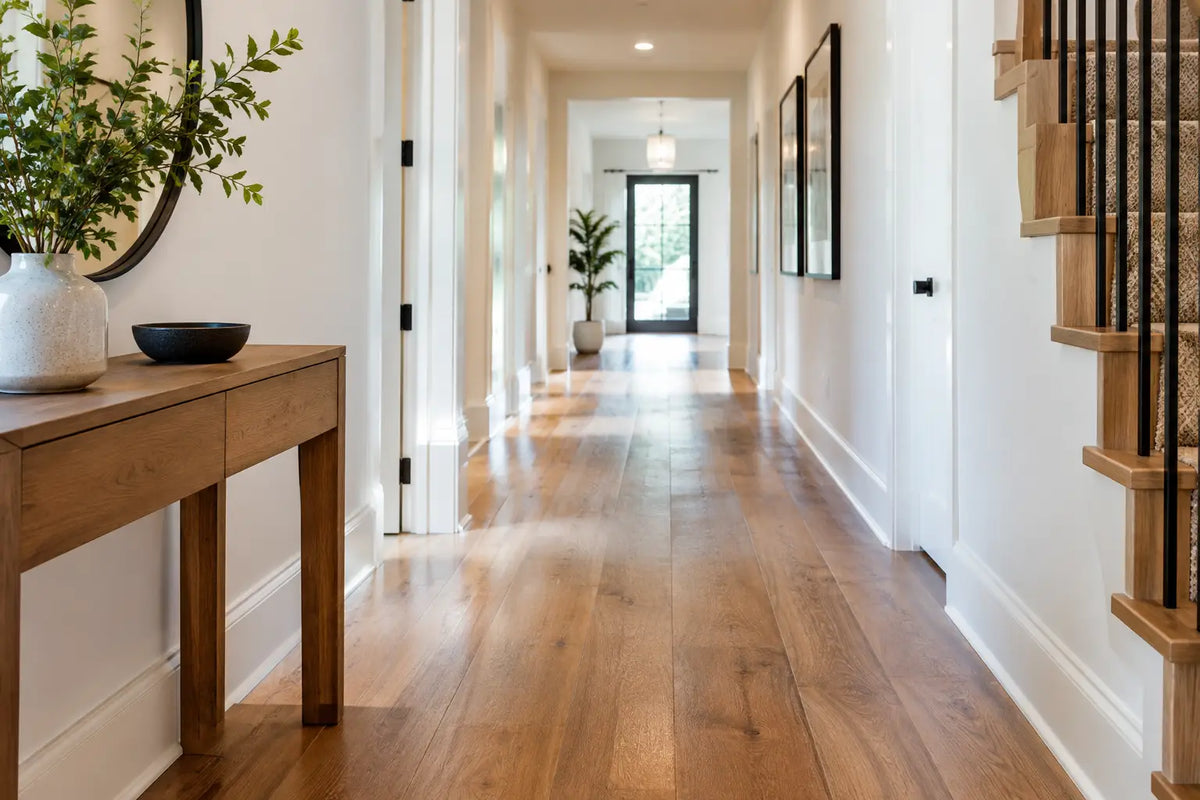
Wide oak planks suit contemporary homes and can make a hallway feel generous and relaxed. A brushed, matt lacquered or hardwax-oiled finish helps conceal minor marks and retains a natural appearance. Smoked oak, nut-brown tones and richer stains can add depth to a grander entrance, but may make a small or low-light hallway feel enclosed. Lighter oak shades tend to be more flexible with changing wall colours and furnishings.
Parquet, including herringbone and chevron, has a more formal rhythm and is well suited to period homes, boutique hospitality spaces and design-led refurbishments. Herringbone is often the more practical specification because it creates less waste and is generally more straightforward to set out than chevron. The visual reward is considerable, but precision matters: central lines, perimeter cuts and threshold details need to be established before the first board is fixed.
Wood is not always the right choice directly inside an exposed front door. Standing water and trapped grit can shorten the life of any timber finish. A recessed matwell, a well-sized washable mat and a porcelain or stone threshold zone can make the arrangement much more resilient. For underfloor heating, select an engineered board approved for the system and follow the manufacturer's limits on surface temperature and installation method.
5. Terrazzo-look porcelain for contemporary character
Terrazzo-look porcelain gives a hallway a confident, design-led finish without the thickness, cost and maintenance considerations of poured terrazzo. Its flecked pattern can combine several colours within one surface, making it useful for tying together painted joinery, metalwork and adjacent room finishes. It works especially well in modern extensions, flat lobbies and hospitality-inspired residential schemes.
A pale base with fine mineral-style chips feels clean and spacious, while darker terrazzo effects can create a more dramatic entrance. Larger tiles provide a modern, expansive appearance; smaller formats can be used to form borders, framed entrance panels or a practical matwell surround. Because the pattern disguises small traces of dust and everyday traffic, it is a sensible choice for active households as well as visually ambitious projects.
Look beyond the tile face when comparing collections. Check the finish underfoot, the rectification of the edges, the number of design variations and whether matching skirtings or complementary plain tiles are available. These details affect how resolved the finished hallway feels. A high-quality porcelain installation also needs a suitable flexible adhesive, grout, movement provision and substrate preparation, particularly over timber floors or heated screeds.
Selecting a floor that performs beyond the first impression
A premium hallway floor should be selected as part of a wider entrance specification. Consider the external approach, whether there is a covered porch, the size of the matting area and how the new floor meets existing rooms. A beautiful material can be undermined by an awkward height difference, poorly placed trim or insufficient allowance for door clearance.
Samples are invaluable because flooring is viewed from above and across changing light throughout the day. Place samples beside wall colours, timber finishes and front-door paint, then look at them after dark with the intended lighting switched on. For tiles, confirm the batch before installation and order enough to cover cuts, wastage and a small quantity for future repairs. The exact allowance varies with tile format, room shape and laying pattern, but patterned, diagonal and parquet layouts usually require more than a straightforward grid.
For homeowners and trade buyers alike, choosing the floor alongside the adhesive, grout, trims, sealers and preparation products reduces avoidable delays on site. Smart Tiles can support that process with design-led tile and wood flooring options, samples and the practical materials needed to complete the specification properly.
The most successful hallway floor is not simply the one that photographs well on day one. It is the surface that still feels composed after a wet winter, accommodates the way the property is actually used and gives every arrival a clear sense of the home's quality.