Choosing Porcelain Patio Tiles for UK Gardens
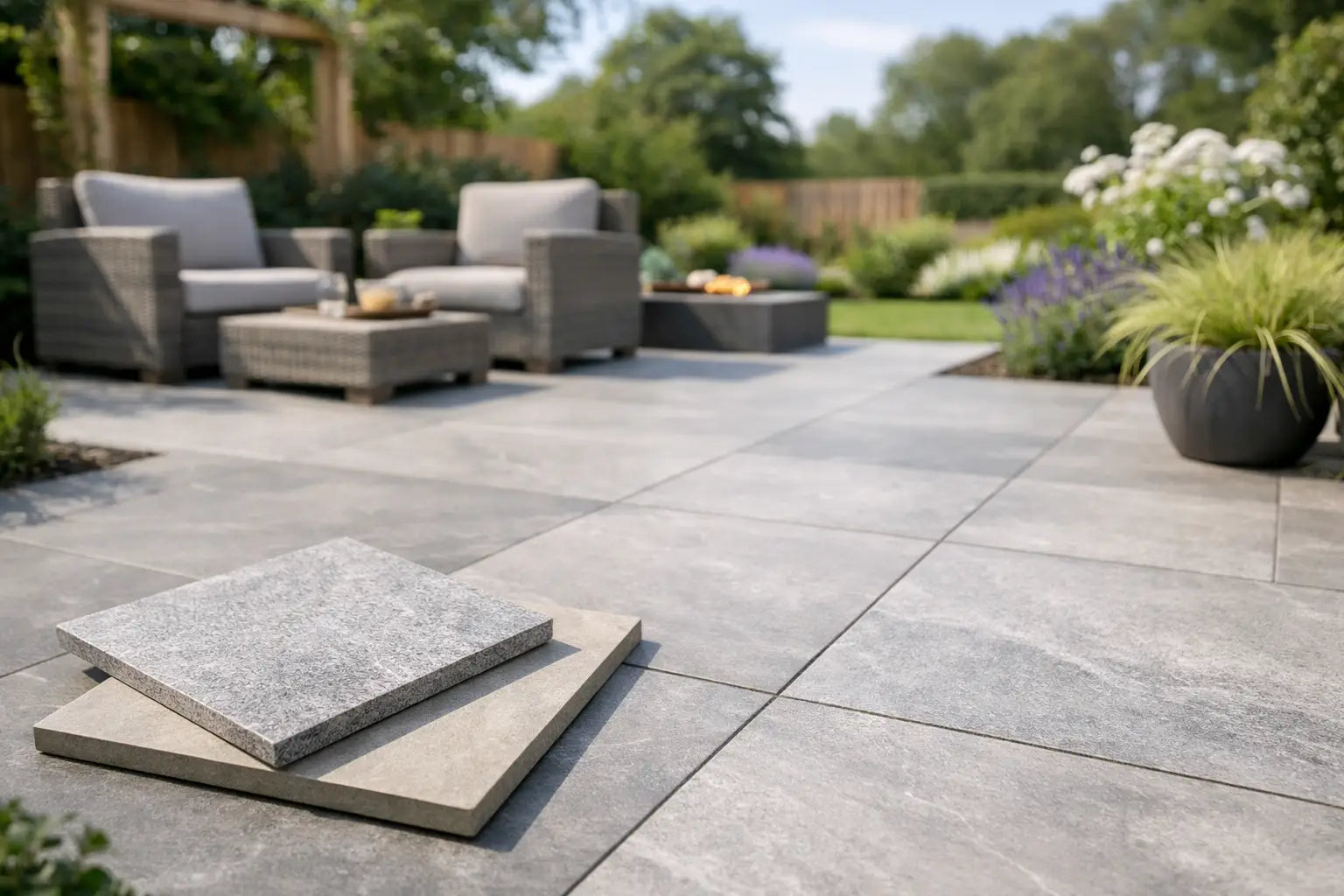
A patio has to work harder than almost any surface around the home. It is exposed to rain, frost, mud, garden furniture, barbecues and regular foot traffic, while still needing to look considered from inside the house. Porcelain patio tiles offer a practical route to a refined outdoor finish, combining contemporary design with the low-maintenance performance many UK projects require.
For homeowners, designers and contractors, the key is not simply choosing a colour that suits the garden. Tile thickness, surface grip, format, drainage and installation method all influence how the finished patio looks and performs over time. A well-specified porcelain surface can make a compact courtyard feel more generous, bring a kitchen extension and garden together, or give a commercial terrace a durable, high-end appearance.
Why choose porcelain patio tiles?
Outdoor porcelain is manufactured at high temperatures, creating a dense, hard-wearing material with very low water absorption. This matters in the British climate. Where more porous materials can take in moisture and become vulnerable to staining, algae or frost damage, properly specified porcelain is designed to withstand wet and changeable conditions.
Its everyday practicality is a major advantage. Spilt drinks, soil and food residue are generally easier to clean than on many natural stone surfaces, and the tiles do not usually need the ongoing sealing associated with some stone products. That makes porcelain especially appealing for busy family gardens, holiday properties and hospitality settings where maintenance needs to remain manageable.
Design choice is equally compelling. Modern porcelain can reproduce the depth and movement of limestone, slate, travertine, concrete, timber and aged stone, while retaining consistency from tile to tile. This allows you to achieve a natural or architectural look with a controlled finish and dependable technical performance.
That said, porcelain is not automatically the right answer for every scheme. Natural stone develops character through variation and weathering, which may be central to a traditional property or period garden. Porcelain provides a more uniform, design-led finish. The decision depends on the desired appearance, maintenance expectations and the quality of the installation.
Choosing the right porcelain patio tiles
Start with an outdoor-rated specification
Do not assume that any porcelain floor tile is suitable for a patio. Outdoor tiles should be clearly specified for external use and selected with the expected conditions in mind. Frost resistance is essential for UK installations, while a suitable anti-slip finish is particularly important for uncovered areas, steps, pool surrounds and entrances.
Slip resistance is often expressed through an R rating. For many domestic patios, an R11-rated surface is a popular choice because it offers useful grip in wet conditions without feeling excessively rough underfoot. A more textured finish may be appropriate for areas with greater water exposure, although heavily structured surfaces can retain more dirt and take longer to clean. The best choice balances safety, comfort and the intended use of the space.
Select the appropriate thickness
Twenty millimetre porcelain is widely used for patios because it is engineered for exterior applications and provides excellent strength. It can be installed using a fully supported mortar bed, laid on suitable adjustable pedestals, or used in some cases over a prepared aggregate base. Each method has different requirements, and the tile format, ground conditions and loading should be considered before ordering.
A thinner tile may be suitable where it is being bonded to a sound, stable concrete base, but it should only be used where the manufacturer confirms exterior suitability. For driveways, service areas or spaces subject to vehicle loading, seek a product and installation system specifically rated for that purpose. A standard patio tile should not be assumed to carry vehicular traffic.
Think about format and scale
Large-format tiles such as 600 x 900mm or 900 x 900mm create a calm, contemporary surface with fewer grout joints. They can look particularly effective when continuing the same stone-effect design from an interior kitchen or living area onto the terrace. However, larger tiles need a very flat, well-prepared base. Any unevenness is more visible, and handling them requires greater care during fitting.
Smaller formats can suit intricate gardens, narrow paths and spaces with curves, angles or several level changes. They may involve more joints, but they can reduce cutting and make it easier to achieve consistent falls. Consider the proportions of the property as well as the patio itself. A huge format can overwhelm a small enclosed courtyard, while a small tile may look overly busy across a broad entertaining area.
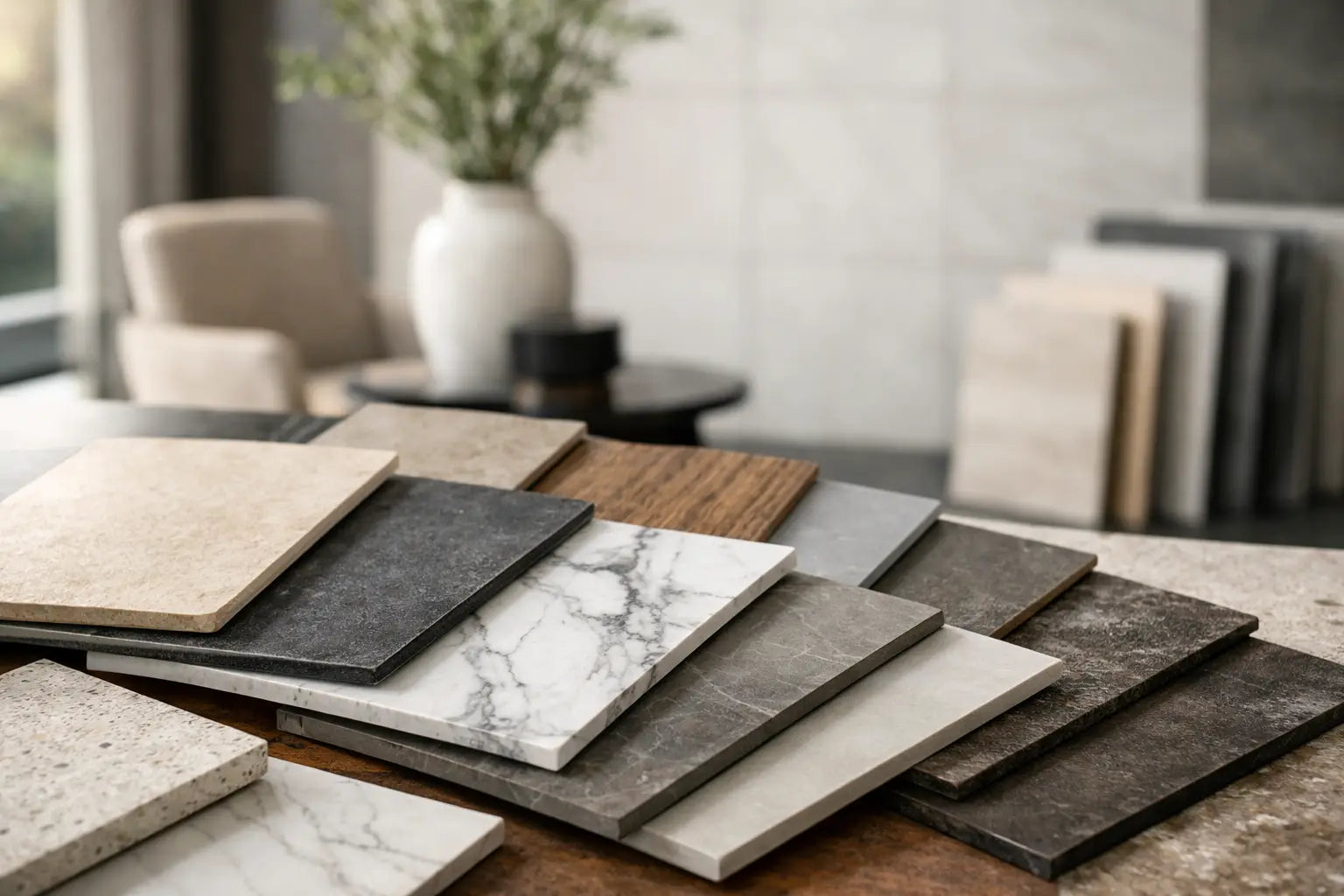
Choose colour for real conditions, not only a sample board
Pale porcelain can brighten a shaded garden and provide a crisp Mediterranean feel, but it may show soil, leaf debris and marks from outdoor furniture more readily. Dark anthracite and charcoal tones create a striking architectural finish, though they can become warm in direct sun and may show dust or pollen.
Mid-grey, taupe, beige and soft stone shades are often the most forgiving choices. They work with a wide range of brickwork, render, timber fencing and planting, while disguising everyday outdoor debris more effectively. Viewing a sample outside is worthwhile. Natural daylight changes colour considerably, and a tile that appears warm under showroom lighting may read cooler in an open north-facing garden.
Installation is where performance is decided
Even premium porcelain can disappoint when the sub-base, drainage or adhesive system is incorrect. The patio needs a stable, properly prepared foundation and a consistent fall away from the building, directing water towards suitable drainage. Standing water is not simply inconvenient. Over time, it can encourage surface soiling and reveal problems with levels or jointing.
For bonded installations, porcelain requires an exterior-rated flexible adhesive and full coverage beneath every tile. Spot bedding is not suitable. Voids under the tile can lead to cracking under point loads and may allow water to collect below the surface. A competent installer will use the appropriate trowel method and, where required, back-butter the tiles to achieve solid support.
Grout should also be selected for external use, with joint widths set according to the tile, layout and manufacturer guidance. Movement joints are essential where a patio meets a building, changes direction, covers a large area or incorporates different substrates. They are a practical allowance for expansion and movement, not an optional finishing detail.
If the project includes steps, retaining edges or drainage channels, plan these elements at the same time as the tile layout. A considered setting-out plan prevents narrow cuts at thresholds, awkward joints around gullies and mismatched step treads. This is particularly valuable with veined stone-effect designs, where the direction of the pattern affects the overall result.
Creating an indoor-outdoor connection
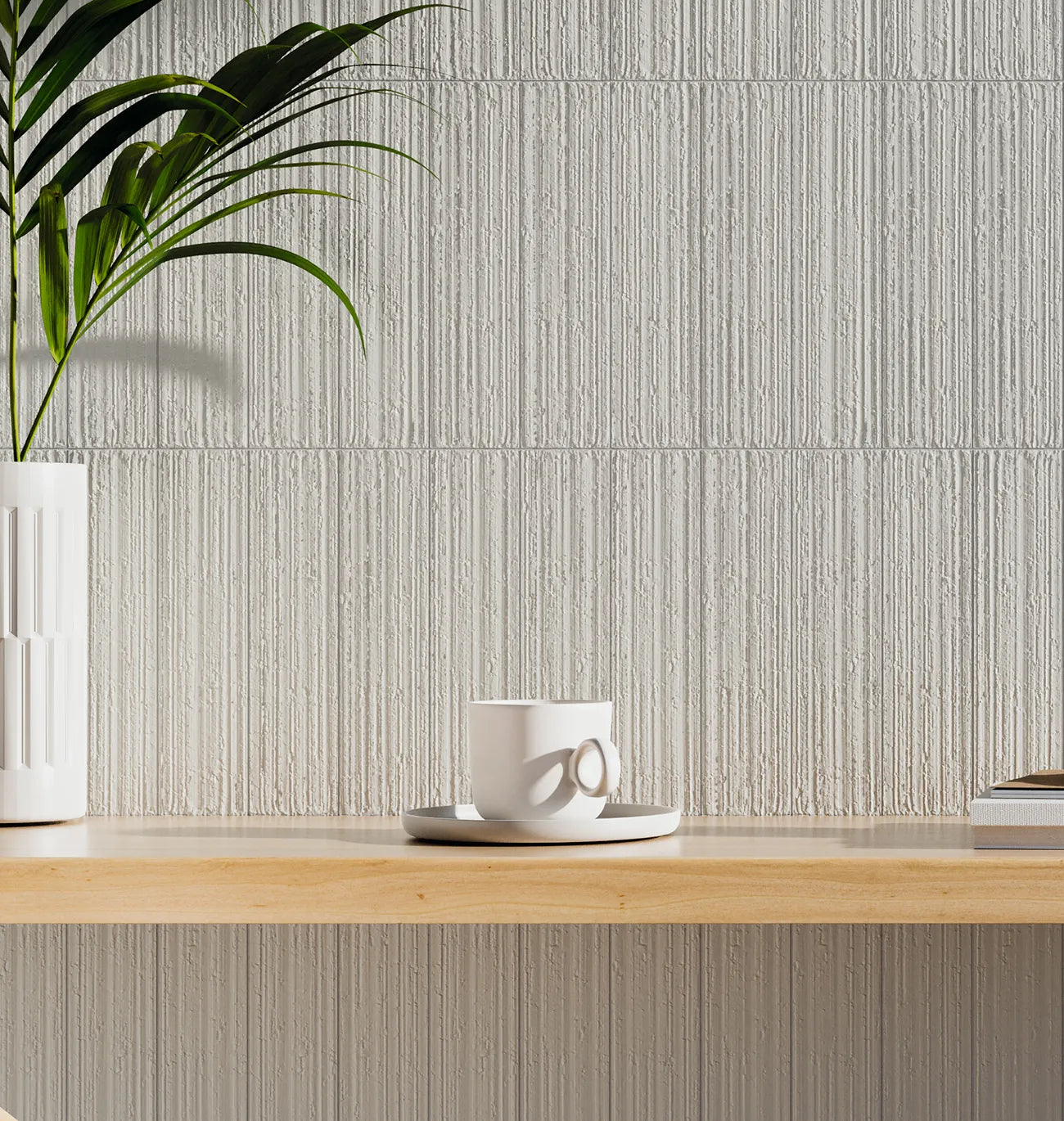
One of the strongest reasons to specify porcelain outside is the opportunity to create continuity between interior and exterior spaces. Many collections are available in coordinated indoor and outdoor finishes, often with a smoother tile for the home and a textured 20mm version for the patio.
The effect works best when levels are carefully planned. Ideally, the exterior surface sits close to the internal floor level while maintaining compliant drainage and threshold detailing. The two areas do not need to use identical tile sizes to feel connected. Matching colour and design in an outdoor format can deliver the same visual flow while meeting the different performance demands of each area.
For commercial schemes, this coordination can strengthen the sense of arrival. Restaurant terraces, hotel courtyards and leisure areas benefit from surfaces that feel intentional rather than added as an afterthought. Specify the finish around practical needs, particularly wet footwear, cleaning regimes, furniture movement and anticipated footfall.
Ordering quantities and planning the details
Measure the finished tiled area rather than relying solely on a broad garden plan. Then allow for cuts, waste and the complexity of the layout. A straightforward rectangular patio may need a modest allowance, while diagonal patterns, steps, curves and multiple thresholds require more. Ordering sufficient material from the same batch at the start is usually the safest approach, as later batches can vary slightly in shade or face pattern.
It is also sensible to order the complete installation system together: suitable adhesive, grout, primers where required, trims, movement joint materials and any preparation boards or drainage components. These products are part of the specification, not an afterthought once the tiles have arrived.
A sample remains one of the most useful project tools. Place it where the patio will sit, view it in wet and dry weather, and compare it with the brickwork, doors and planting. Smart Tiles can support this process with design-led porcelain options and the practical materials needed to take an outdoor surface from selection through to professional installation.
The best patio choices are made with both the view from the kitchen and the realities beneath your feet in mind. Choose a finish you enjoy looking at, then give equal attention to grip, drainage, preparation and fitting. That is how an outdoor space stays impressive long after the first summer gathering.