Article: Choosing Floor Tiles for Style and Performance
Choosing Floor Tiles for Style and Performance
A floor has to work harder than almost any other surface in a room. It carries foot traffic, furniture, muddy shoes, spills and daily cleaning, while setting the visual tone for the entire scheme. The right floor tiles should therefore do more than look impressive in a sample board or showroom display. They need to suit the room, the level of use and the installation build-up beneath them.
For a refined residential interior or a demanding commercial setting, the best choice is usually the one that balances finish, format, maintenance and technical performance. That balance will look different in a quiet en-suite than it does in a busy hallway, hotel entrance or open-plan kitchen.
Start with how the room will be used
Before narrowing down colours and patterns, consider the practical demands of the space. Kitchens, hallways and utility rooms are exposed to frequent traffic, moisture and grit. Bathrooms need a finish that feels appropriate underfoot and performs safely when wet. In commercial interiors, durability, slip resistance, cleaning regimes and the likelihood of heavy loads can all influence specification.
Porcelain is often the leading choice for floor applications because it is dense, hardwearing and low-absorption. It is available in an exceptionally broad range of stone, concrete, timber, terrazzo and decorative effects, making it possible to achieve a considered design without the ongoing care associated with some natural materials. Many porcelain collections are suitable for busy family homes and commercial projects alike, subject to the manufacturer’s stated use classification.
Ceramic tiles can be an excellent option in lower-traffic interior areas, particularly where a lighter-weight tile or a more decorative finish is desired. However, not every ceramic wall tile is suitable for floors. Always confirm that the selected product has been manufactured and tested for floor use before ordering.
Natural stone delivers genuine variation and depth, but it requires a more considered approach. Stone may need sealing, periodic maintenance and a compatible cleaning routine. Its natural movement can be precisely what gives an interior character, though it is worth accepting that it will not offer the uniformity of a porcelain stone-effect alternative.
Choose a finish that suits daily life
The finish of a tile changes both its appearance and its practicality. Polished porcelain reflects light beautifully and can make a bathroom, reception area or formal living space feel brighter and more expansive. It may, however, show water marks and footprints more readily than a matt surface, and it is not always the most suitable choice where floors are regularly wet.
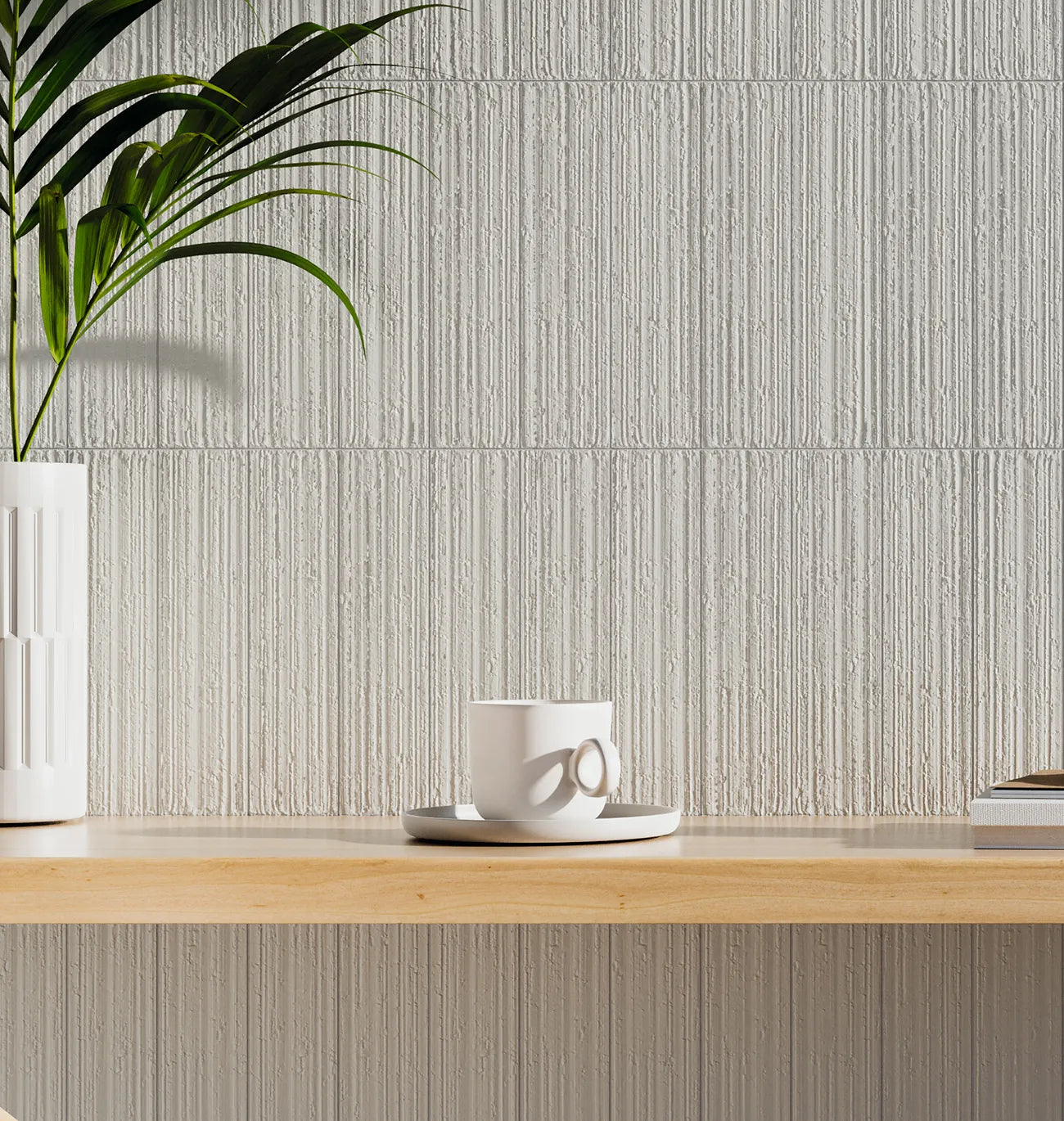
Matt tiles provide a softer, more contemporary appearance and are generally forgiving in high-use areas. They work particularly well with concrete-effect, limestone-effect and large-format porcelain designs, where the objective is a calm, architectural surface rather than a glossy statement.
Textured finishes can add grip and visual depth. They are useful for shower rooms, entrances and areas where slip resistance is a priority, but deeper texture can require more attention during cleaning. The key is to choose enough surface texture for the application without creating unnecessary maintenance in a space that sees daily use.
Slip ratings should be assessed in context rather than treated as a simple higher-is-better measure. A tile suitable for a dry domestic kitchen may not be appropriate for a wet changing area or a commercial entrance exposed to rain. Ask for the technical data relevant to the intended environment, including the stated slip-resistance testing and recommended applications. For bathrooms, also consider whether the floor will be regularly wet, whether there is a level-access shower and who will use the space.
Floor tile sizes and layouts shape the room
Tile format has a significant effect on proportion. Large-format porcelain can make an open-plan space feel more continuous, with fewer grout joints interrupting the surface. A 600 x 600mm tile remains a versatile choice for kitchens and hallways, while larger formats can create a striking, pared-back look in generous rooms.
That said, larger is not automatically better. In a compact bathroom with several corners, waste pipes and awkward thresholds, a smaller format may reduce cutting and make it easier to create accurate falls towards a drain. Mosaic or small-format tiles are often a practical option for walk-in shower floors because the additional grout joints help the tiled surface follow the required gradient.
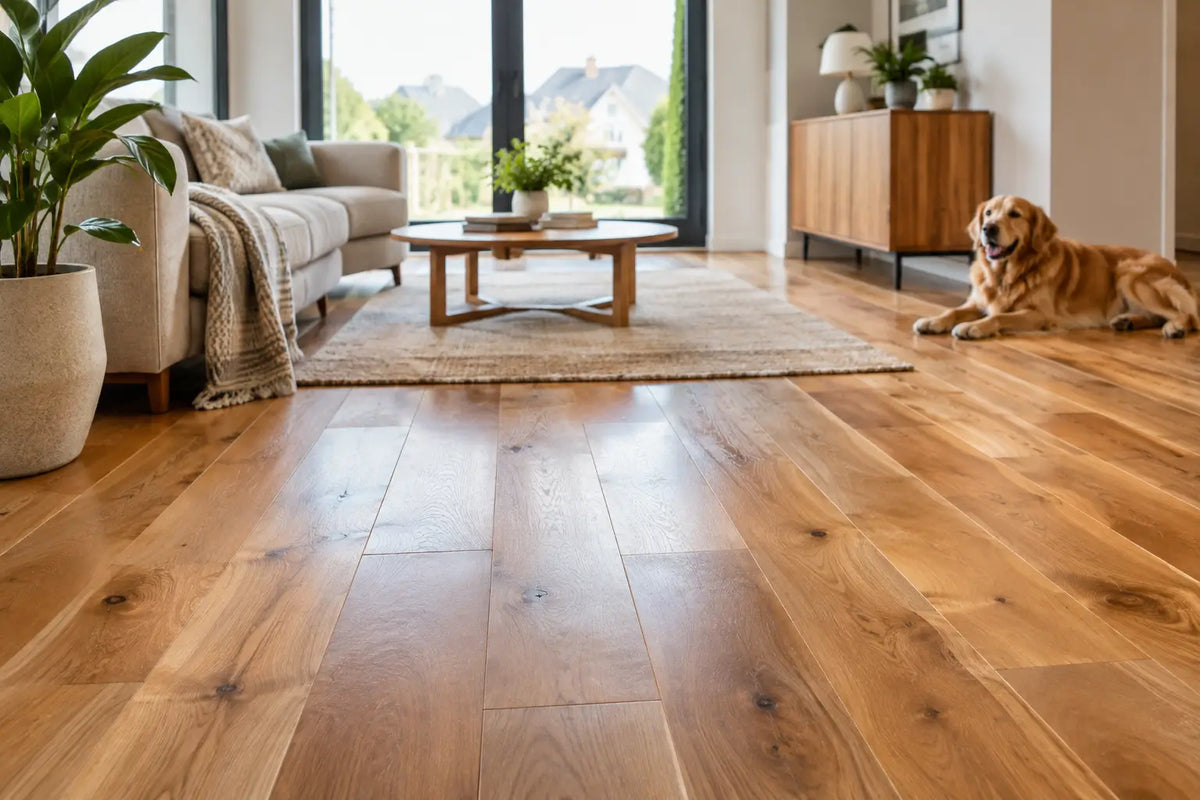
Plank-format wood-effect porcelain offers the warmth and direction of timber with the water resistance and durability of tile. Laid lengthways, it can visually extend a narrow room; laid across it, it can make the space feel wider. A herringbone pattern adds detail and a sense of craftsmanship, although it involves more cutting, more labour and a higher allowance for waste than a straightforward staggered layout.
Patterned tiles deserve the same practical consideration. They can give a hallway, cloakroom or bar area a strong design identity, but the scale of the pattern matters. A bold, oversized motif may dominate a small room, while a more intricate design can become lost in a large open floor. Ordering samples and viewing them in the project’s natural and artificial light is the most reliable way to judge the effect.
Grout is part of the specification
Grout is not merely a finishing material. Its colour, joint width and technical suitability influence the final appearance and long-term performance of the floor. A closely matched grout gives a large-format tile a more continuous look. A contrasting grout can emphasise the geometry of a layout, particularly with encaustic-style designs, metro formats or herringbone patterns.
For most modern porcelain floors, a narrow joint creates a neat finish, but the joint should never be reduced beyond the tile manufacturer’s recommendation. Even rectified tiles require a joint to accommodate normal dimensional tolerance and movement. A skilled installer will also plan movement joints where needed, especially over larger areas, door thresholds, underfloor heating zones and commercial floors.
In kitchens, bathrooms and entrance areas, choose a grout designed for the expected moisture and cleaning conditions. Colour-consistent, stain-resistant options can make day-to-day maintenance considerably easier. Matching silicone or flexible sealant should be used at changes of plane and movement points rather than rigid grout.
Do not overlook the floor beneath the tile
Even the highest-quality tile cannot compensate for an unsuitable subfloor. Floors must be sound, clean, flat and appropriately prepared before installation begins. Timber floors may need strengthening or boarding, while concrete and screeded floors may require moisture testing, priming or levelling compounds. Existing surfaces should not be tiled over automatically without checking their stability, flatness and compatibility.
Large-format floor tiles demand particularly good preparation. Small variations in the subfloor can cause lipping between adjacent tiles or make it difficult to achieve full adhesive coverage. This is why specification should include the right preparation products, adhesive, grout, trims and movement provisions rather than treating them as afterthoughts.
Underfloor heating is an excellent partner for porcelain because tile conducts heat efficiently and provides a stable, comfortable finish. The heating system must be compatible with the substrate and installation method, and the floor should be commissioned gradually after the adhesive and grout have fully cured. Flexible adhesive and grout are generally required where thermal movement is expected.
Calculate quantities with a sensible allowance
Accurate ordering prevents delays once work has started. Measure each section of the floor separately, calculate the total area in square metres and include an allowance for cuts, breakages and future repairs. A simple, square room with a straight layout may need a modest allowance, while diagonal layouts, herringbone patterns, large formats or rooms with many recesses will require more.
It is prudent to retain a few spare tiles from the same batch once the project is complete. Tile production batches can vary subtly in shade, pattern distribution and calibration. Keeping spare material makes future repairs much easier, especially for a collection that may later be discontinued.
For larger or more complex projects, check the coverage per pack, tile orientation, layout direction and lead time before finalising the order. This is particularly useful where several rooms need to flow together or where a commercial programme depends on material arriving in planned phases.
Build the scheme from the floor upwards
A successful tiled floor anchors the rest of the interior. Stone-effect porcelain can bring quiet, natural character to a kitchen or bathroom. Concrete-effect tiles provide a clean foundation for contemporary joinery and brushed metal finishes. Wood-effect planks soften modern spaces, while decorative porcelain can give an entrance or hospitality setting a memorable focal point.
The most confident choices are made when the tile is viewed as part of a complete system: the right format, finish, grout, adhesive and prepared subfloor working together. Smart Tiles can support that process with design-led collections, samples and the practical installation materials needed to take a surface from initial selection to a professional finish.
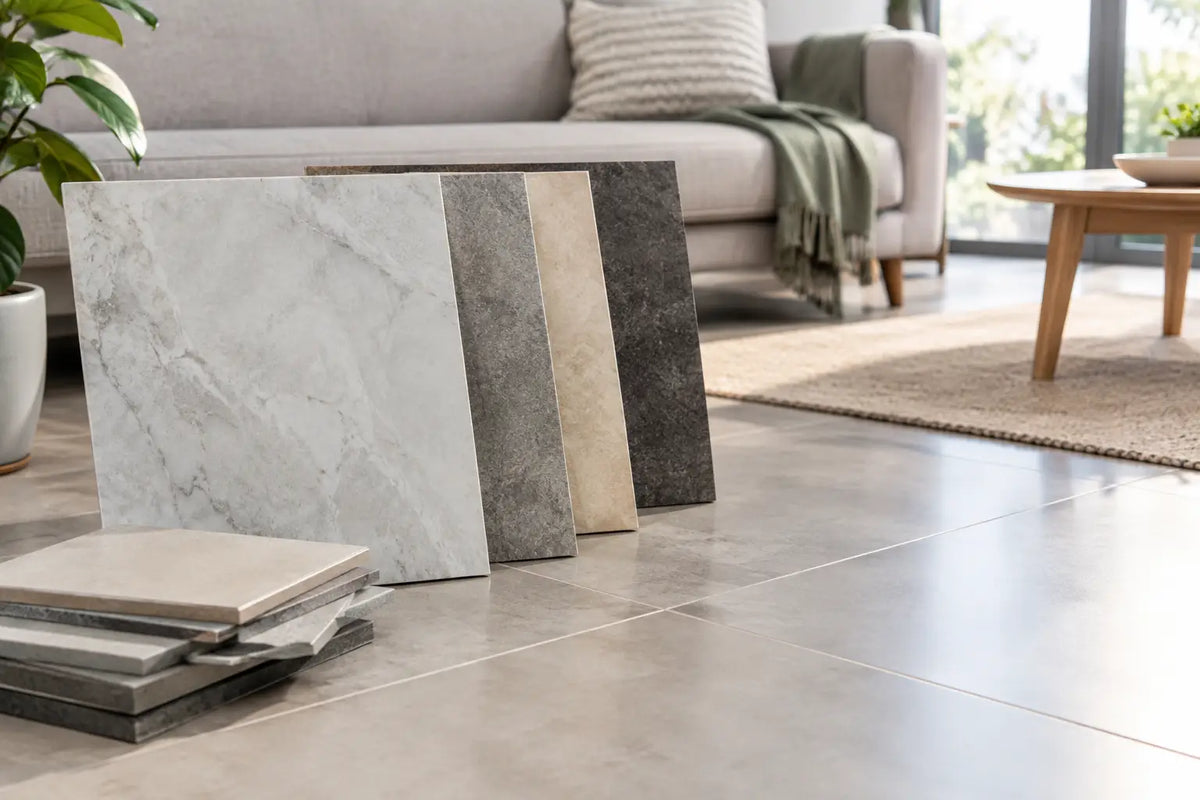
Before committing to a full order, place samples on the floor in the actual room, look at them at different times of day and consider how they feel underfoot. That small step often turns an attractive tile choice into the right floor for the project.