Choosing Fireplace Tiles That Perform Beautifully
A fireplace is often the one architectural feature that holds a room together. The right fireplace tiles can make a period chimney breast feel considered again, give a contemporary stove installation greater presence, or create a practical surface around an open fire. The decision is not purely decorative, however. Heat exposure, substrate condition, tile finish and the installation system all need to suit the particular appliance and setting.
For homeowners, designers and installers, the best result comes from treating the fireplace as a complete specification. Consider the fire or stove first, then the required clearances and hearth construction, before choosing a tile that delivers the desired look at the scale of the room.
Start with the fireplace, not the tile
There is a significant difference between tiling a chimney breast around an electric fire and finishing a surround for a solid-fuel stove or open fire. An electric fire may create limited surface heat, while a wood burner, gas fire or open fireplace can expose nearby finishes to much higher temperatures. The appliance manufacturer's instructions should always establish the permitted materials, distances from combustible surfaces and required hearth dimensions.
A tiled hearth or surround needs to be non-combustible where regulations and the appliance specification require it. Tiles themselves are generally suitable surface materials, but the adhesive, grout, backing board and any surrounding construction must also be appropriate for the heat conditions. This is where a professional installer adds value: a beautifully chosen tile cannot compensate for an unsuitable substrate or incorrect clearances.
If the existing chimney breast has cracks, loose plaster, uneven masonry or evidence of historic movement, address this before selecting a finish. Large-format porcelain will only look as precise as the wall behind it allows. In older properties, levelling and strengthening the surface may be just as important as the tile design.
The best materials for fireplace tiles
Porcelain is a leading choice for fireplace surrounds, hearths and feature walls because it combines visual range with reliable performance. Modern porcelain collections can recreate limestone, slate, marble, concrete, metal and timber-inspired surfaces while offering low water absorption and straightforward day-to-day maintenance. It is particularly useful where a fireplace sits within an open-plan kitchen or family space and needs to work with adjacent flooring.
Ceramic wall tiles are an excellent option for decorative surrounds and chimney breasts where direct heat exposure is suitable for the tile and installation system. Their lighter weight and extensive choice of colour, gloss and handmade-style variation make them well suited to classic fireplaces, Victorian-inspired schemes and expressive contemporary interiors. They are usually intended for walls rather than hearths or floors, so check the product rating before specifying.
Natural stone brings depth and individuality, with each tile carrying genuine tonal and textural variation. Slate, limestone and marble can be highly effective around fireplaces, especially in country homes or projects seeking a more traditional material palette. Stone may need sealing and more considered cleaning than porcelain, and some softer or more porous varieties are less forgiving of soot, staining and household spillages.
For a high-heat area immediately around an appliance, do not assume every tile is suitable simply because it is ceramic or porcelain. Confirm the tile manufacturer's guidance alongside the appliance requirements and use a compatible, heat-suitable fixing system.
Matching finish to the way the room is used
A polished marble-effect porcelain can give a formal fireplace a refined, light-reflecting appearance, particularly in a drawing room with good natural light. It may show dust, fingerprints and soot more readily than a matt alternative, though. A honed, matt or structured finish is often the more practical choice for a hearth, where footwear, logs and ash can create everyday wear.
Textured stone-effect tiles bring character but require attention to cleaning. Deep riven surfaces can retain dust or ash in their texture, whereas a lightly textured porcelain gives much of the same visual interest with easier upkeep. In family rooms and holiday properties, practical cleaning is often the deciding factor.
Choose a layout that gives the fireplace proportion
Tile format has a strong effect on the perceived size of a fireplace. Small-format tiles, including metro shapes, squares and decorative encaustic-style designs, can create rhythm and detail around a compact cast-iron insert. They suit period proportions and allow a homeowner to introduce colour without overwhelming the full wall.
Larger tiles create a calmer, more architectural surface. A large stone-effect porcelain with minimal grout lines can turn a chimney breast into a confident focal point, while book-matched marble-effect slabs or large formats can frame a contemporary fire with a more luxurious feel. The trade-off is that larger pieces demand a flatter substrate, careful handling and accurate setting out.
Before ordering, establish where full tiles will fall. A symmetrical layout around the fire opening usually looks more intentional than narrow cut pieces at one side. This becomes especially important with veined marble-effect tiles, directional timber-look designs and patterned collections. Plan the direction of the pattern, the location of cuts and the relationship between the hearth, opening and mantel before installation begins.
Grout is part of the finished design
Grout can either quietly support the tile or become a defining contrast. A close colour match is effective with stone-effect porcelain and large-format tiles, helping the surface read as one continuous plane. A contrasting grout can sharpen the geometry of brick-shaped or square tiles and is often appropriate for heritage-inspired schemes.
For hearths and high-use areas, choose a grout suited to the installation and cleaning demands. Very pale grout may look crisp at first but needs regular maintenance around logs and ash. Mid-tone greys, warm taupes and charcoal shades are often more forgiving while still complementing the tile.
Do not overlook the hearth and surrounding floor
The hearth has a practical role, but it is also an opportunity to connect the fireplace with the wider room. Matching the hearth to the chimney breast produces a monolithic, contemporary result. Using a contrasting material or tile format can frame the fire more traditionally and make a modest opening feel more substantial.
Where the fireplace meets timber flooring, carpet or another finished floor, detailing matters. A clean edge, correctly selected trim or neatly designed transition prevents the hearth from looking like an afterthought. Allow for floor levels early in the project, particularly where new tile thickness, adhesive build-up or underfloor heating may affect adjoining finishes.
If the room already has porcelain or stone-effect floor tiles, a coordinated fireplace finish can create a cohesive scheme without making every surface identical. For example, use the same collection in a different format, a deeper shade, or a complementary decorative tile on the chimney breast. This keeps the design connected while giving the fireplace its own identity.
Specify the complete installation system
A professional fireplace tile installation is more than tile and grout. The backing surface may require cement-based board, suitable levelling material or crack-isolation preparation, depending on the construction and condition of the chimney breast. Adhesive selection must account for tile type, tile size, substrate and expected temperature exposure.
Check whether trims are needed at external corners, recessed openings or a tiled hearth edge. Metal trims can give a clean contemporary line, while mitred porcelain edges create a more minimal look but require precise cutting and suitable tile thickness. Sealers, movement joints and compatible cleaning products should also be considered before work starts rather than added later as compromises.
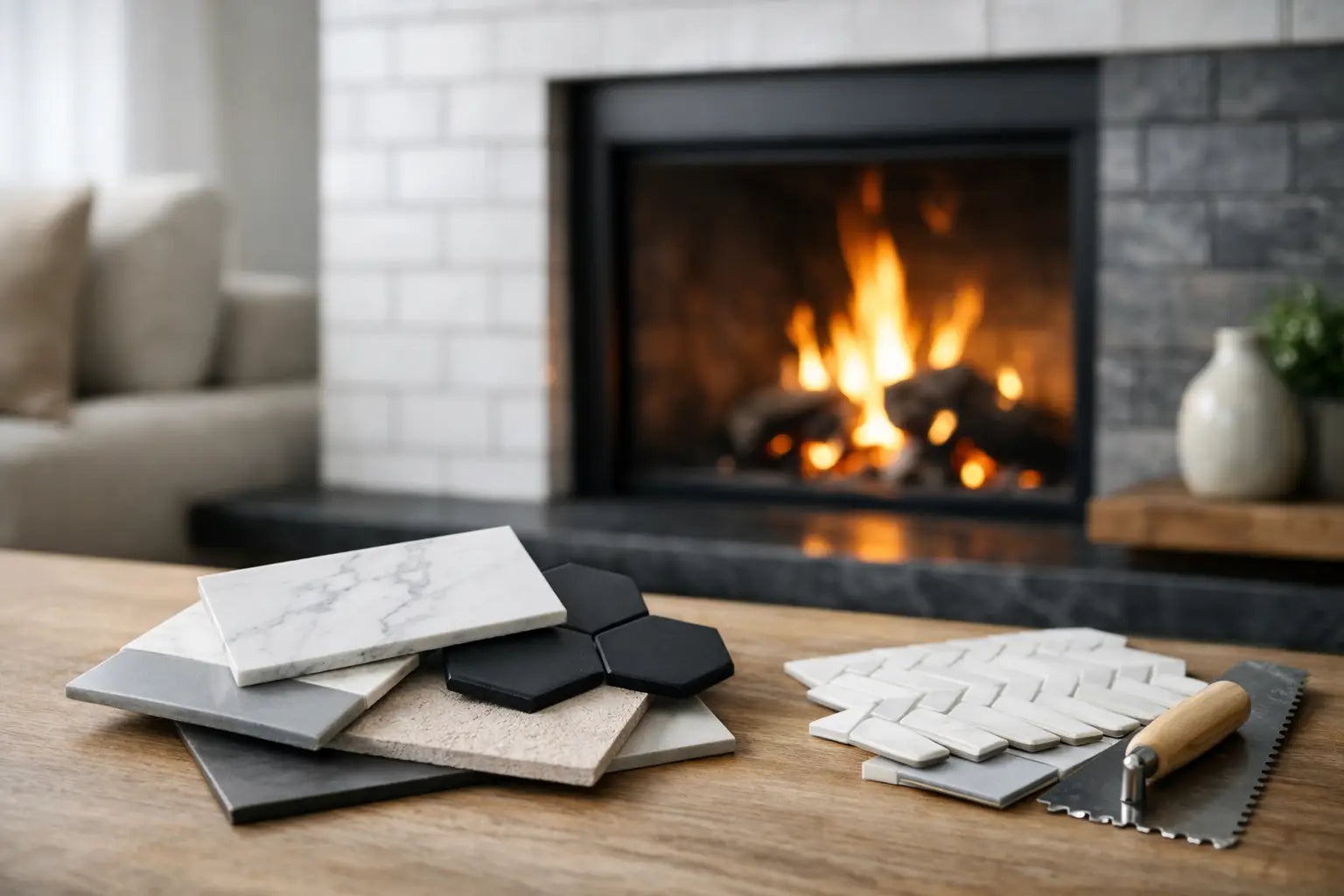
Order samples whenever possible. View them against the mantel, wall paint, flooring and the light in the room at different times of day. A tile that appears cool grey in a showroom may read warmer beside an oak floor, while a glossy glaze can change dramatically under firelight. Confirm quantities from measured areas, then include a sensible allowance for cuts, pattern matching and future repairs.
Smart Tiles can help bring those decisions together, from design-led porcelain and decorative wall tiles to the adhesive, grout, trims and preparation materials that support a dependable installation.
A fireplace deserves more than a surface chosen from a small swatch. Choose a finish that suits the heat, honours the proportions of the room and remains practical long after the first fire of the season.