Best Hallway Floor Tiles for a Lasting Entrance
A hallway floor has a harder job than almost any other surface in the home. It receives wet shoes, grit, pet paws, bags and the daily movement between rooms, while setting the first visual impression of the property. The best hallway floor tiles combine reliable wear resistance with a finish, scale and colour that suit the architecture of the space.
For most UK homes, porcelain is the strongest starting point. It offers the design freedom to create anything from a quiet stone-effect entrance to a bold patterned floor, without asking the homeowner to compromise on everyday practicality. The right choice, however, also depends on natural light, the size of the hallway, how directly it connects to the outdoors and the condition of the subfloor.
What Makes the Best Hallway Floor Tiles?
A hallway tile should be selected as a working surface rather than simply a decorative feature. It needs to tolerate abrasion from dirt and small stones, clean easily, remain comfortable underfoot and maintain its appearance after years of use. This is why tile finish matters as much as colour or pattern.
Porcelain floor tiles are usually the preferred option for busy residential entrances and commercial reception areas. Fired at high temperatures, porcelain has low water absorption and excellent day-to-day durability. Modern Italian and Spanish collections can convincingly reproduce limestone, slate, terrazzo, timber and concrete, giving a premium look with lower maintenance demands than many natural materials.
Ceramic tiles can be suitable in lighter-use internal hallways, particularly where budget is a key consideration. For a front entrance that regularly sees rain, mud and frequent footfall, a porcelain specification provides greater reassurance. Natural stone remains a distinctive choice for character properties and high-end schemes, but it should be selected with an understanding of its sealing and maintenance requirements.
Prioritise a practical surface finish
Highly polished tiles create a striking formal entrance, especially in a generous, well-lit hallway. Their reflective surface can make a narrow space feel brighter, but it will show water marks, dust and footprints more readily than a matt alternative. They are generally better suited to low-traffic internal areas than a direct route from an exterior door.
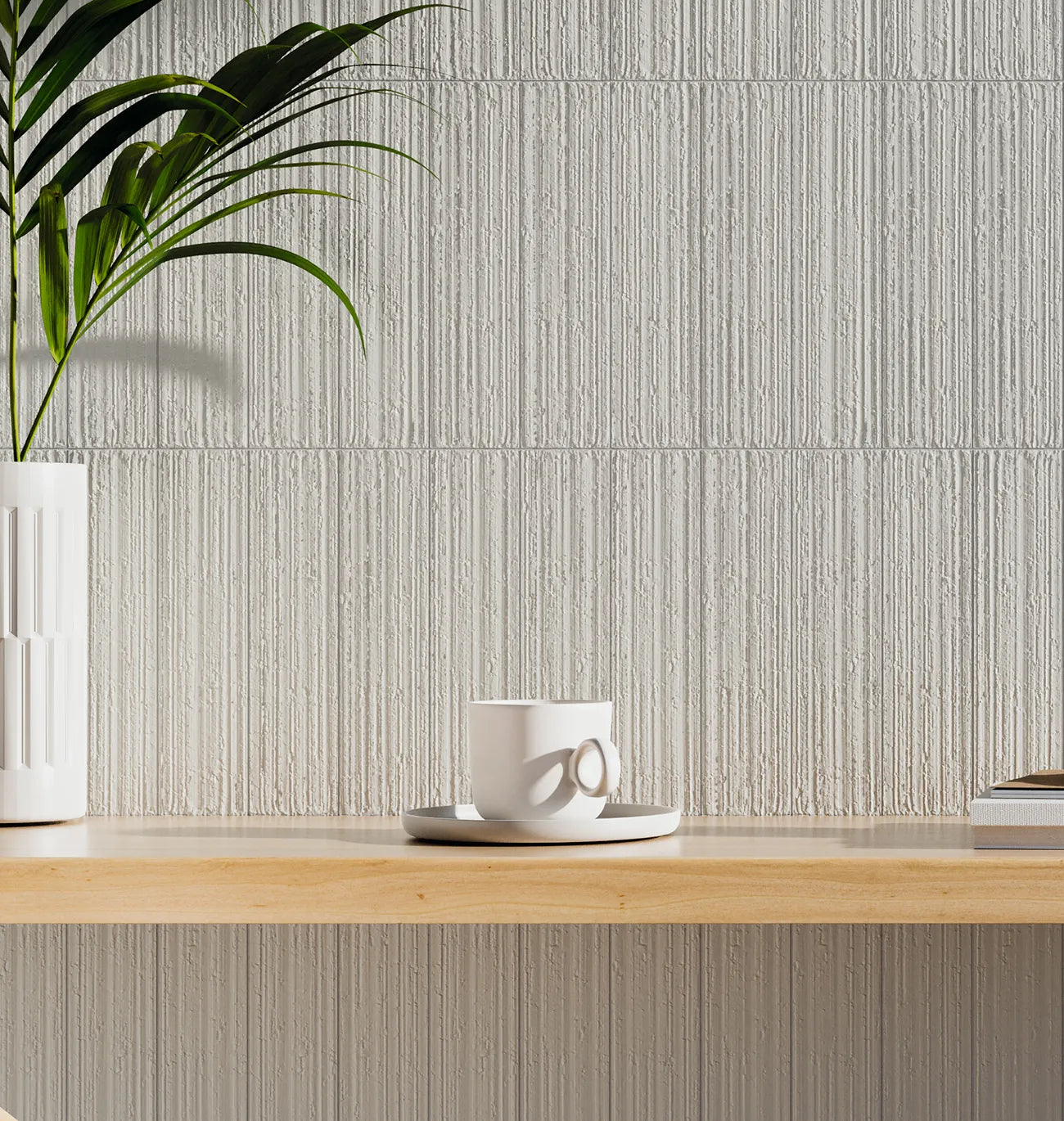
Matt, honed-look and lightly textured porcelain are often more forgiving choices. They disguise the signs of daily use and provide more grip when shoes are damp. A structured finish can be valuable near a front or back door, although an overly rough tile may hold onto dirt and require more attention when cleaning. The most effective balance is a surface with useful texture that can still be mopped easily.
Slip resistance should be considered in context. An entrance used by children, pets or older family members may benefit from a more tactile finish, while a commercial project may have defined performance requirements. Always assess the manufacturer’s technical information alongside the practical use of the area, rather than choosing solely by a photograph or sample board.
Porcelain Styles That Work in Hallways
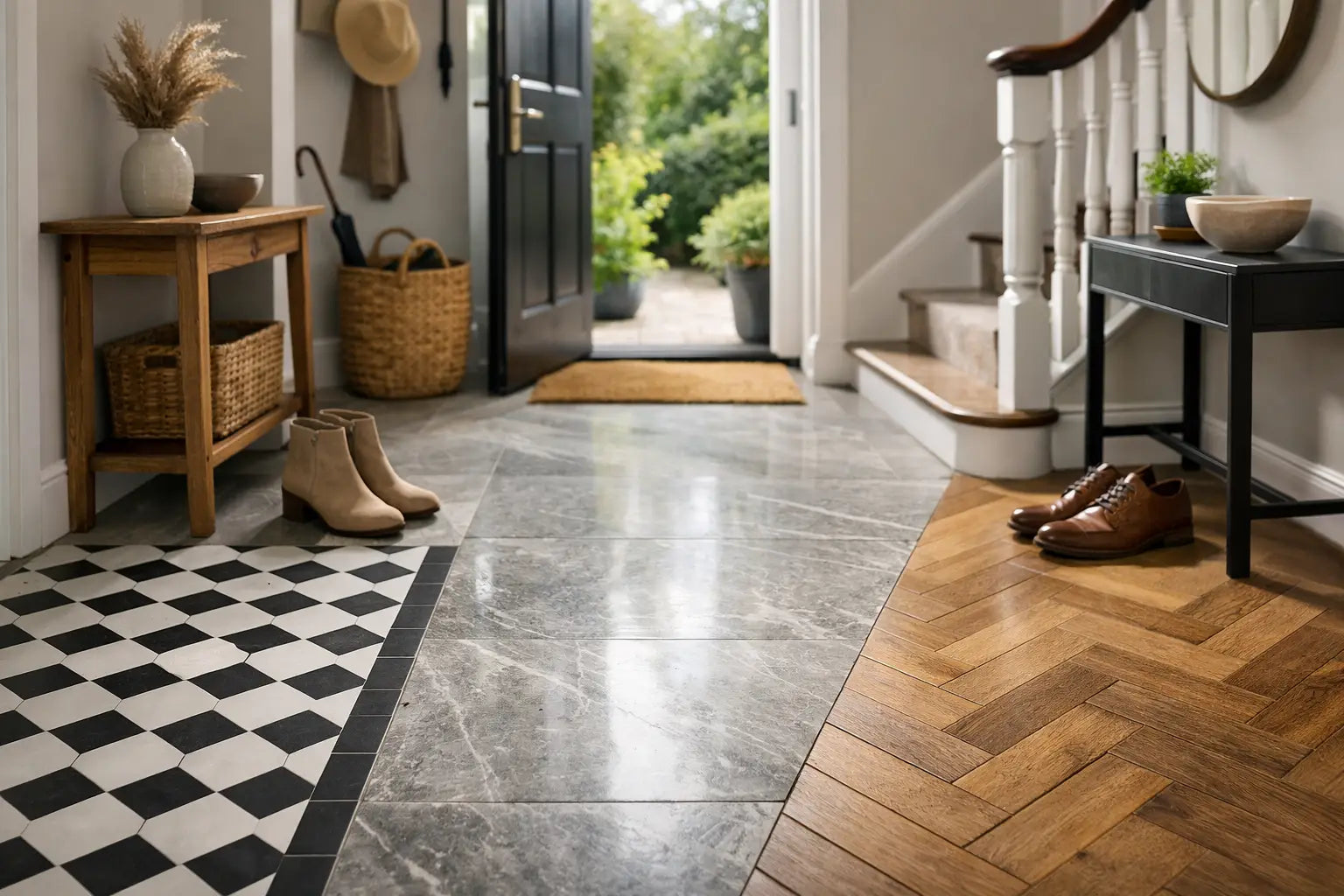
Stone-effect porcelain has enduring appeal because it feels established without being overly formal. Soft limestone tones, warm greys and gentle beige shades work particularly well in period houses, country homes and schemes that lead into timber flooring. Large-format stone-effect tiles with subtle movement can make an entrance feel calm and considered.
Terrazzo-effect tiles bring more visual energy. Their flecked pattern is practical in a high-traffic setting because it helps conceal small marks between cleans, while allowing colour to be introduced without overwhelming the room. Choose a restrained terrazzo for a timeless result, or a bolder aggregate pattern where the floor is intended to be a central design element.
Patterned porcelain is ideal for a compact hallway that needs definition. A geometric or encaustic-inspired design can establish a threshold between outdoors and the rest of the house, particularly when paired with simple painted walls and understated joinery. The trade-off is that a strong pattern needs careful consideration alongside adjacent flooring, rugs and stair finishes. Let it lead the scheme rather than compete with several other decorative materials.
For contemporary properties, concrete-effect and large-format porcelain create a clean architectural base. These finishes suit black metal details, oak furniture and minimal interiors, but warmer grout and paint colours can prevent the result from feeling too cool. Wood-effect porcelain is another practical option where a continuous timber appearance is desired but moisture and maintenance make real wood less suitable at the entrance.
Tile Size, Layout and Hallway Proportions
Tile size should respond to the room, not a fixed rule. Larger formats can reduce grout lines and make a hallway appear more expansive, particularly in an open-plan entrance. They do require a suitably flat subfloor and thoughtful setting out, as narrow perimeter cuts can distract from an otherwise refined floor.
Medium-format tiles are often the most versatile option. They work in both compact and generous hallways, are easier to handle during fitting and give installers more flexibility around doorways, cupboards and awkward returns. Rectangular tiles can be laid lengthways to visually draw the eye along a corridor, while a diagonal layout can soften a narrow, box-like space. Both require additional cutting, so allow for wastage when calculating quantities.
Mosaic and smaller-format tiles have a natural place in Victorian-style entrances and feature zones. Their additional grout joints can offer useful slip resistance, though cleaning takes longer than with a large-format floor. If the hallway opens directly into a larger tiled kitchen or living area, consider using a border, inset pattern or change in tile direction to make the transition deliberate.
Grout is part of the finished design
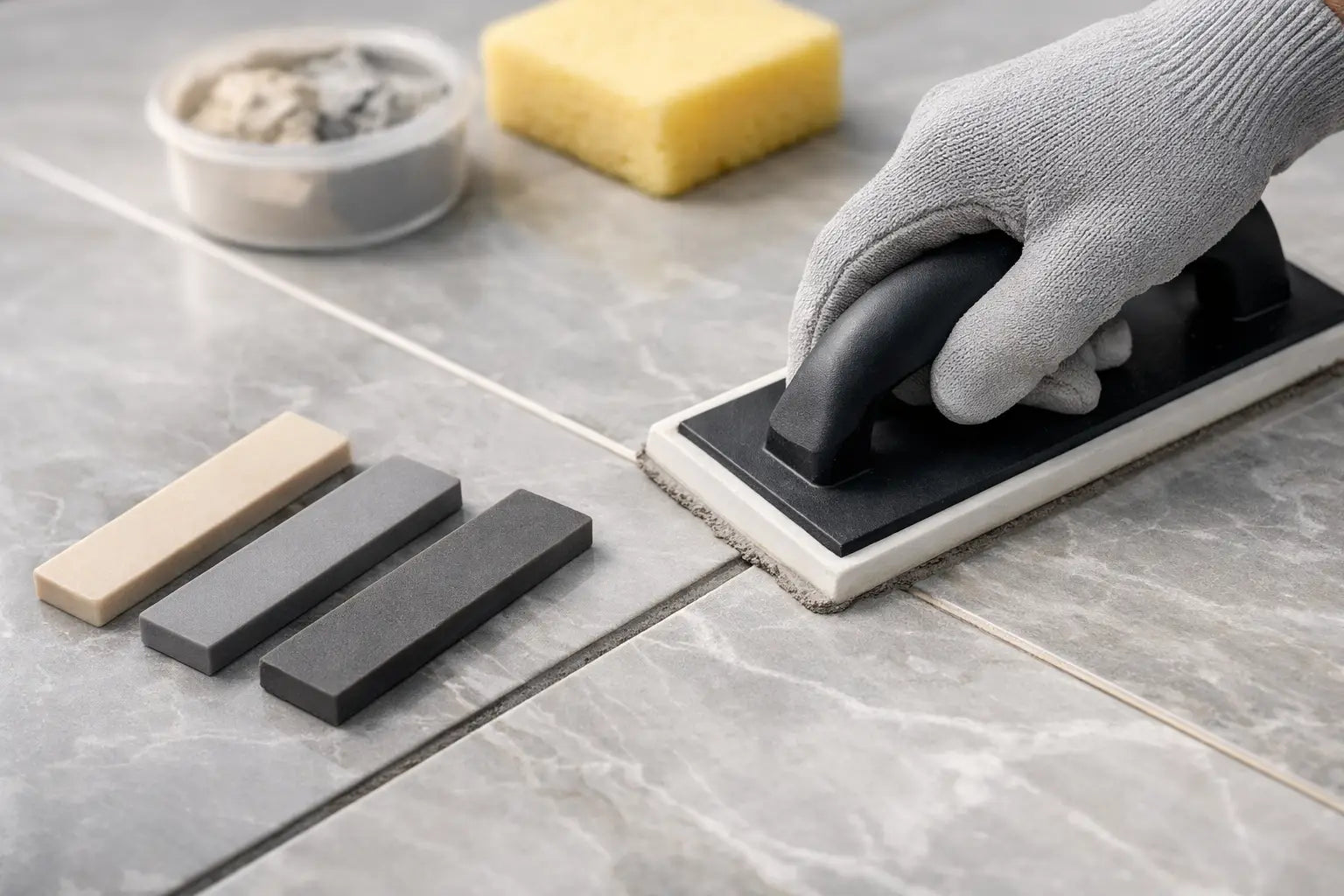
Grout colour changes the overall character of a tiled hallway more than many buyers expect. A matching grout gives a quieter, more continuous surface and is usually the easiest choice for large-format porcelain. A contrasting grout highlights the layout and works well with metro, geometric or smaller tiles, but it also makes alignment and installation accuracy more visible.
Mid-tone grout is generally more forgiving than brilliant white in a hard-working entrance. It is worth choosing a quality flexible grout suitable for floors and following the recommended joint width for the tile. For porcelain with rectified edges, narrow joints may be possible, but they are never a substitute for a level substrate and careful fitting.
Plan for the Conditions Beneath the Tile
The durability of a hallway floor depends as much on preparation as on the tile itself. Existing timber floors may need an appropriate tile backer board or decoupling system to limit movement. Concrete bases need to be sound, dry and level, with any unevenness addressed before tiling begins. Large-format porcelain is especially unforgiving of dips and high points.
An experienced installer will check floor levels, door clearances and transitions to adjoining rooms before work begins. This matters in renovation projects, where the finished floor build-up can affect internal doors, thresholds and skirting details. Underfloor heating can be used beneath suitable porcelain tiles, providing a welcoming surface in colder months, but the system, adhesive and grout must all be compatible.
Specify a flexible tile adhesive designed for the substrate and tile format, along with suitable primers, trims and movement joints where required. These are not minor accessories. They are part of the installation system that helps a quality floor perform as intended.
Choosing Colour for a Welcoming Entrance
Pale tiles can make a small or dark hallway feel more open, but very light plain floors may show muddy footprints quickly. Warm ivory, putty, sand and soft greige often offer a more practical middle ground than pure white. They complement natural oak, painted panelling and brass or black ironmongery without feeling overly trend-led.
Darker slate, charcoal and deep blue-grey floors add definition and can be highly practical in country properties or entrances with direct outdoor access. Balance them with good lighting and lighter wall finishes, particularly in halls without windows. A tile sample should always be viewed in the actual space at different times of day, as both natural and artificial light alter the perceived tone.
Before placing an order, measure the room accurately and include the areas within door openings, alcoves and cupboards where tiles will continue. Add an allowance for cuts, pattern matching and future repairs. Ordering a sample first is the simplest way to assess finish, colour and texture alongside the rest of the scheme. Smart Tiles can help bring the product, quantity calculation and installation materials together, so the selected floor is ready for specification rather than just inspiration.
A well-chosen hallway tile should feel right from the first step through the door and continue to work quietly through every busy season. Start with the demands of the entrance, then choose the porcelain finish and layout that make those practical decisions look intentional.