Article: Best Decorative Bathroom Tiles for UK Homes
Best Decorative Bathroom Tiles for UK Homes
A decorative tile can turn a standard bathroom into a properly considered space, but it also has to cope with water, cleaning products, underfloor heating and daily use. The best decorative bathroom tiles balance character with practical performance, whether you are specifying a boutique en-suite, a family bathroom or a hotel washroom.
Pattern is only one part of the decision. Tile format, finish, grout colour and where the decorative element sits all affect the finished result. Choosing these details early helps avoid a design that looks busy, feels out of scale or creates unnecessary installation complications.
Best Decorative Bathroom Tiles: Start with the Room
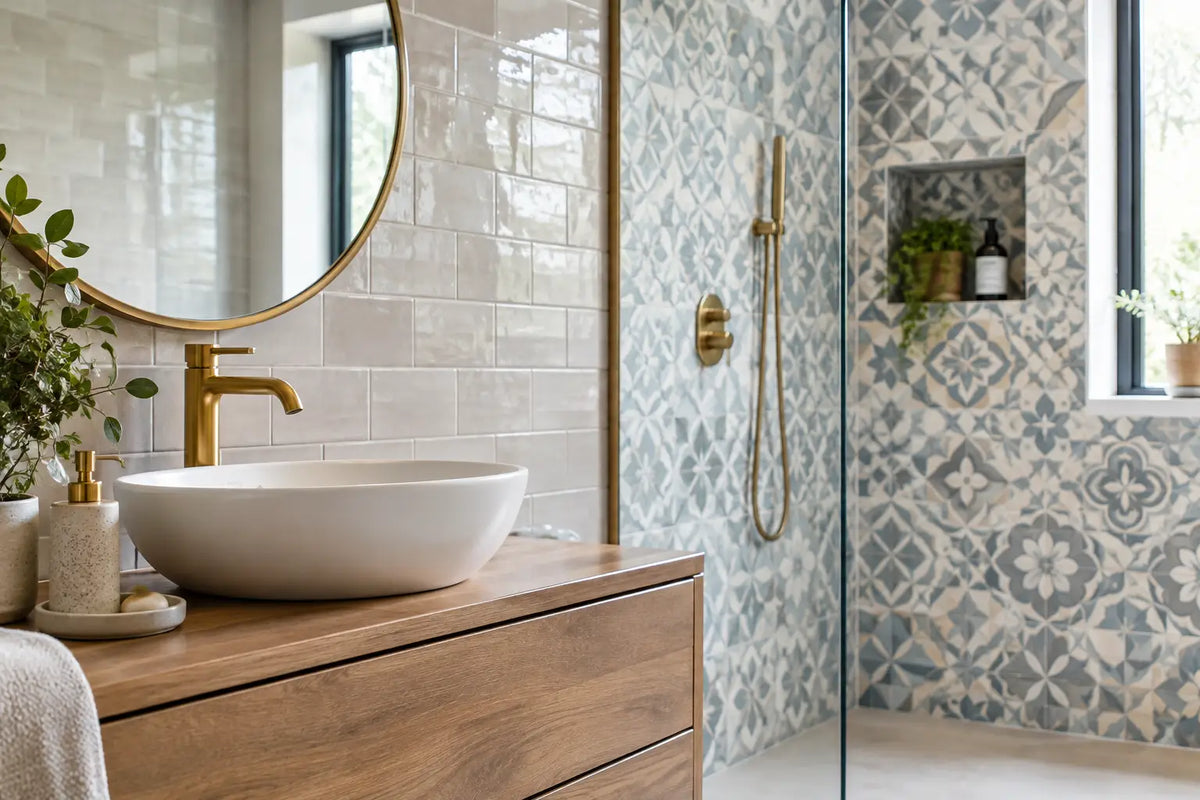
The most successful decorative schemes respond to the room rather than treating every wall and floor as a display surface. In a compact cloakroom, a patterned porcelain floor can create immediate impact while plain wall tiles keep the space light. In a generous main bathroom, decorative tiles may work particularly well behind a freestanding bath, inside a walk-in shower or as a defined vanity backdrop.
Think about sightlines from the doorway. The wall opposite the entrance, the shower enclosure and the floor visible around a bath are natural focal points. A feature tile in one of these positions gives the room a clear design direction without requiring pattern across every surface.
Light matters too. Bathrooms with limited natural light often benefit from glazed ceramic wall tiles, softer tonal patterns and reflective finishes. Where there is strong daylight, matte porcelain and deeper colours can feel calm and architectural rather than heavy. Always view samples in the intended room if possible, as showroom lighting and bathroom lighting can produce very different results.
Choose the Right Decorative Tile Material
Porcelain for floors and wet areas
Porcelain is often the strongest choice for decorative bathroom floors and shower areas. It is dense, low-absorption and available in convincing encaustic-inspired, geometric, stone-effect and terrazzo-effect designs. A porcelain patterned floor is a practical option for busy family bathrooms and commercial settings because it is straightforward to maintain and suited to regular use.
For floor applications, check the tile's slip rating and suitability for wet conditions rather than selecting purely on appearance. A smooth, glossy tile can be appropriate for walls, but may not be the right specification for a shower floor or a bathroom used by young children or older family members. Smaller formats can also provide more grout joints underfoot, which may improve grip depending on the installation and grout selected.
Ceramic for decorative walls
Ceramic wall tiles offer a broad choice of colour, shape and glazed finish. They are especially effective for splashbacks, bath surrounds and feature walls, where a richer glaze or handcrafted-look surface can become the focal point. Kit Kat-style tiles, scallops, slim brick formats and softly uneven square tiles all bring texture without relying on a large-scale printed pattern.
Ceramic is usually lighter and easier to cut than porcelain, which can be useful on detailed wall layouts. However, it should only be used where the manufacturer confirms it is suitable. Wall tiles are not automatically suitable for floors, and a decorative tile should never be specified outside its intended application.
Natural-looking and textured effects
Stone-effect, marble-effect and timber-effect tiles can be decorative in a quieter way. A marble-look porcelain with dramatic veining creates movement across a shower wall, while a travertine-effect format brings warmth to a contemporary scheme. These options suit homeowners who want a premium finish but prefer a more restrained look than a bold Victorian-style pattern.
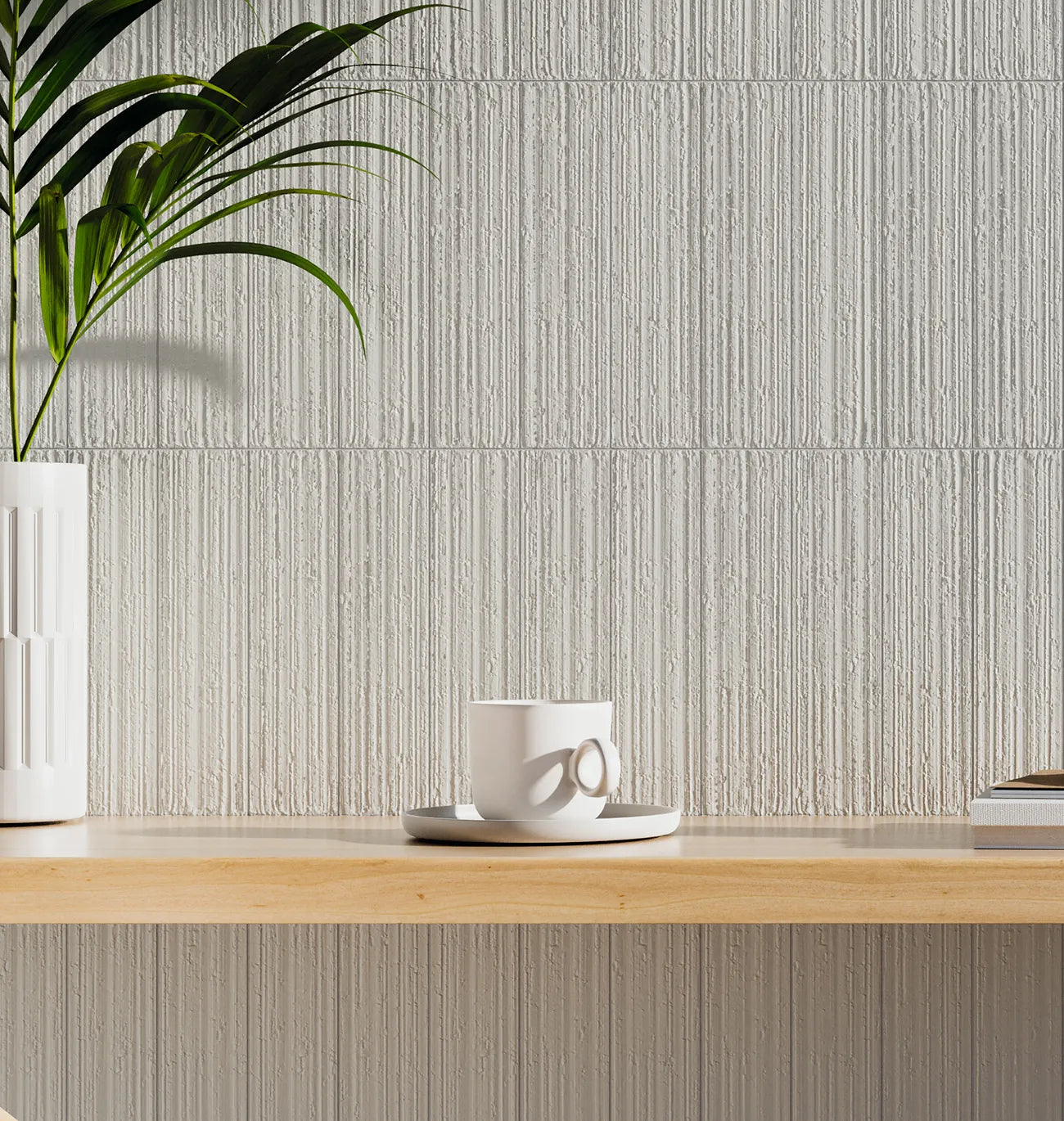
Textured relief tiles also deserve consideration. Used on one wall, they catch light and add depth without introducing competing colours. They are best kept away from areas that receive constant soap and shampoo residue, as deeply textured surfaces need more careful cleaning.
Pattern Scale Makes or Breaks the Scheme
A tile can look perfectly proportioned on a sample board and feel completely different once installed across several square metres. Large-scale patterns tend to suit larger rooms, broad shower walls and open-plan dressing areas. In a small bathroom, they can still work, but choose a design with generous negative space or a limited colour palette.
Smaller repeated motifs are often more forgiving in compact rooms. Hexagons, small florals and encaustic-inspired formats can create a sense of detail without overwhelming the room. The trade-off is installation time: more individual tiles, more cuts and more grout joints can increase labour and material requirements.
If the room already includes a statement basin, coloured sanitaryware or brushed brass brassware, a tonal decorative tile is usually the safer choice. Conversely, a simple white suite and pared-back fittings leave more space for a stronger floor or shower-wall pattern. Decorative tiles work best when the rest of the specification supports them rather than competes for attention.
Use Colour and Grout Deliberately
Grout is part of the finished surface, not an afterthought. A closely matched grout gives a patterned tile a softer, more continuous appearance. A contrasting grout outlines each tile and can emphasise a geometric layout, particularly with brick, herringbone or mosaic formats.
For a patterned floor, select one or two colours from the design for paint, towels or cabinetry. This creates a coordinated finish without making everything identical. Deep blue, green, terracotta and charcoal decorative tiles can feel particularly sophisticated when paired with warm whites, natural oak and brushed metal finishes.
Paler patterns remain a practical choice for smaller bathrooms, but avoid assuming that white grout is always low maintenance. On a floor, a mid-tone grout often provides a more forgiving finish. In wet areas, choose an appropriate grout and installation system for the substrate, movement requirements and level of exposure to water.
Plan Decorative Tiles Around Installation Details
Premium tiles deserve an equally considered installation. Before ordering, establish the tile layout, starting point and cut positions. A centred feature wall may need balancing cuts at both edges, while a patterned floor should be dry-laid or planned to ensure the motif lands well at doorways, sanitaryware and thresholds.
Allow for wastage beyond the net room measurement. Straightforward layouts may need a modest allowance, while diagonal, herringbone, patterned or small-format installations normally require more. Extra tiles are also valuable for future repairs, particularly where batch variation or discontinued designs may be a consideration.
Wall condition is critical. Decorative tiles with repeating lines make uneven backgrounds more noticeable, and large-format porcelain requires a flat, properly prepared surface. In shower areas, use a suitable waterproofing system before tiling where required, along with compatible adhesive, grout, sealant and trims. These components are not secondary purchases - they are part of the system that protects the finished room.
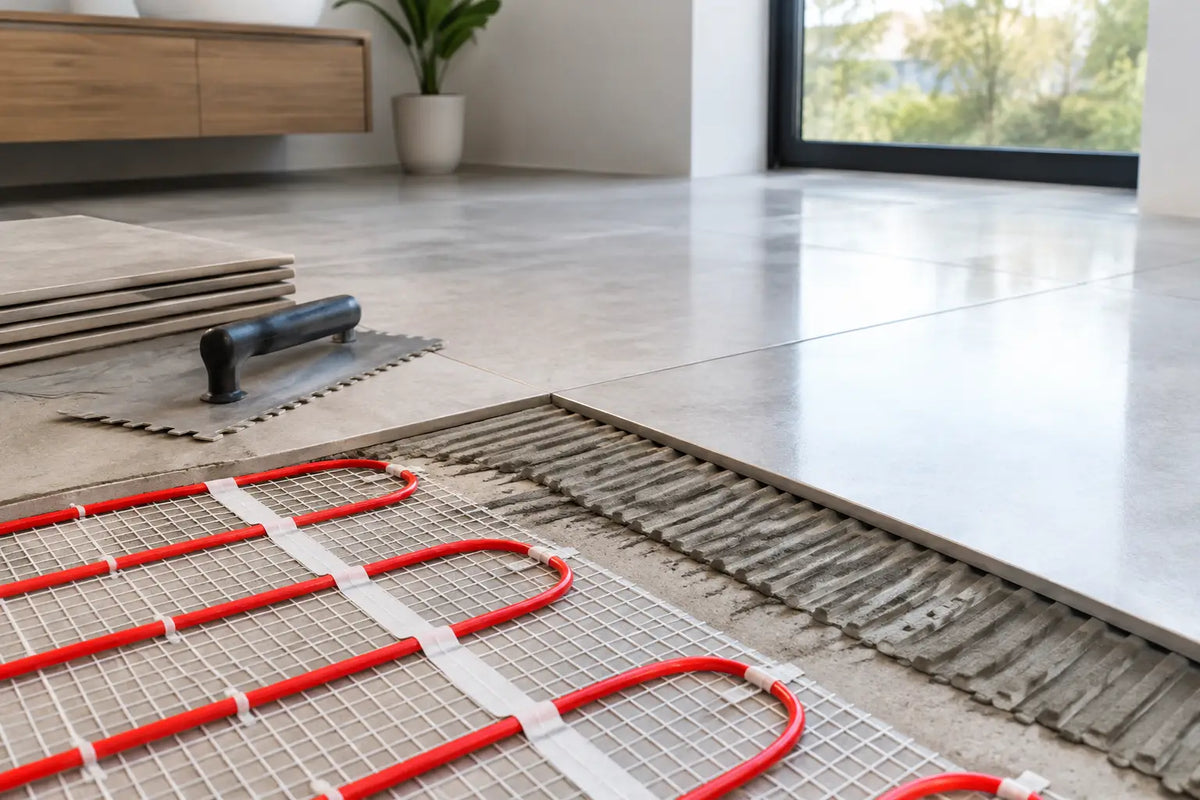
For floor tiles, confirm compatibility with underfloor heating if it is included in the project. Porcelain performs well with heated floors, but the substrate, adhesive and movement provisions must be correctly specified. Professional installers will also consider falls to drains in wet rooms, tile thickness, transitions to adjoining flooring and access points for future maintenance.
Decorative Tile Ideas That Stay Timeless
The safest route to a bathroom that still feels current in years to come is not necessarily avoiding pattern. It is choosing a pattern with a clear material quality and using it in a measured way. A muted encaustic-effect porcelain floor, a vertically stacked glazed wall tile or a marble-effect shower enclosure can all feel distinctive without being tied to a short-lived trend.
For high-end residential projects, consider using one decorative surface alongside larger plain-format tiles. This approach gives the room visual hierarchy and can be more cost-effective than tiling every surface in a premium statement range. For hospitality and commercial bathrooms, porcelain decorative tiles offer the added benefit of repeatable performance, easier maintenance planning and a cohesive finish across multiple rooms.
Samples are essential when comparing decorative options. Place them next to cabinetry, brassware, paint and flooring choices, then assess the scale from a normal viewing distance. Smart Tiles can help bring the visual and practical elements together, from selecting a European tile collection to calculating quantities and specifying the installation materials required.
A decorative bathroom should feel intentional from the first tile at the threshold to the final grout line. Select a design you will enjoy seeing every day, then give it the correct setting, surface preparation and installation detail to perform as well as it looks.