Bathroom Tile Trends 2027 - 8 Looks to Specify
The strongest bathroom tile trends 2027 are not about replacing every surface with a new novelty. They are about creating bathrooms with more warmth, texture and permanence, while retaining the practical performance expected from porcelain and ceramic. For a family en-suite, a carefully detailed principal bathroom or a hotel refurbishment, the most successful schemes will balance a distinctive design direction with surfaces that are straightforward to clean, specify and install.
The direction of bathroom tile trends 2027
Cool grey bathrooms have not disappeared, but the palette is becoming noticeably softer. Natural mineral tones, layered finishes and tiles with movement are taking priority over flat, uniform surfaces. The aim is a bathroom that feels considered rather than overly styled: a space with visual depth, tactile interest and enough neutrality to remain appealing for years.
This is good news for practical projects. Many of the key looks can be achieved with durable porcelain, giving homeowners and specifiers the character of natural stone, handmade ceramics or timber without introducing unnecessary maintenance demands in wet areas. Scale, layout and finish still matter as much as colour. A beautiful tile can feel entirely different when used across a large shower wall rather than as a small-format splashback.
1. Warm stone-effect porcelain
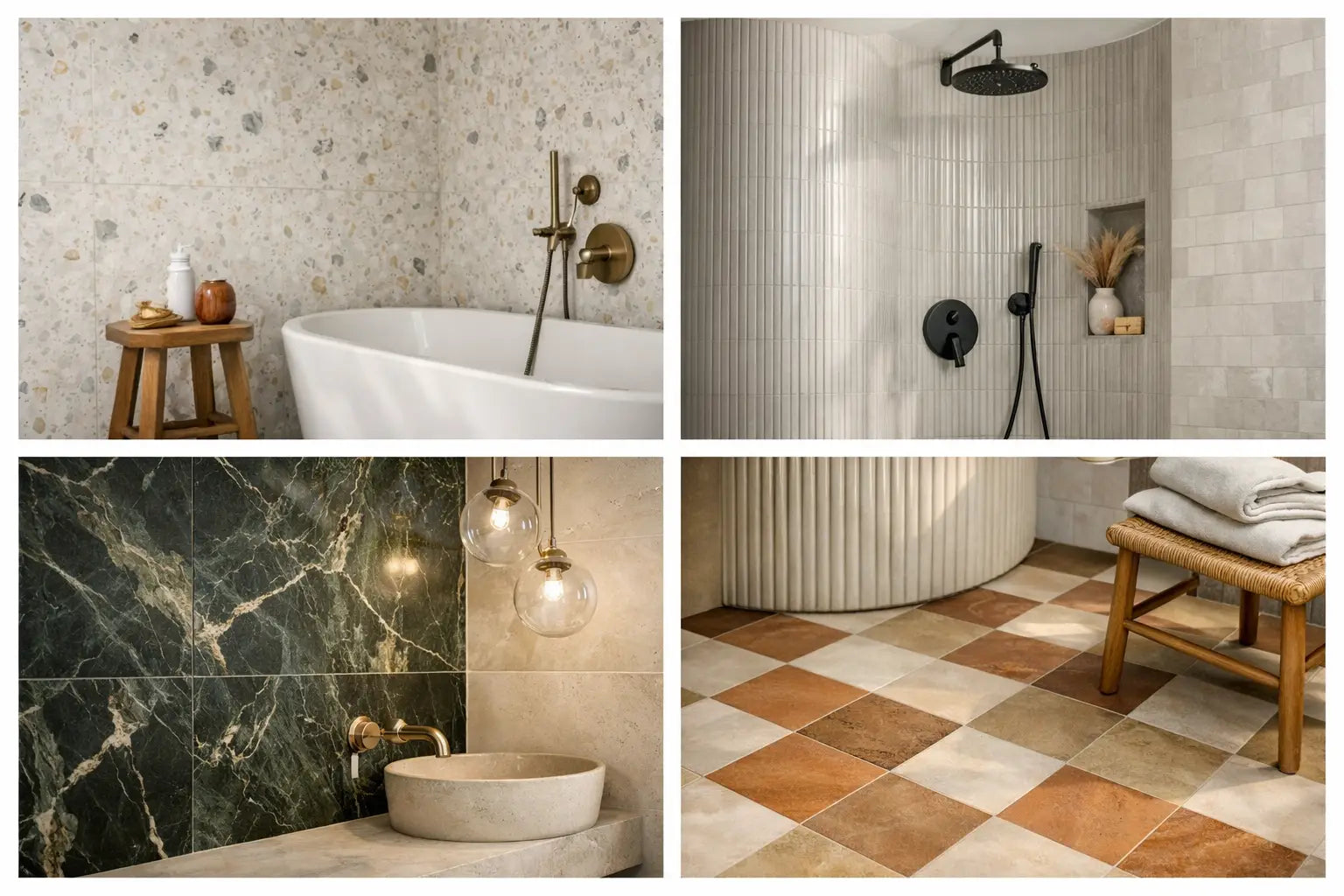
Travertine, limestone and sandstone-inspired finishes will remain central to bathroom tile trends in 2027, especially in warmer interpretations. Think chalk, almond, biscuit, putty and pale tobacco rather than cold concrete grey. These colours work comfortably with brushed brass, aged bronze, timber vanity units and off-white sanitaryware.
Porcelain stone-effect tiles are particularly useful where a project needs consistency and easy care. They offer a more controlled alternative to natural stone while retaining convincing variation through graphics, veining and subtle surface texture. Large formats can make a compact bathroom feel calmer by reducing grout lines, but they need a sufficiently flat substrate and careful handling during installation. In a small room with awkward cuts or limited access, a medium format may be the better commercial and practical choice.
2. Honed, matt and tactile finishes
Gloss still has a place on wall tiles, particularly where light reflection is needed. However, the overall movement is towards honed, soft-matt and lightly textured finishes that absorb light more gently. These surfaces make a room feel less clinical and give plain colour a more architectural quality.
For shower floors and wet zones, finish is a safety as well as a style decision. A tile that looks suitably refined on a display board must also offer the appropriate slip resistance for its location. Smaller tiles can be especially effective in shower areas because the additional grout joints improve underfoot grip and help follow falls to a drain. Always check the product’s technical suitability rather than selecting solely by appearance.
3. Structured wall tiles with real shadow play
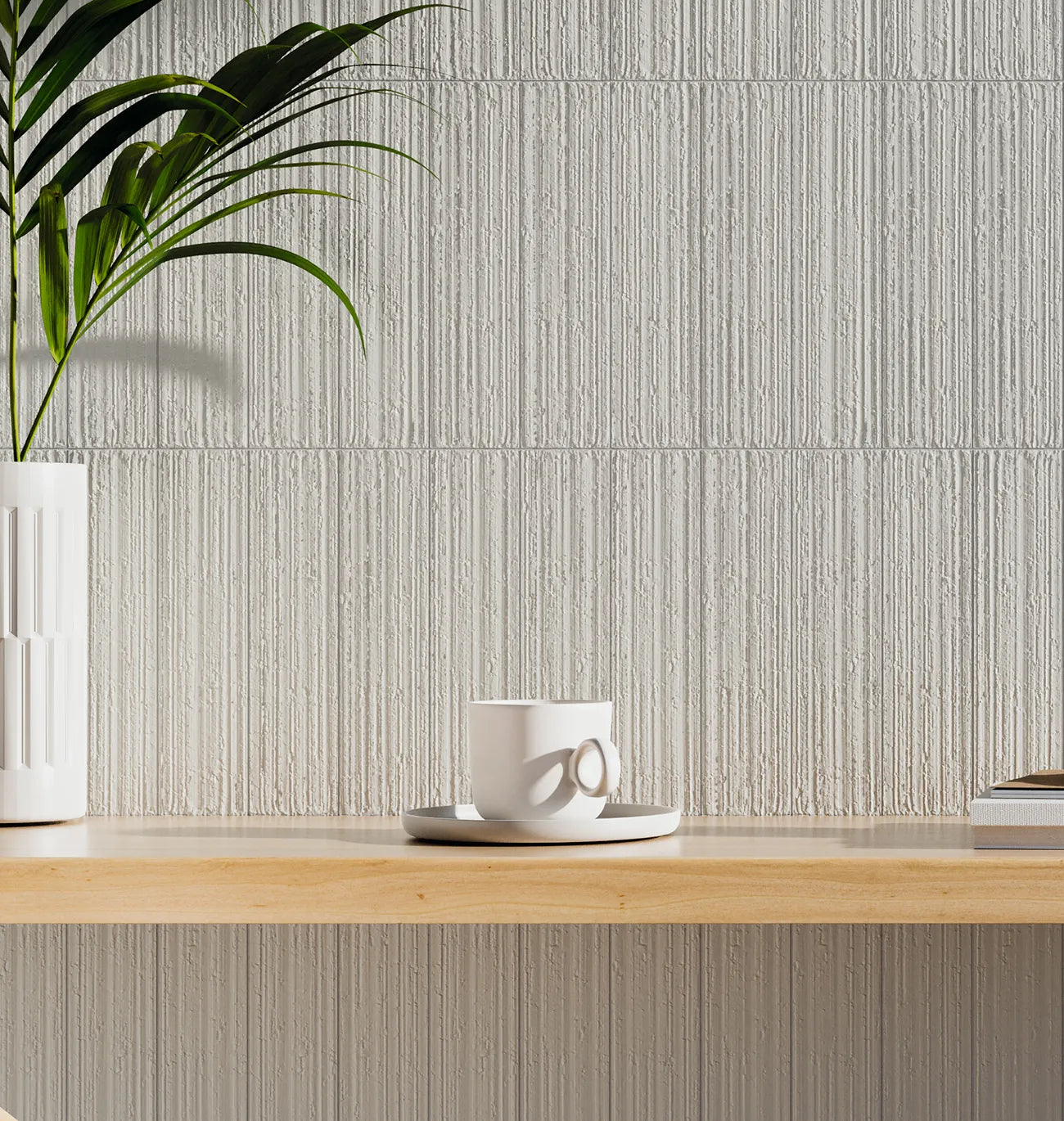
Fluted, ribbed and relief tiles are evolving beyond the narrow vertical profile. Expect rounded grooves, shallow geometric reliefs and irregular handcrafted-style faces that create movement across a wall. In the right setting, a structured tile gives a simple vanity wall or bath surround a strong focal point without relying on a bold printed pattern.
Use these tiles selectively. A full room of deep relief can become difficult to clean, and the changing shadows may feel busy in a compact bathroom. One feature wall, a recessed shelf or the wall behind a basin often provides enough impact. Match the grout colour closely to the tile if the aim is a quieter, more continuous finish; choose a contrast only where the grid is intended to be part of the design.
4. Tonal colour, not one flat shade
Bathroom colour is becoming more nuanced. Rather than a single blanket shade of green, blue or beige, schemes are using related tones across walls, floors and joinery. Dusty olive with olive-grey stone, for example, feels more enduring than a saturated green used everywhere. Clay pink, mineral blue, tobacco brown and deep aubergine will also appear in considered residential and hospitality schemes.
Colour works best when its location is planned. A darker tile on the floor can ground a room, while a lighter wall tile retains brightness around mirrors and shower glass. In rooms with limited natural daylight, request samples and view them at different times of day. Showroom lighting, north-facing windows and warm LED fittings can alter the appearance of a tile considerably.
5. Checkerboard and softened geometry
Pattern is returning, but the 2027 approach is more restrained than a high-contrast monochrome checkerboard. Expect combinations such as cream and tan, pale green and chalk, or muted red-brown with warm white. Squares, elongated hexagons and geometric mosaics can bring personality to a bathroom floor without overwhelming the room.
A patterned floor is often easiest to live with when the walls are quieter. It also makes sense to consider the room’s proportions. Small mosaics and busy motifs can make a tiny cloakroom feel intentional, whereas a larger family bathroom may benefit from a bigger repeat or a border detail that does not fragment the floor. For commercial bathrooms, choose patterns with a clear replacement strategy in mind, particularly where future repairs may be required.
6. Tile layouts that feel tailored
The layout is becoming a more visible part of the specification. Straight stack bonds, vertical brick patterns, offset grids and framed shower areas are replacing default installations. Rectangular tiles laid vertically can give a low ceiling more apparent height, while horizontal layouts can widen the perception of a narrow room.
This is where early planning pays off. Establish the tile set-out before choosing a final format, particularly around niches, windows, shower valves and vanity units. A centred layout with balanced cuts at the edges usually looks more premium than narrow slivers forced into a corner. It may also influence whether a 300 x 600 mm, 600 x 600 mm or larger format is the most efficient option for the room.
7. Continuous floor-to-wall surfaces
Using the same porcelain tile across the floor and selected walls remains a strong choice for walk-in showers and contemporary bathrooms. It produces a calm, cohesive envelope and can make the room appear larger. Stone-effect porcelain is especially suited to this treatment, as the design has enough natural variation to avoid looking flat.
Continuity does not have to mean covering every wall. A practical approach is to run the floor tile into the shower and use it on the rear shower wall, then introduce a complementary ceramic wall tile elsewhere. This retains the visual connection while controlling budget and avoiding an overly heavy result. Where the same tile is used on floors and walls, confirm that the finish is appropriate for both applications.
8. Thoughtful contrast in metal, grout and trim
The detail colours around a tile scheme are no longer an afterthought. Brushed brass and bronze continue to complement warm stones and clay tones, while brushed nickel remains a versatile option for cooler or more contemporary spaces. Tile trims can be chosen to blend discreetly with the tile, match brassware or provide a deliberate dark outline.
Grout deserves the same attention. Colour-matched grout gives large-format stone effects a calm finish, while a slightly contrasting tone can bring definition to a handmade-look wall tile. In heavily used bathrooms, select a grout designed for the environment and plan joint widths carefully. Very narrow joints may look sharp initially, but product tolerances, tile edges and substrate movement all need to be considered by the installer.
Planning a trend-led bathroom that will last
A fashionable bathroom should still suit the property, the users and the installation conditions. Before committing, order samples, compare them beside paint and brassware, and assess the chosen tile under the room’s own lighting. Check coverage carefully, allow for cuts and sensible wastage, and make sure the adhesive, grout, waterproofing system, trims and backer boards are suitable for the substrate and wet-zone requirements.
For larger renovations, it is worth finalising the tile format and layout before plumbing positions are fixed. A shower niche or basin centred on the tile grid is a small decision that makes a finished bathroom look properly resolved. Smart Tiles can help bring the design and technical elements together, from selecting a European-led porcelain or ceramic collection to calculating quantities and completing the installation specification.
Choose a direction that you will enjoy every day, then support it with the right finish, format and fitting materials. That is how a bathroom follows the 2027 look without becoming tied to a short-lived trend.