Tile Showroom vs Online: Which Suits Your Project?
A porcelain tile can look soft grey on a screen, then reveal a warm taupe undertone when it arrives. A polished finish may look understated in a product image but become highly reflective under bathroom lighting. That is the real decision behind tile showroom vs online: not where you happen to buy, but how much certainty your project needs before materials are ordered.
For a small splashback, online browsing may provide everything required. For a large open-plan floor, a luxury bathroom or a commercial specification, seeing the surface and discussing the installation can prevent costly changes later. The strongest approach often combines both.
Tile showroom vs online: the practical difference
Online shopping is exceptionally useful for narrowing a large choice. It allows homeowners, designers and contractors to compare formats, colours, finishes and prices at a convenient time, while checking product information alongside matching grouts, trims, adhesives and preparation materials. It is particularly effective when you already know the look you want, such as a large-format stone-effect porcelain, a decorative kitchen wall tile or a timber floor in a defined shade.
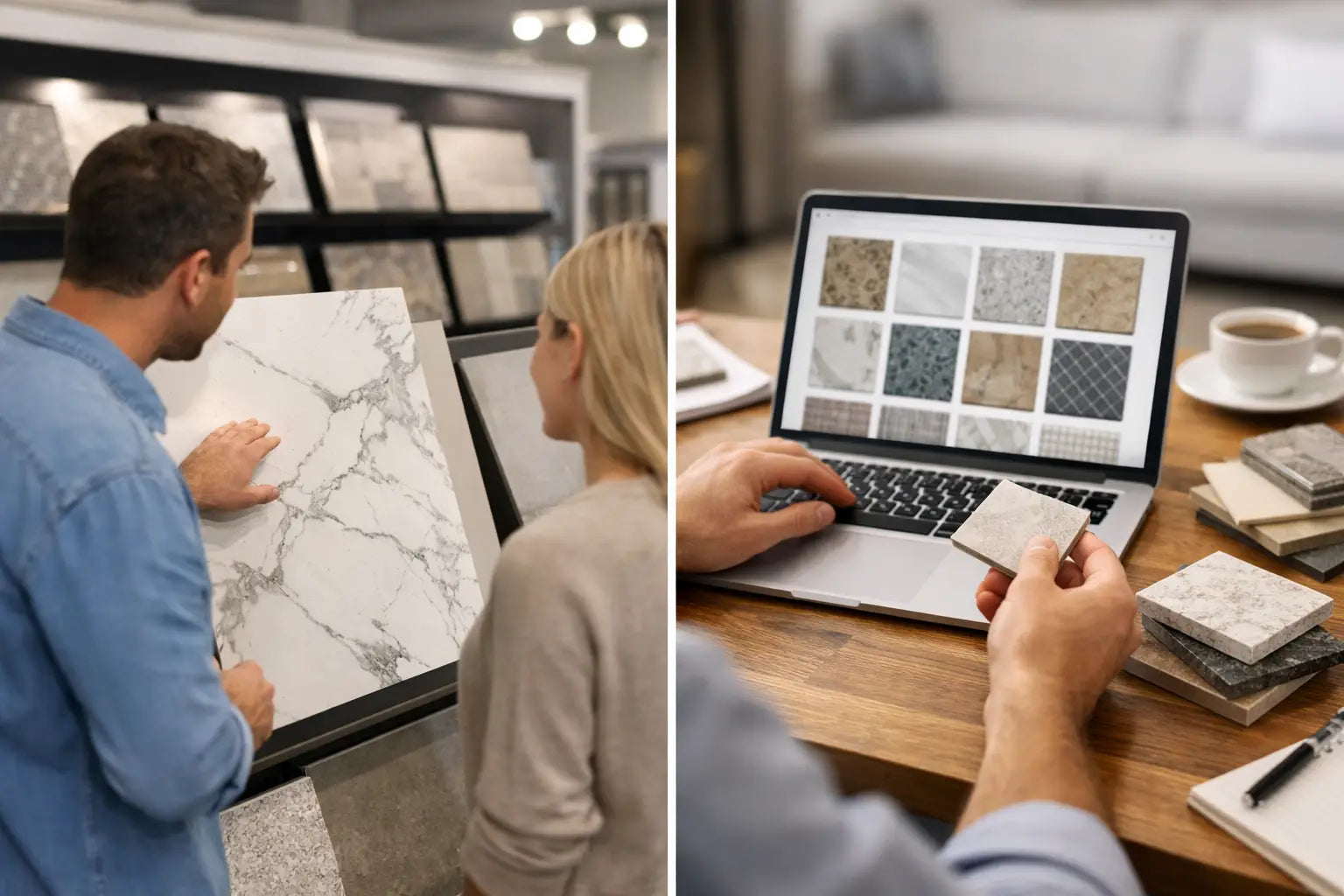
A showroom adds physical context. Tiles can be viewed at full scale, handled in natural and artificial light, and compared against cabinetry, paint samples, sanitaryware or flooring choices. This matters because a tile is not simply a colour. Its texture, edge detail, variation, surface sheen and scale all affect the finished room.
Neither route is automatically better. Online buying is efficient; showroom selection is tactile and consultative. The right choice depends on the value of the order, the complexity of the installation and how confident you are in the product specification.
What online tile shopping does well
For early-stage planning, an online store is hard to beat. You can search by room, material, size, colour and finish without travelling between retailers. This is useful when building a scheme, comparing several styles or working around a busy renovation schedule.
Online product pages also make technical comparison more straightforward. A buyer can review whether a tile is suitable for walls or floors, whether it is appropriate for bathrooms, and how its dimensions fit the layout. For trade and commercial customers, the ability to review ranges, order samples and plan quantities remotely is valuable when several projects are moving at once.
It is also easier to build a complete basket. Tiles, levelling systems, adhesives, grout, trims, sealers and backer boards can be considered together rather than treated as separate purchases. That helps avoid a common project delay: attractive tiles arriving on site without the appropriate materials to install them correctly.
Online ordering works especially well when the product has already been specified, when you are replacing an existing tile, or when you have approved a sample. It can also be the most practical option for customers outside the local area who need dependable delivery planning.
The limitations of buying from images alone
Screens alter colour, and studio photography cannot fully communicate finish. This is most noticeable with natural stone effects, concrete looks, timber-look porcelain and handmade-style ceramics, where tonal movement and surface character are part of the appeal.
Tile size can also be deceptive. A 600 x 1200mm porcelain tile has a very different visual weight from a 600 x 600mm tile, even when both are shown in the same styled room image. Large formats can make a space feel calmer and more expansive, but they may require a flatter substrate, careful handling and a suitably experienced installer.
A sample is the sensible bridge between online inspiration and final selection. View it in the intended room at different times of day, place it beside your chosen paint and furniture finishes, and check it under the lighting that will be used after installation. For patterned or varied tiles, ask whether several pieces can be viewed so you can understand the range of faces and tones.
Why a tile showroom earns its place
A showroom is most valuable when several design and technical choices are connected. A bathroom floor may need to work with wall tiles, brassware, vanity units, lighting and shower-screen glass. A kitchen floor must complement cabinetry while being practical for daily use. In these settings, the ability to stand back from larger displays and compare materials side by side gives far more confidence than viewing isolated images.
At Smart Tiles, the showroom experience is designed around this kind of practical selection. Customers can assess design-led European collections while discussing formats, finishes and the installation products required to complete the scheme professionally.
Showroom advice is equally useful when performance is a priority. A polished porcelain may suit a low-traffic feature wall, while a matt or structured surface could be a more considered choice for an entrance, wet area or frequently used family floor. The right answer depends on the room, cleaning expectations, footfall and the wider design brief.
For commercial buyers, designers and contractors, a conversation before ordering can clarify product suitability, lead times, batch requirements and quantity planning. This is not about overcomplicating a purchase. It is about reducing risk before a large order reaches site.
See the details that affect the finished result
In person, it is easier to judge the details that make premium surfaces feel considered. You can see whether a rectified edge supports a tighter grout joint, compare a satin finish against a full polish, and understand how a decorative tile catches light across a wall.
You can also assess whether the chosen grout enhances or interrupts the design. A close tonal grout can create a quieter, more continuous floor, while a contrasting grout makes a format or pattern more prominent. Trims deserve the same attention, particularly around niches, external corners and transitions to other floor finishes.
Quantities, wastage and installation planning
The most expensive tile is often the one you cannot match later. Ordering accurately matters, but so does allowing enough additional material for cuts, breakages, layout adjustments and future repairs.
Simple rooms with square tiles may need a modest allowance. Diagonal layouts, herringbone patterns, large-format tiles, multiple doorways and irregular spaces generally require more. The exact percentage varies with the layout and installer’s cutting plan, so a coverage calculator is a helpful starting point rather than a substitute for measured site information.
For larger projects, confirm the final quantity before ordering and aim to purchase the full requirement in one go where possible. This improves batch consistency and reduces the chance that a later order will vary slightly in shade or calibre. Keep spare tiles from the same batch, labelled and stored safely, for future maintenance.
Substrate preparation should be considered before the tile is selected, not when the installer arrives. Floors may require levelling, walls may need boarding, and wet areas need appropriate waterproofing measures. The tile, adhesive and grout system must suit the substrate and intended use. A beautiful porcelain tile cannot compensate for inadequate preparation beneath it.
A better way to buy tiles for your project
For many customers, the most effective process starts online and finishes with physical confirmation. Use online browsing to identify collections, formats and price points. Order samples or visit a showroom when colour, finish or scale will influence the final decision. Then place the complete order once quantities, accessories and delivery requirements are clear.
This approach is especially useful for high-value renovations. It maintains the convenience of browsing from home while adding the reassurance of seeing the product properly before committing to a full room or whole-floor order.
If your project is straightforward and you have already approved the tile, online ordering can be a fast and efficient route. If the project includes several finishes, complex detailing, large-format porcelain or demanding site conditions, showroom guidance is likely to save time and uncertainty.
The best purchase is not the one made fastest. It is the one that leaves you with the right surface, enough material, compatible installation products and a finish that still looks right when the room is complete.