Stone Effect Porcelain Tiles for Every Room
A limestone-look floor in a busy kitchen, a slate-style bathroom wall, a concrete-inspired hallway with cleaner edges and less maintenance - this is exactly why stone effect porcelain tiles continue to be specified across both residential and commercial interiors. They offer the visual depth of natural materials while giving you a more controlled, practical surface for everyday use.
For homeowners, that usually means achieving a premium finish without the ongoing care that some natural stone requires. For designers, contractors and specifiers, it means more consistency across batches, dependable performance, and a wider choice of sizes, colours and finishes that suit modern project requirements. When the look needs to feel refined but the installation also needs to work in the real world, this category makes a strong case.
Why stone effect porcelain tiles remain a popular choice
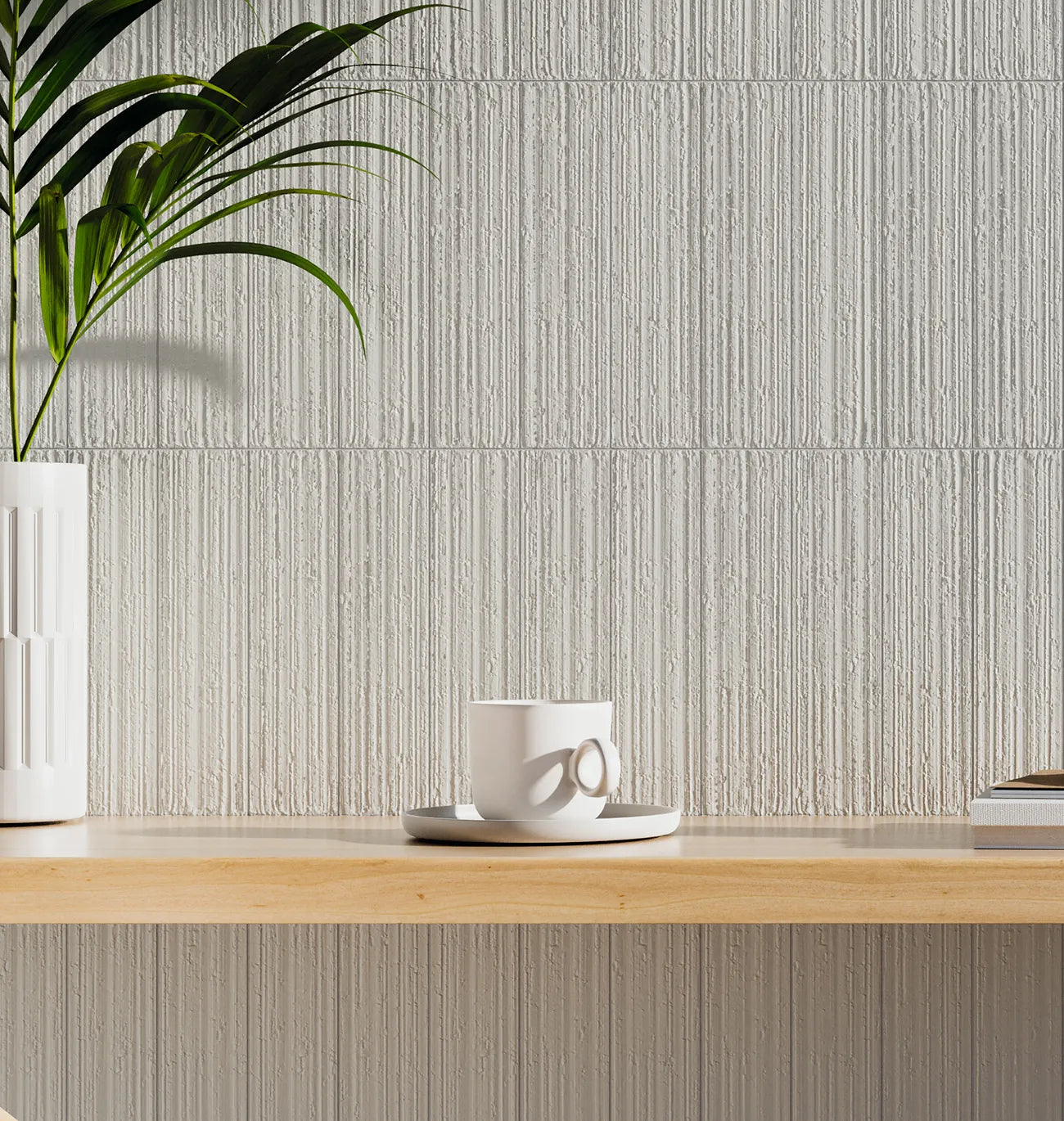
The appeal starts with aesthetics, but it does not end there. Advances in tile production now allow porcelain to capture the tone variation, veining, riven texture and surface movement found in stone, often with very convincing results. Whether the design direction calls for soft travertine tones, cooler concrete-greys, dramatic slate character or understated limestone, there is usually a porcelain option that delivers the look with fewer compromises.
The practical benefits are just as important. Porcelain is dense, hardwearing and well suited to spaces that see regular foot traffic, splashes and general wear. In kitchens, utility rooms, entrance areas and bathrooms, that matters. In commercial settings such as hospitality, retail and washrooms, it matters even more.
There is also a specification advantage. Natural stone is beautiful, but every project team knows it can introduce variables. Porcelain gives a cleaner level of predictability in thickness, maintenance expectations and long-term appearance. That can make planning simpler, particularly when deadlines, quantities and installation sequencing are under pressure.
What to look for when choosing stone effect porcelain tiles
The first decision is usually the style of stone you want to replicate. Limestone-effect tiles tend to create a calm, balanced backdrop and work particularly well in contemporary kitchens, open-plan living spaces and understated bathrooms. Slate-effect designs bring stronger movement and texture, often suiting utility spaces, cloakrooms and feature walls. Marble-inspired porcelain can sit within the same broader category of stone looks, but it gives a more decorative and formal finish.
Colour should be considered in relation to light, room size and the overall material palette. Pale beige, ivory and light greige tones help smaller rooms feel more open and sit comfortably with timber, brushed brass and warm neutrals. Mid-grey and charcoal can create a sharper architectural look, though they tend to show dust more readily on some floors. Warmer taupe and sand shades are often the easiest to live with because they soften the scheme without feeling dated.
Finish matters too. Matt and natural finishes are often the most versatile for floors, particularly where a relaxed, stone-like appearance is the goal. They generally feel more authentic and offer a practical surface for everyday use. Polished options can work on walls or in lower-traffic settings, but they give a more formal appearance that does not suit every stone style.
Tile size changes the feel of the room as much as the colour does. Large format stone effect porcelain tiles can make a space look more streamlined because there are fewer grout joints interrupting the surface. That is often appealing in open-plan areas and larger bathrooms. Smaller formats, however, can be the right choice where the room is more compact, the layout more complex, or a traditional style is required.
Stone effect porcelain tiles on walls and floors
One of the strongest advantages of this category is design continuity. Using the same or coordinating tile on walls and floors creates a more complete, considered scheme, especially in bathrooms and spa-style interiors. It can make compact rooms feel larger and reduce visual clutter.
That said, wall and floor use should not be treated as identical decisions. A tile that looks excellent on a wall may not be the right technical choice for a floor if slip resistance or wear rating is a concern. In wet rooms, shower areas and commercial spaces, performance should lead the conversation just as much as appearance.
There is also the question of scale. A heavily patterned slate-effect tile may add welcome interest to a floor, but across a full wall it could feel too busy. By contrast, a quieter limestone-effect tile can often work successfully across both surfaces because the visual movement is softer and easier to repeat.
Where they work best in the home
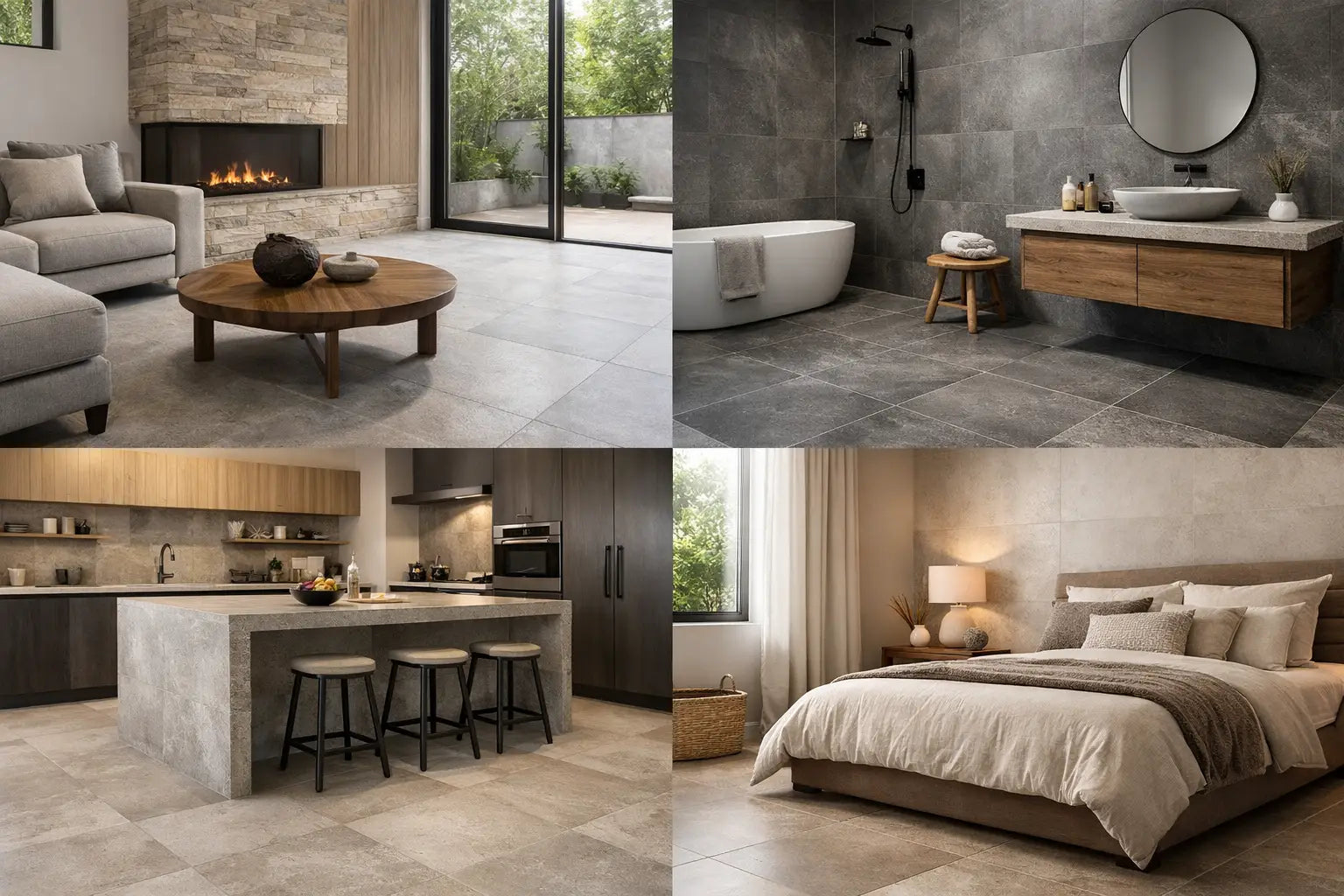
In kitchens, stone effect porcelain tiles are a reliable choice because they combine design value with day-to-day practicality. They suit underfloor heating, work well with shaker and handleless cabinetry alike, and provide a grounded finish that complements timber, painted units and natural worktops. A soft stone look can help a kitchen feel premium without becoming overly formal.
In bathrooms, they are often chosen for their ability to deliver a calm, spa-led look while standing up well to moisture and regular cleaning. Stone visuals naturally lend themselves to this setting, particularly in neutral tones and larger formats. If the aim is a bathroom that feels more architectural than decorative, this is usually a strong direction.
Hallways and entrance areas benefit from the durability of porcelain. These spaces work hard, and the floor needs to cope with muddy shoes, wet weather and frequent use. A mid-tone stone effect tends to be practical here because it balances style with easier day-to-day appearance.
Living areas are increasingly using porcelain in place of stone, particularly in open-plan renovations. The right tile can create a consistent flow from kitchen to dining and lounge zones, and with current manufacturing quality, the finished result can feel both substantial and refined.
Practical points before you buy
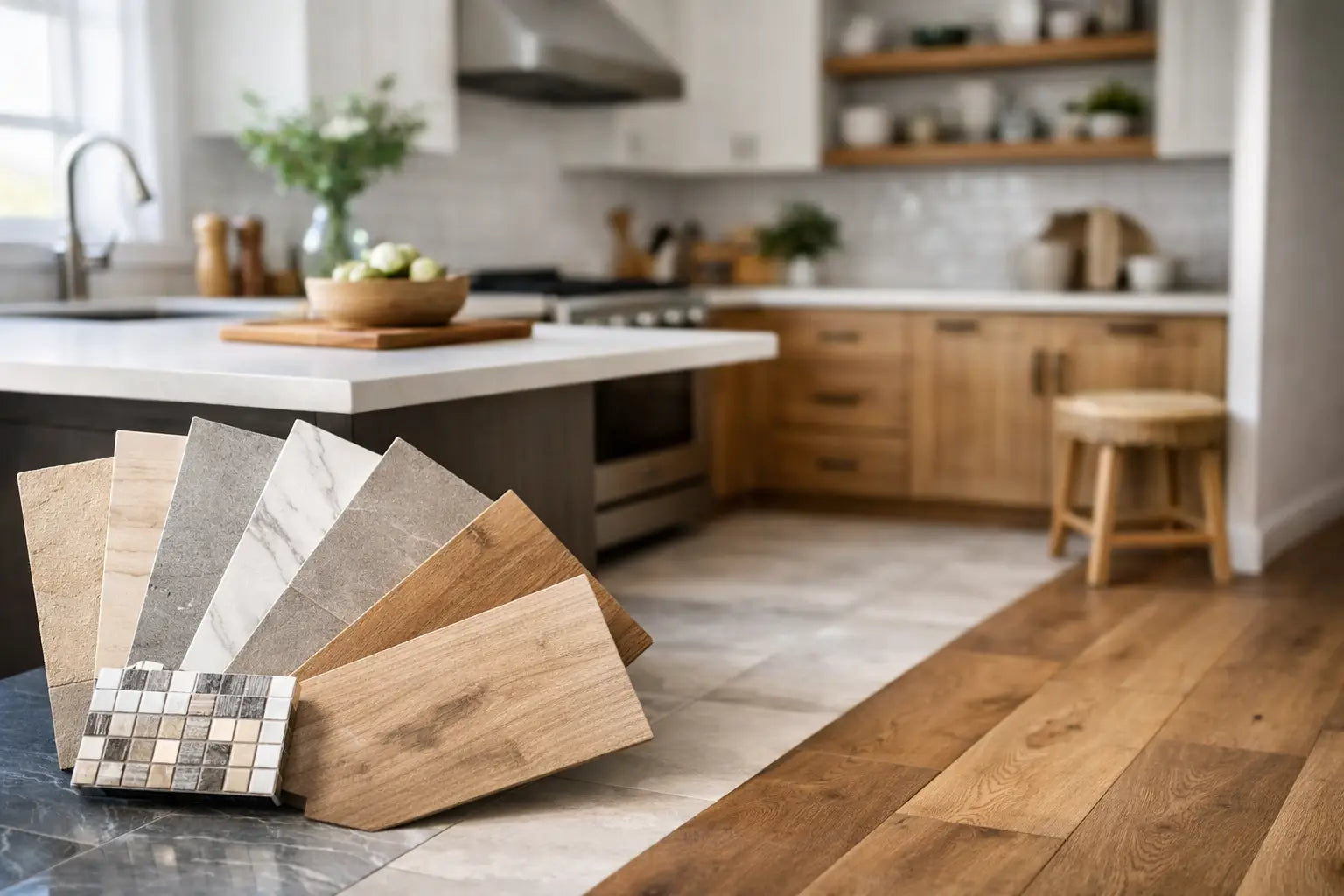
Samples are worth taking seriously. A tile can look very different in a showroom display or on a screen than it does in your own property. Natural daylight, room orientation and adjacent materials all affect how the colour reads. Ordering samples gives you a better sense of texture, shade variation and scale before committing to quantity.
It is also sensible to think beyond the tile itself. Grout colour changes the overall result more than many buyers expect. A close-match grout creates a more continuous surface, while a contrasting grout defines each tile and can make the layout feel more prominent. Trims, adhesives, levelling systems and preparation boards should be planned at the same time, not as an afterthought.
Quantity planning matters, particularly on larger projects or when a tile has noticeable variation. Accurate coverage calculations, allowing for cuts and wastage, help avoid delays and reduce the risk of colour variation between batches if extra material is needed later. For trade buyers and commercial projects, this is not a minor detail - it is part of keeping the installation programme on track.
Design trade-offs worth considering
Stone effect porcelain tiles are a strong all-round option, but there are still decisions to make. If you want the exact individuality of quarried stone, porcelain will not reproduce every irregularity in the same way. Some clients actively prefer that natural unpredictability. Others see consistency as a benefit.
There is also a balance between realism and practicality. A highly textured tile may look closer to split-face or riven stone, but it can be less straightforward to clean in some settings. A smoother matt finish may be easier to maintain while still delivering the overall stone impression. The right answer depends on the room, the level of traffic and how the surface will be used.
Price positioning can vary as well. Stone effect porcelain spans accessible entry points and more design-led premium collections from European manufacturers. Higher-end ranges often justify the difference through more convincing graphics, better variation control, refined sizes and coordinated accessories. On a feature project, those details can make a visible difference.
Making the right specification choice
The best results come from treating the tile as part of the full surface specification rather than a simple colour choice. Room type, substrate, traffic level, finish, layout and installation materials all need to align. That applies whether you are refurbishing a family bathroom or specifying flooring for a hospitality scheme.
At Smart Tiles, this is why selection support matters as much as the product itself. The right stone-look tile should not only suit the design brief, but also the practical demands of the space, the installation method and the finish you want to achieve once everything is complete.
If you are choosing for a current project, focus on the room first, then the look. The most successful interiors tend to come from that order - a tile that feels right visually, performs properly, and continues to look considered long after installation day.