Article: Matte Tiles vs Glossy: Which Finish Suits You?
Matte Tiles vs Glossy: Which Finish Suits You?
A tile finish can change the entire character of a room before colour, pattern or format are even considered. In the matte tiles vs glossy decision, the right answer is rarely about one finish being better than the other. It is about how the surface will look in your light, how it will be used, and how much day-to-day maintenance suits the project.
Gloss can bring brightness and polish to a compact ensuite or kitchen splashback. Matte porcelain can give a large open-plan floor a quieter, more architectural feel. Both can look exceptionally premium when selected for the right location and specified with the installation in mind.
Matte tiles vs glossy: the key differences
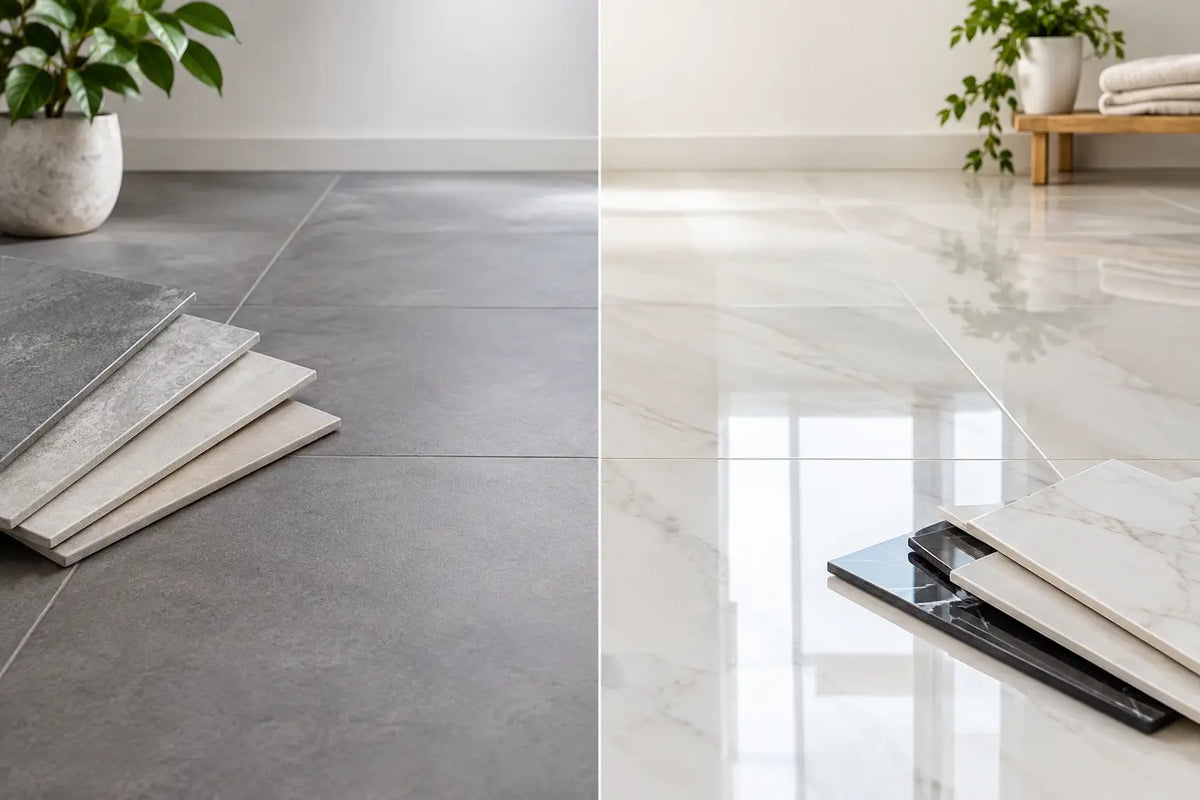
The distinction is in the surface sheen. Glossy tiles have a reflective finish that bounces light around the room, often creating a crisp, polished appearance. Matte tiles have little to no reflection, producing a softer, more understated surface that tends to emphasise the body, texture and tonal variation of the tile.
Neither finish is limited to one material. Porcelain, ceramic and many decorative wall tile collections are available in matte or gloss, although the exact choice will vary by range. Always check the product specification rather than assuming a tile is suitable for a particular wall or floor simply because of its finish.
Light and sense of space
Glossy wall tiles are particularly effective where natural light is limited. Their reflective quality can make a small bathroom, cloakroom or utility feel lighter and more open, especially in clean whites, pale neutrals and soft pastel shades. A gloss finish also brings definition to bevelled, metro and decorative-format tiles, where changing light catches the edges.
Matte surfaces absorb rather than reflect light. This makes them well suited to larger rooms, south-facing spaces and interiors where the aim is calm visual continuity. Large-format matte porcelain can create a refined, almost monolithic floor with fewer visual distractions. It is also a considered choice alongside timber, natural fabrics, brushed brass and textured finishes.
There is a trade-off. A high-gloss surface can reveal reflections from windows, spotlights and cabinetry, which may be desirable in a contemporary bathroom but less so across a large kitchen floor. Matte finishes avoid glare and are generally more forgiving in strong daylight.
Appearance, style and tile format
Glossy tiles suit schemes where a clean, tailored finish is the priority. They work naturally for bathroom walls, shower enclosures, kitchen splashbacks and feature walls. A glossy green, blue or white ceramic tile can give a traditional shape a sharper, more contemporary result.
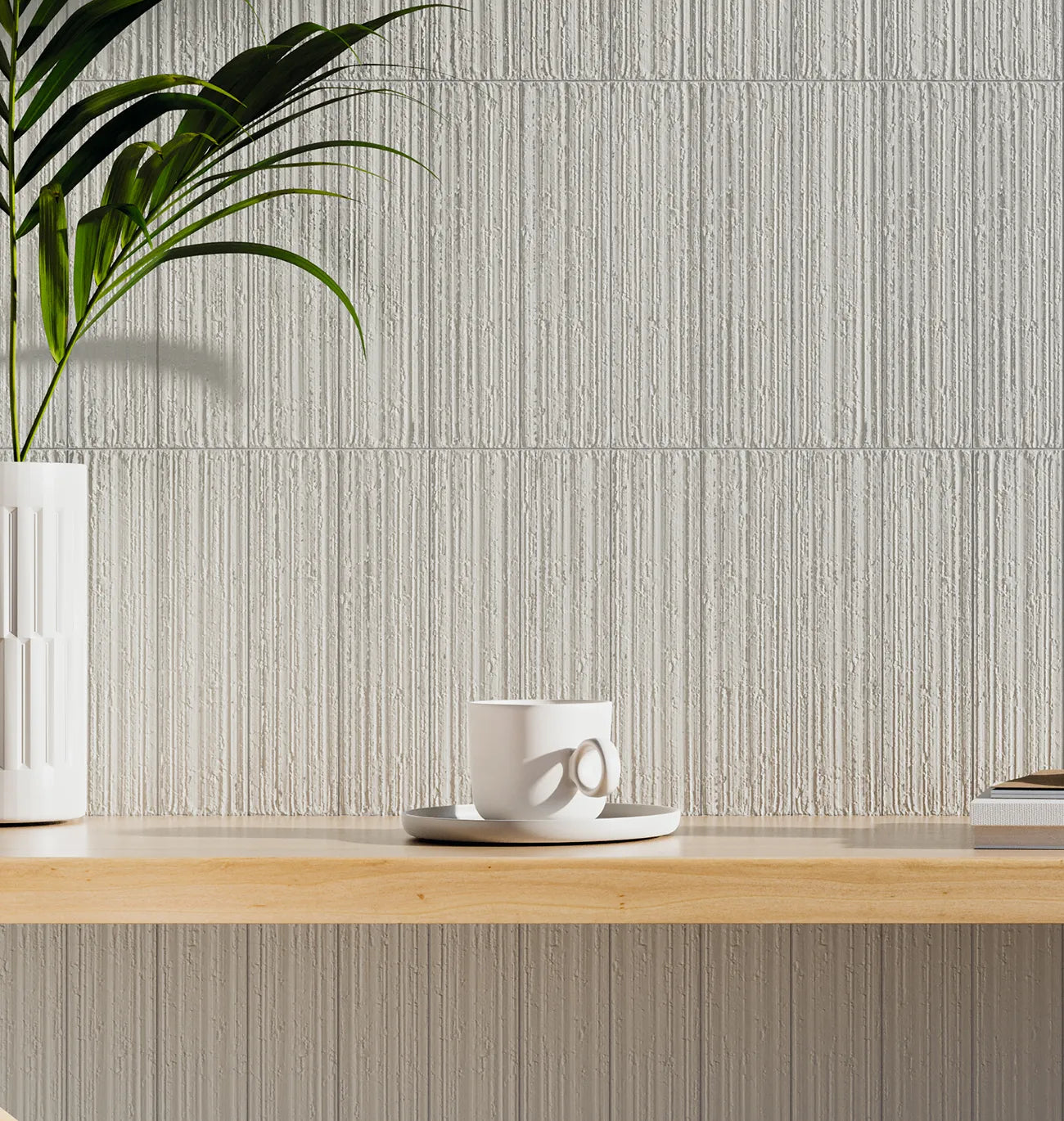
Matte tiles are often chosen for stone-effect, concrete-effect and wood-effect designs because the reduced sheen supports a more natural appearance. They are equally at home in a modern country kitchen, a minimalist bathroom or a commercial reception area. In rectified large-format porcelain, matte finishes can feel particularly considered when paired with narrow, colour-matched grout joints.
Do not treat matte as automatically rustic or gloss as automatically modern. A polished marble-effect porcelain can be dramatic and formal, while a matte black geometric wall tile can be distinctly contemporary. The tile design, grout colour, layout and surrounding materials all shape the final result.
Which finish is better for floors?
For most floor applications, matte porcelain is the more practical starting point. It usually conceals everyday dust, water marks and light smudging better than a highly reflective surface, and many ranges offer a finish designed with improved slip resistance. This is useful in entrance halls, kitchens, utility rooms, bathrooms and commercial spaces where wet footwear or regular traffic are expected.
However, finish alone does not confirm slip performance. A tile described as matte may still be unsuitable for wet barefoot areas, external spaces or demanding commercial settings. Check the manufacturer’s stated slip-resistance classification, the intended use of the product and any project-specific requirements. For bathrooms, distinguish between the main floor, the shower enclosure and a level-access wet-room area, as each can require a different specification.
Glossy floor tiles can look striking in low-traffic areas, particularly in formal spaces where a polished, reflective look is central to the design. They demand more consideration in homes with children, pets or an active household, and they are rarely the first choice for shower floors, entrances or busy kitchen floors. Water, grease and high shine are not an ideal combination.
Tile size matters too. Smaller tiles create more grout joints, which can improve underfoot grip in a shower area. A larger tile may be suitable on the main bathroom floor but impractical on a shower tray because it cannot comfortably follow the required falls. A matching mosaic or smaller-format option is often the more effective solution.
Cleaning and everyday maintenance
Glossy tiles are smooth and simple to wipe down, making them an excellent option for kitchen walls and bathroom walls exposed to splashes. The downside is that fingerprints, limescale, water spots and streaks can be easier to see, particularly on dark colours or in rooms with hard water. Regular wiping with a suitable neutral cleaner and a dry microfibre cloth helps preserve the clear shine.
Matte tiles tend to disguise marks better, but they are not maintenance-free. Textured matte surfaces can hold onto dirt more readily than a smooth glazed tile, especially on kitchen floors or in entrance areas. A regular vacuum or soft brush followed by a suitable floor cleaner will keep them looking their best. Avoid harsh acidic products unless they are specifically approved for the tile and grout being cleaned.
Grout selection deserves equal attention. Light grout beside a dark matte floor can make joints visually prominent, while an unsuitable grout shade can undermine an otherwise carefully chosen glossy wall tile. For high-use areas, a stain-resistant grout system and a correctly selected sealant at movement joints support a cleaner, longer-lasting finish.
Choosing for bathrooms and kitchens
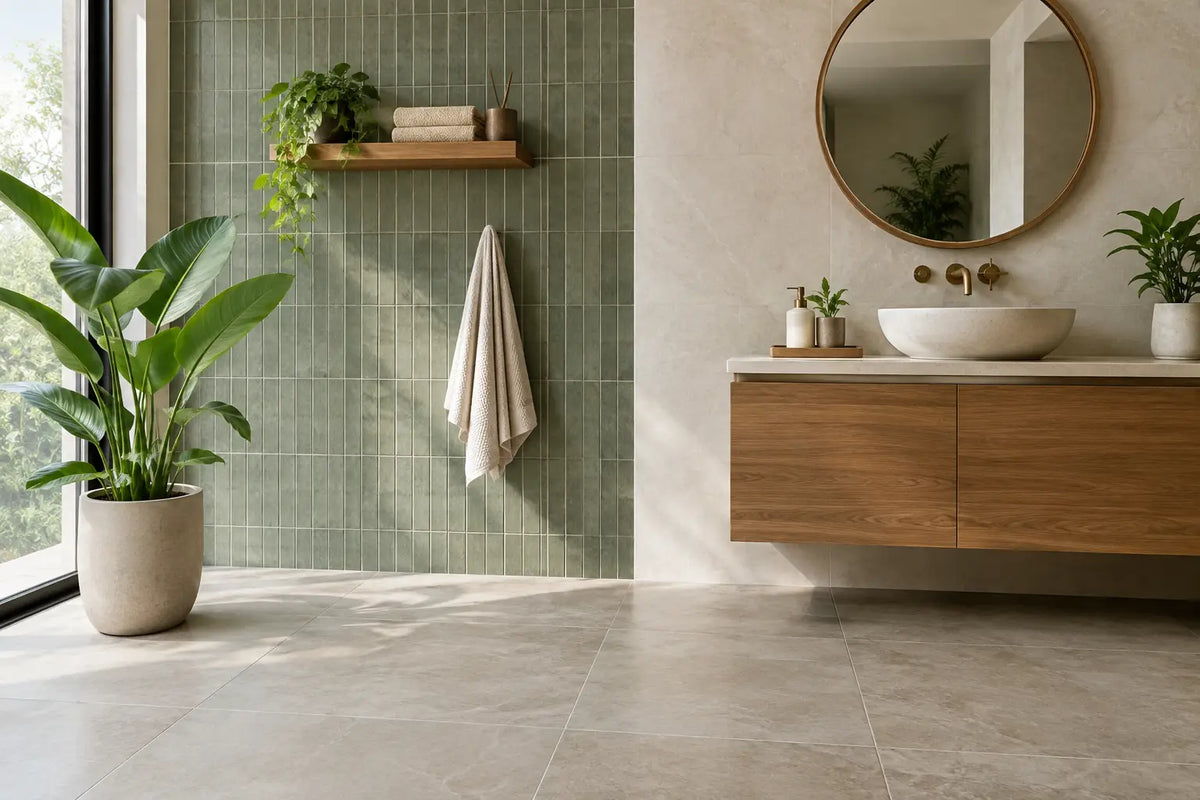
In a bathroom, it is common to combine both finishes. Glossy tiles on the walls can brighten the room and reflect light around the basin area, while a matte porcelain floor provides visual balance and a more practical walking surface. Using the same colour family in different finishes can produce a coordinated scheme without making the room feel flat.
For a shower enclosure, consider the cleaning routine as well as the look. Glossy wall tiles are easy to rinse and wipe, but a matte or textured floor tile with the appropriate wet-area slip rating is typically the more suitable choice. A full-height tiled wall also means considering trims, waterproofing and substrate preparation before the first tile is fixed.
In kitchens, glossy tiles remain a strong option for splashbacks, where their light-reflecting quality lifts worktop areas and their smooth finish handles everyday splashes well. Matte porcelain is often the more dependable choice for the floor, particularly in open-plan rooms that connect kitchen, dining and living spaces. It gives the scheme a consistent foundation without competing with cabinetry or lighting.
Practical specification checks before ordering
A finish should never be selected from an online image alone. Order samples and view them beside cabinetry, paint, worktops and flooring in the room where they will be used. Look at them in morning light, artificial evening light and, where relevant, beside the fittings that will reflect in the surface.
Before placing the final order, confirm the tile’s intended application, thickness, finish, slip information and whether it is rectified. Calculate the coverage carefully, allowing for cuts, layout, breakages and a sensible level of spare material for future repairs. For larger projects, batch consistency and delivery timing should also be confirmed before installation is scheduled.
The fitting system matters as much as the finish. A suitable adhesive, grout, trim, preparation board or tanking system protects the investment in the tile itself. Large-format porcelain, for example, needs a sound, level substrate and an adhesive method appropriate to the tile size and setting.
A showroom visit can be particularly valuable when comparing finishes at scale. Smart Tiles can help bring together samples, tile quantities and the installation materials needed to move from a design decision to a properly specified project.
The most successful choice is the one that still looks right after a busy week of cooking, showering, muddy shoes and changing light. Start with how the room will be used, then let the finish support the design rather than dictate it.