
How to Order Tile Samples Online with Confidence
A tile can look beautifully restrained on screen, then feel too cool, too glossy or too busy once it is held against your cabinetry, paintwork and natural light. That is why customers order tile samples online before committing to a bathroom, kitchen, hallway or commercial scheme. A sample turns a considered online choice into a product decision grounded in the actual space.
For a small splashback, a single sample may be enough to confirm the direction. For a large-format floor, a feature wall or a project where several finishes meet, it pays to compare a small selection side by side. The objective is not simply to choose the most attractive tile in isolation. It is to specify a surface that works with the room, the intended use and the installation details.
Why order tile samples online before buying
Photographs are invaluable for browsing, but every screen renders colour slightly differently. Lighting, image editing and surrounding finishes can also affect how a tile appears. A warm white wall tile may read cream in one setting and crisp white in another; a pale grey porcelain may reveal beige, blue or green undertones once it is in your home.
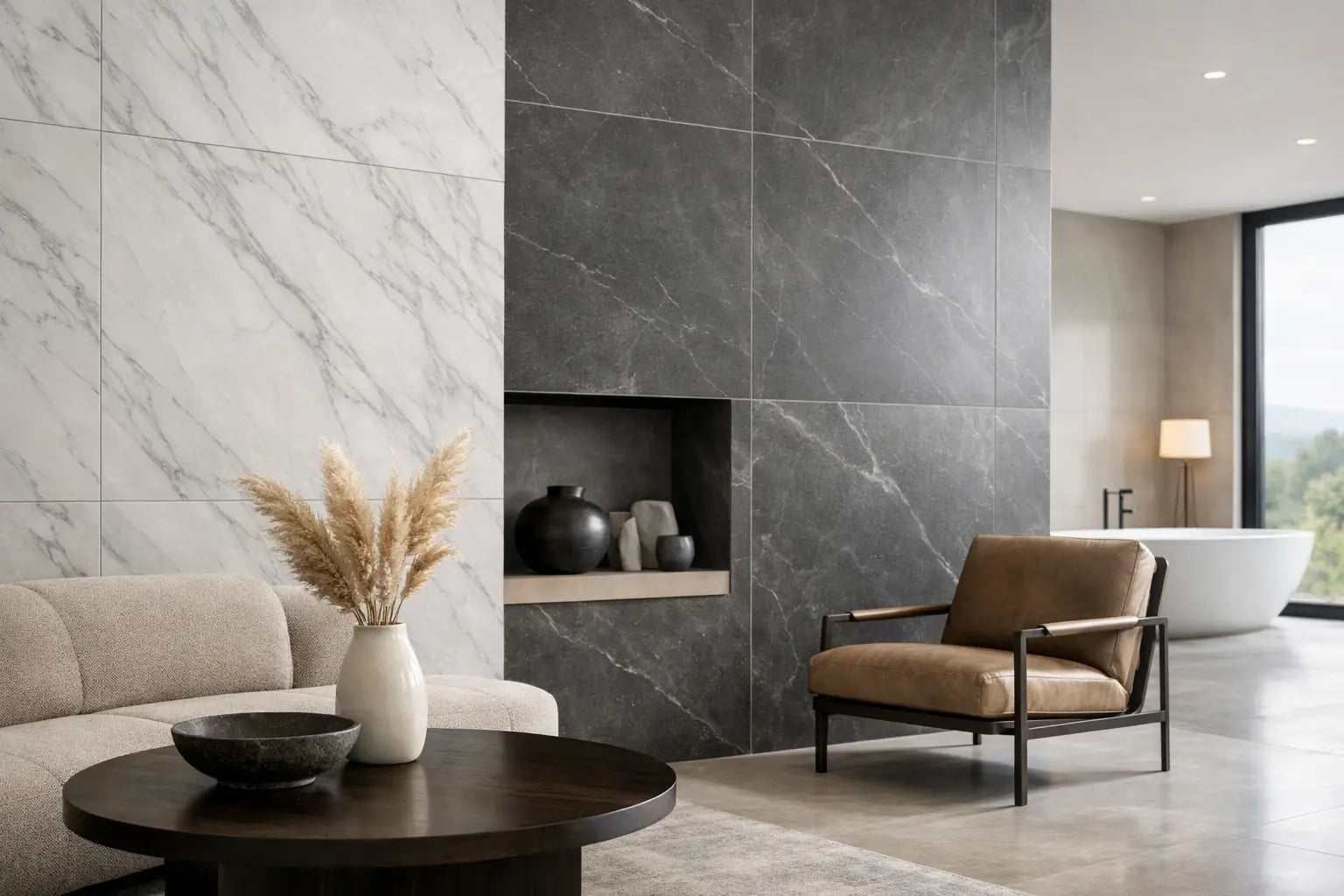
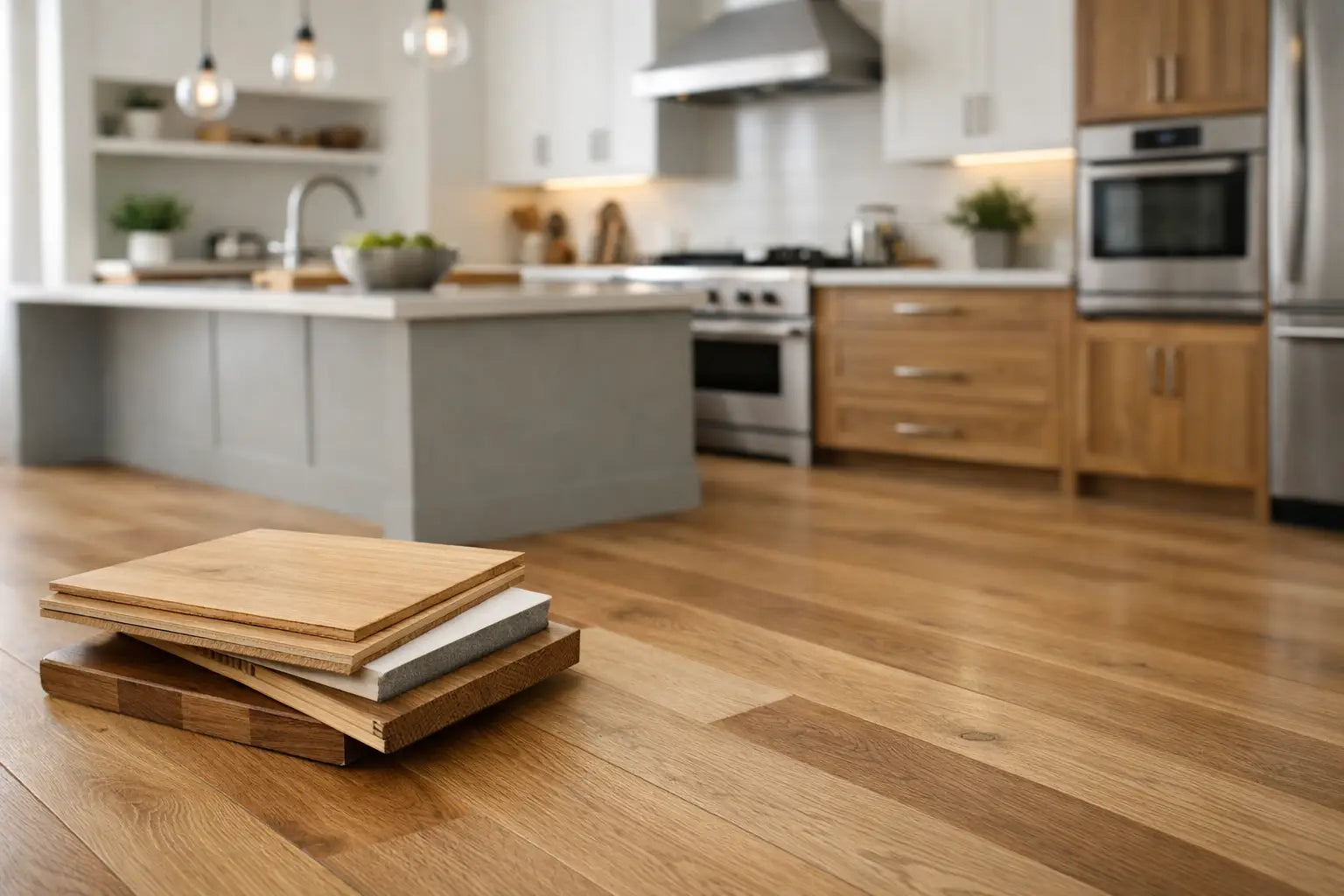
Sampling also gives you the chance to assess qualities that images cannot fully communicate. You can feel whether a matt porcelain has the understated texture you expected, judge the depth of a stone-effect design, and see how a polished finish responds to light. With wood-effect tiles, it is useful to look at the grain detail, plank proportion and variation between pieces before setting out a larger floor.
For trade, design and commercial projects, samples support clearer conversations before procurement begins. They allow an interior designer, client and installer to agree the finish early, helping to prevent substitutions or late changes that can affect quantities, lead times and fitting programmes.
Start with the room, not just the tile
The best sample order is led by the demands of the space. Consider whether the tile is intended for a wall, floor or both, then account for moisture, traffic, cleaning requirements and the visual scale of the room.
A bathroom wall may suit a glossy ceramic tile that reflects light and makes a compact space feel brighter. A busy entrance hall needs a durable floor surface that is practical underfoot and forgiving of day-to-day use. In a kitchen, a porcelain floor tile can offer strength and easy maintenance, while the finish should still sit comfortably alongside worktops, doors and splashback materials.
It also matters how the room is lit. North-facing spaces can make cool greys and stark whites feel sharper, whereas strong afternoon light may bring out warmth in stone-effect porcelain. Take samples into the room at different times of day. Place them both flat and upright, as a tile on a wall catches light differently from one laid on the floor.
What to compare when tile samples arrive
Avoid making a decision from one sample placed on a bare table. Bring it into the scheme. Hold wall tile samples next to paint colours, kitchen fronts, brassware, worktops and fabrics. Put floor samples against skirting, timber flooring or adjacent stone finishes. This is where small differences in tone become visible.
When comparing options, assess four practical points:
- Colour and variation: Look for underlying tones and how much movement is visible in stone, marble-effect, concrete-effect or wood-effect designs.
- Finish and light reflection: Compare matt, satin, structured and polished surfaces in the room rather than under a single overhead light.
- Format and proportion: Check whether the tile size suits the dimensions of the wall or floor, particularly around niches, doorways and sanitaryware.
- Suitability for use: Confirm that the product is suitable for the intended setting, including wet areas, floors, external conditions where applicable, and the expected level of traffic.
How many tile samples should you order online?
For most residential rooms, ordering three to five carefully selected samples is more useful than ordering every possible option. Start with one preferred tile, then add alternatives that test a different undertone, size or finish. For example, if you favour a warm limestone-effect floor, compare it with a slightly cooler alternative and one with a more refined grain. The differences will be easier to judge in the space than on a product listing.
Larger projects may need a more deliberate sample set. A hotel bathroom scheme, reception floor or multi-room refurbishment may involve wall tiles, feature finishes, flooring, trims and grout selections. In these cases, samples should be reviewed together as a palette. This helps ensure that the finish remains coherent from one area to the next while allowing each surface to meet its own performance requirement.
Do not overlook grout. Its colour can change the character of an installation considerably. A tonal grout can create a quieter, more continuous surface, while a contrasting grout emphasises the tile format and joint pattern. If the final grout choice is not available at the sampling stage, use a close paint card or grout swatch to test the effect.
Check format, layout and installation details early
A tile sample confirms the material, but planning the installation confirms whether it will deliver the look you want. Large porcelain tiles can create a refined, less jointed appearance, although they may require careful handling, a suitably prepared substrate and an experienced fitting team. Smaller formats can work well around detailed areas and may introduce character through a herringbone, brick bond or modular layout.
Before placing a full order, consider where cuts will fall. A full-sized tile at the centre of a shower wall may look balanced, but awkward narrow cuts at the edges can undermine the result. Likewise, a patterned floor needs a starting point that works with the doorway and the room’s main sightlines. An installer can advise on setting out, movement joints, substrate preparation and the most appropriate fixing system.
The right adhesive, grout, trim, tanking system, levelling compound and tile backer board are not afterthoughts. They form part of the specification. Matching the installation materials to the tile, background and location protects the finish and helps avoid problems caused by movement, moisture or insufficient support.
From sample approval to a confident tile order
Once a preferred sample has been approved in the actual room, confirm the product’s intended use and calculate the coverage required. Measure each area carefully, deducting openings only where appropriate, then allow for cuts, layout and a sensible wastage margin. The amount needed varies according to tile size, room shape and pattern. Straightforward layouts usually require less allowance than diagonal, herringbone or highly detailed designs.
For projects with a defined completion date, check availability and delivery expectations before finalising the programme. It is wise to order the full quantity in one go where possible, as this helps maintain consistency across the installation. Different production batches can carry minor tonal variation, particularly with products designed to have natural movement.
Smart Tiles combines online sampling with showroom-led product knowledge, making it easier to move from an initial finish choice to a complete order that includes the practical materials needed for fitting. For homeowners, that means less uncertainty before a substantial purchase. For specifiers and contractors, it supports a cleaner route from approval to installation.
A sample may be small, but it can prevent a large compromise. Give it time in the room, test it against the finishes that will stay, and let the final choice be guided by both the look you want and the work the surface needs to do.