How to Choose Wood Flooring for Any Room
A hallway that looks immaculate on day one can tell a very different story six months later if the wrong floor has been specified. Wood flooring is one of the most effective ways to bring warmth, texture and long-term value into an interior, but the right choice depends on far more than colour alone. If you are working out how to choose wood flooring, the best starting point is not the plank you like most - it is the room, the level of use and the finish that will perform properly in that setting.
For homeowners, that usually means balancing appearance with daily wear. For designers, contractors and commercial buyers, it also means thinking about movement, subfloors, installation method, lead times and the wider specification. Good wood flooring should look right in the scheme, but it also needs to suit the demands of the project.
How to choose wood flooring by room
The room should shape the specification from the outset. A calm, elegant board in a bedroom may not be the right solution for a busy kitchen-diner, entrance hall or retail space. Different areas place different demands on the floor, and that affects everything from board construction to finish and grade.
In living rooms and bedrooms, design tends to lead the decision. These spaces usually allow more flexibility in plank width, timber character and surface texture because they experience lower moisture exposure and, in many cases, less abrasive traffic. This is often where wider planks, more natural grain variation and matt oiled finishes come into their own.
Kitchens, hallways and open-plan family spaces need a more practical lens. Here, you are choosing for footfall, furniture movement, dropped items and regular cleaning. Engineered wood flooring is often the more dependable option in these settings because of its dimensional stability. A durable lacquered or hardened oiled finish can also make day-to-day maintenance more manageable.
Bathrooms and utility rooms need extra caution. Real wood and standing moisture are not natural partners, so suitability depends on the product, the environment and how well the room is ventilated. In many cases, clients who want the look of timber in wet areas are better served by a wood-effect porcelain tile. It gives the same visual warmth with fewer performance compromises.
Solid or engineered wood flooring?
This is one of the first practical decisions to make, and it affects installation, performance and budget.
Solid wood flooring is made from a single piece of timber throughout. It has authenticity, can be sanded back multiple times over its life and appeals to buyers looking for a traditional specification. That said, it is generally more sensitive to changes in temperature and humidity. In period homes and stable interior environments, it can be an excellent choice, but it needs the right conditions and an installer who understands movement allowances.
Engineered wood flooring has a real wood top layer over a multi-layered core. That construction makes it more stable than solid wood, particularly where underfloor heating is involved or where the internal climate changes across the seasons. For many modern renovation and new-build projects, engineered flooring is the more versatile and commercially sensible option. It still delivers genuine timber on the surface, but with fewer installation risks.
Neither option is automatically better in every case. If the project priority is traditional construction and maximum refurbishment potential, solid wood may be preferred. If the brief requires broader compatibility and easier specification across multiple rooms, engineered flooring will often make more sense.
Choose the right wood species and grade
Once the construction is clear, the timber itself becomes the next decision. Oak remains the most widely specified option for good reason. It is durable, visually adaptable and available in a broad range of tones, grades and finishes, from pale contemporary boards to deeper smoked and brushed looks.
Other species can shift the character of a scheme quite noticeably. Walnut brings richer, darker tones and a more formal feel. Lighter woods create an airy, Scandinavian-inspired look but may show dirt differently depending on the finish. The species affects not only appearance but also hardness, grain pattern and how the floor ages over time.
Grade matters as well. Prime grades are cleaner and more uniform, with fewer knots and less colour variation. Rustic or character grades introduce more natural markings, tonal shifts and visual movement. Neither is right or wrong. A prime grade can suit refined, minimal interiors, while a more characterful grade may feel more relaxed and established. The key is to choose a grade that supports the wider interior rather than competing with it.
Colour, plank size and finish
This is where visual preference and practical judgement need to work together.
Paler wood floors can make rooms feel larger and brighter, which is especially useful in spaces with limited natural light. Mid-tone oak offers flexibility and tends to sit comfortably across classic and contemporary interiors. Darker boards can look striking and sophisticated, but they may show dust, pet hair and surface marks more readily.
Plank size has a strong effect on how spacious a room feels. Wide boards often create a premium, architectural look and can help open-plan spaces feel calmer and more cohesive. Narrower boards can suit smaller rooms, more traditional properties or projects where a busier floor pattern is part of the design intent. Board length also plays a role. Longer boards tend to produce a cleaner, more uninterrupted visual flow.
The surface finish influences both appearance and upkeep. Lacquered floors provide a sealed surface and are often chosen for easier cleaning. Oiled floors give a more natural, tactile look and can be easier to repair locally, though they may require more regular maintenance. Brushed, hand-scraped or distressed textures can add depth and help disguise minor wear in active spaces.
How to choose wood flooring for durability
Durability is not just about hardness. It is a combination of timber species, board construction, finish, traffic levels and maintenance expectations.
In a busy household, especially one with children, pets or frequent entertaining, surface resilience matters. A floor with a strong finish and enough visual texture to soften everyday marks will usually perform better than a very smooth, very dark board chosen purely for appearance. In commercial settings, the calculation becomes even more practical. Footfall, cleaning regimes and furniture movement all need to be considered before the floor is signed off.
It is also worth looking closely at the wear layer on engineered boards. A thicker top layer generally offers greater longevity and more scope for future renovation. That can make a meaningful difference on projects where long-term value matters more than the lowest initial price.
Installation method and subfloor conditions
Even the best product can underperform if the installation context has been overlooked. Before choosing a floor, confirm what it is being laid onto and whether the site conditions are suitable.
Some boards are designed for floating installation, while others are better glued down or secret nailed. The right method depends on the product, the subfloor, the acoustic requirement and whether underfloor heating is present. Glue-down installation can provide a more solid feel underfoot and is often preferred on larger or higher-specification projects.
Moisture testing, levelling and preparation are not minor details. They are central to the success of the floor. Trade buyers will already be alert to this, but it is just as important for private renovators to understand that adhesives, underlays, vapour control and trims are part of the specification, not afterthoughts. A one-stop approach to flooring and installation materials reduces delays and lowers the chance of compatibility issues on site.
Budget without losing quality
When clients compare prices, they often focus on the board cost alone. In practice, wood flooring should be costed as a complete project. That includes underlay or adhesive, trims, preparation products, wastage allowance and fitting.
Spending slightly more on a better constructed board can be the wiser decision if it improves stability, finish quality and service life. At the same time, not every room needs the highest possible specification. A principal living space may justify a premium plank with a substantial wear layer, while a lighter-use room might allow more flexibility.
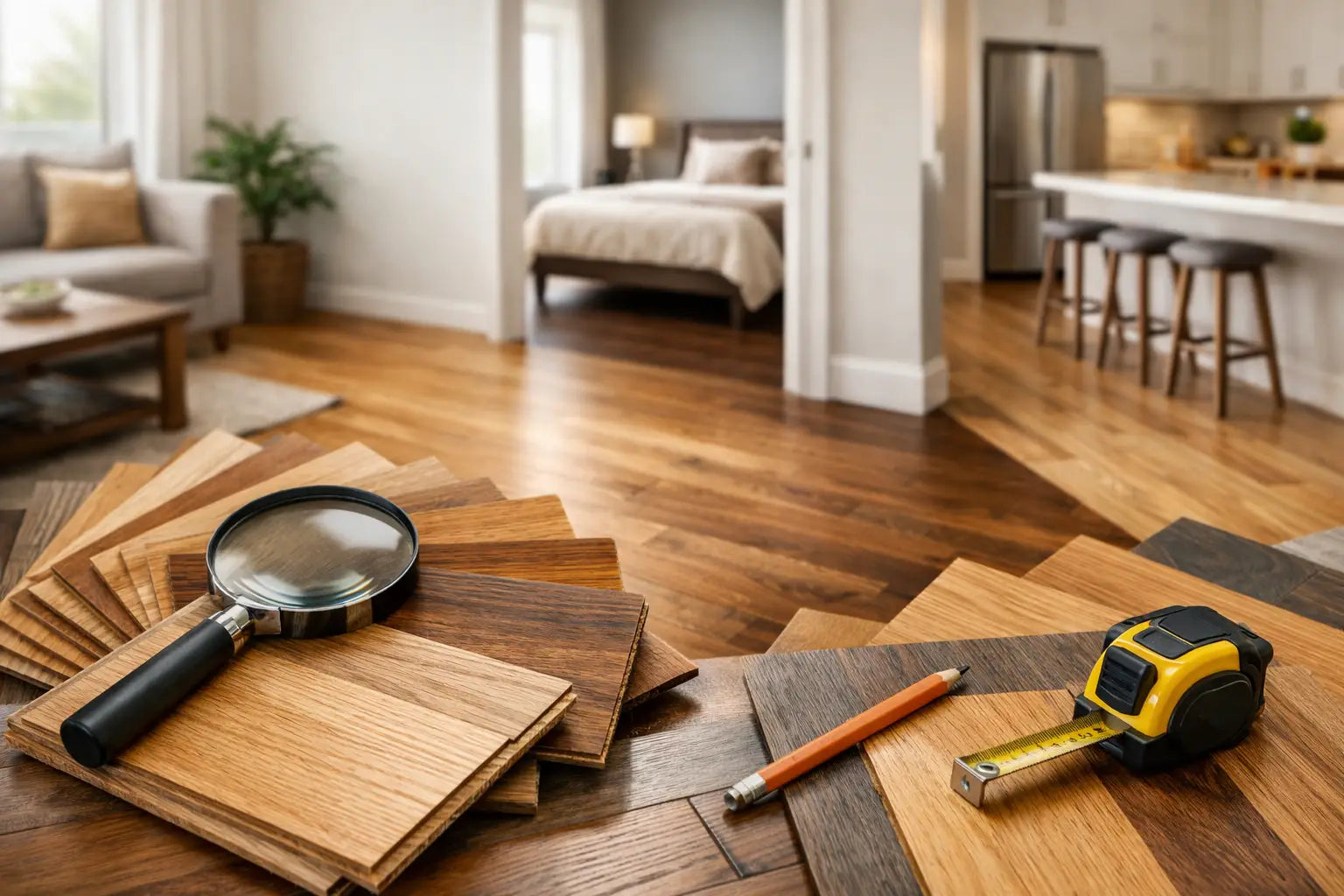
Samples are particularly useful here because they help narrow down options before the full quantity is ordered. Seeing tone, grain and finish in the actual room light often changes the decision.
Make the final choice with confidence
If you are still weighing up how to choose wood flooring, reduce the decision to four questions. Does it suit the room? Will it perform under the expected level of use? Does the finish support the design scheme? And has the full installation been considered, not just the board itself?
That is the point where style and specification meet. A well-chosen wood floor should not feel like a compromise between good looks and practicality. It should do both, while fitting the pace, purpose and standard of the project. If you can see the product in person, compare samples properly and source the installation materials alongside it, the final result is usually stronger from every angle.
The best wood flooring choice is rarely the most fashionable one on paper. It is the one that still looks right, feels right and performs properly long after the rest of the project has been signed off.