Engineered Wood vs Laminate Flooring
A floor can look right in a sample box and still be wrong for the room once real life starts. Wet shoes in the hallway, chair legs in a dining area, underfloor heating in a kitchen extension, tight programme on a commercial fit-out - these are usually what decide the best option. When weighing up engineered wood vs laminate, the right choice comes down to more than appearance alone.
Both are popular for good reason. They offer a cleaner, more predictable installation route than traditional solid timber, and both can deliver a smart, design-led finish. But they behave differently underfoot, wear differently over time, and suit different budgets and project priorities.
Engineered wood vs laminate - what is the difference?
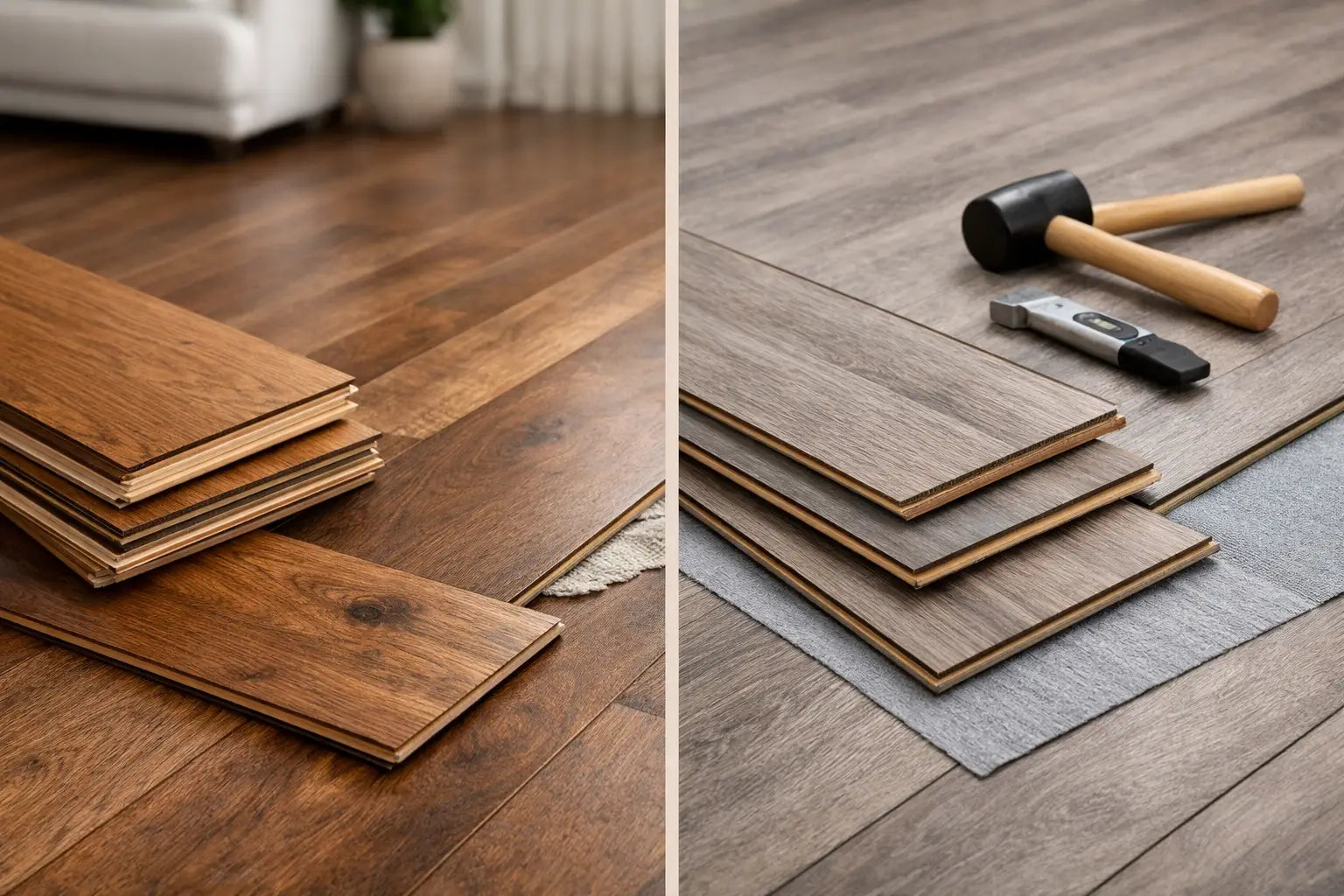
Engineered wood is a real wood floor. It is made from a plywood or multi-layer core with a top layer of genuine timber, often called the wear layer. That means the surface has natural grain, variation and texture that are unique to wood.
Laminate is a layered product too, but its top surface is not real timber. Instead, it uses a printed decorative layer designed to replicate wood, topped with a durable protective coating. Modern laminates can look impressively realistic, especially in wider plank formats and more refined surface finishes, but they do not have the same natural character as timber.
This distinction matters because it affects not only how the floor looks, but also how it feels, ages and can be maintained. If your project is led by authenticity and long-term material value, engineered wood usually has the edge. If the brief is practical, cost-conscious and performance-led, laminate often makes more sense.
Appearance and finish
For premium interiors, engineered wood tends to be the stronger visual choice. Because the top layer is real oak, walnut or another timber species, you get true grain movement, tonal variation and a finish that develops naturally in changing light. In design terms, that gives a space more depth and warmth.
Laminate has improved significantly in recent years. Better embossing techniques and lower-sheen finishes have made many ranges far more convincing than older products. For secondary rooms, rental properties, offices and busy family homes, laminate can provide the wood look without the higher material cost.
The trade-off is consistency. Laminate often looks more uniform from board to board, which some customers appreciate, especially in contemporary schemes. Engineered wood is less predictable, and that is part of its appeal. In a showroom setting, it is often this difference that helps customers decide quickly.
Which feels more premium?
Underfoot and on close inspection, engineered wood generally feels more substantial and refined. The natural timber surface gives it a softer visual richness that laminate cannot fully reproduce. If the floor is a key design feature rather than a practical backdrop, engineered wood is usually the better fit.
Durability in everyday use
Durability is where the decision becomes more nuanced. Many buyers assume engineered wood is tougher simply because it is real wood, but that is not always true in daily use.
Laminate is highly resistant to scratches, scuffs and surface wear, particularly in busy households with pets, children or frequent foot traffic. Its top wear layer is designed for exactly that kind of pressure. For hallways, playrooms and some commercial settings, this can be a real advantage.
Engineered wood is durable, but it is still wood at the surface. It can mark from grit, heels and moving furniture more easily than laminate. On the other hand, it often wears in a more forgiving way. Small dents and signs of use can add character rather than simply looking damaged.
If your priority is keeping a floor looking crisp with minimal fuss, laminate is often the practical winner. If you are comfortable with a floor that matures and shows some natural wear over time, engineered wood offers a more authentic long-term finish.
Moisture, heating and room suitability
Neither option should be treated as waterproof unless specifically rated for that purpose, but engineered wood and laminate respond differently to moisture.
Engineered wood is more dimensionally stable than solid wood, which is why it is widely specified across modern homes. It copes better with changes in temperature and humidity, and many ranges are suitable for use with underfloor heating when installed correctly. That makes it a strong choice for open-plan living areas and kitchen extensions where warmth and finish quality both matter.
Laminate can also work well with underfloor heating, depending on the product and underlay system, but it is generally less tolerant if standing water is left on the surface or if moisture reaches the joints. In utility spaces or entrance areas where wet shoes are common, product selection becomes especially important.
For bathrooms, neither standard engineered wood nor standard laminate would be the automatic first choice. In those spaces, customers often achieve a more reliable result with wood-effect porcelain, particularly when long-term moisture resistance is the priority.
Best rooms for each option
Engineered wood suits living rooms, bedrooms, dining spaces and high-end residential interiors where appearance is central to the scheme. Laminate suits busy households, rental properties, home offices and value-driven projects where ease of maintenance and budget control are key.
Cost and long-term value
Engineered wood is usually more expensive upfront, both in material cost and sometimes in installation. That higher price reflects the real timber wear layer and the overall quality of construction.
Laminate is more accessible on budget and can offer strong visual impact for less. For larger areas, that difference can be substantial. If you are fitting out multiple rooms or working to a firm project budget, laminate can free up spend elsewhere, whether that is on better skirting, upgraded underlay or more decorative surface finishes in other parts of the scheme.
Long-term value depends on your priorities. Engineered wood may last longer in the right setting and can sometimes be lightly sanded and refinished, depending on the thickness of the wear layer. Laminate cannot be refinished, so once the surface is significantly damaged, replacement is the usual route.
That does not mean laminate is poor value. In many homes it performs exactly as needed for years. It simply serves a different buying objective.
Installation considerations
Installation should not be an afterthought. The best floor can still disappoint if the subfloor is uneven, the underlay is wrong or expansion requirements are ignored.
Laminate is often quicker and simpler to fit, usually with click systems that installers and capable DIY buyers already know well. It is a practical option when timelines are tight and disruption needs to be limited.
Engineered wood can also be installed as a floating floor in many cases, but some projects benefit from a glued installation for a more solid feel underfoot and improved acoustic performance. The subfloor condition, room size and heating system all influence the best method.
For both materials, the surrounding details matter. Door thresholds, trims, moisture barriers, levelling products and suitable underlay all contribute to the final result. That is often where a specialist supplier adds real value - not simply by offering the floor itself, but by helping ensure the installation system is right from the start.
Maintenance and upkeep
Laminate is straightforward to maintain. Regular vacuuming or sweeping and a lightly damp mop are usually enough. Because the surface is sealed, it deals well with general household dirt and day-to-day wear.
Engineered wood needs a little more care. It should still be cleaned simply, but excessive water must be avoided, and the correct wood floor cleaning products should be used. Felt pads, entrance mats and prompt attention to spills all help preserve the finish.
That said, customers choosing engineered wood are rarely doing so because they want the lowest-maintenance floor possible. They are usually buying into a better material finish and accepting the extra care that comes with it.
So which should you choose?
If you want the most authentic look, natural texture and a floor that adds genuine material value to the interior, engineered wood is the stronger choice. It suits design-led homes, premium refurbishments and projects where finish quality carries weight.
If you want a hard-wearing, cost-effective floor that is easy to live with and visually convincing, laminate is often the smarter option. It is particularly useful in busy family settings and practical commercial spaces where durability and budget matter as much as style.
The better question is not simply engineered wood vs laminate. It is what the room needs, how the floor will be used, and where you want to place your budget. A hallway, a calm principal bedroom and a hospitality fit-out may all point to different answers.
If you are choosing for a full renovation or specification project, sample the finish properly, check the technical suitability for the room, and think beyond the plank itself to underlay, trims and fitting conditions. The right floor should not just look good on day one. It should still feel like the right decision once the furniture is in, the heating is on and the room starts being used as intended.