Article: Bathroom Tile Trends 2027: Less Clinical, More Character
Bathroom Tile Trends 2027: Less Clinical, More Character
The strongest bathroom tile trends for 2027 aren’t about chasing novelty or ripping out every surface in sight. They’re about creating rooms that feel warmer, richer in texture and built to last—without sacrificing the easy-care performance expected from ceramic and porcelain. Whether you’re refreshing a family en-suite, planning a carefully considered principal bathroom or specifying a hotel refurbishment, the winning formula is a memorable look supported by practical choices.
Bathroom tile trends for 2027: warmth with staying power
Cool grey hasn’t vanished, but it’s making room for softer, more natural palettes. Mineral tones, layered finishes and tiles with subtle movement are taking centre stage, bringing depth and personality without making a bathroom feel overstyled. The goal is a space that feels thoughtfully put together today and still looks inviting years from now.
That’s welcome news for practical projects. Durable porcelain can capture the character of natural stone, handmade ceramics or timber without adding unnecessary maintenance in wet areas. But colour is only one part of the picture: format, layout and finish matter just as much. The same tile can make a bold statement across a shower wall or add a quiet flourish as a small-format splashback.
1. Warm stone-effect porcelain, with a softer side
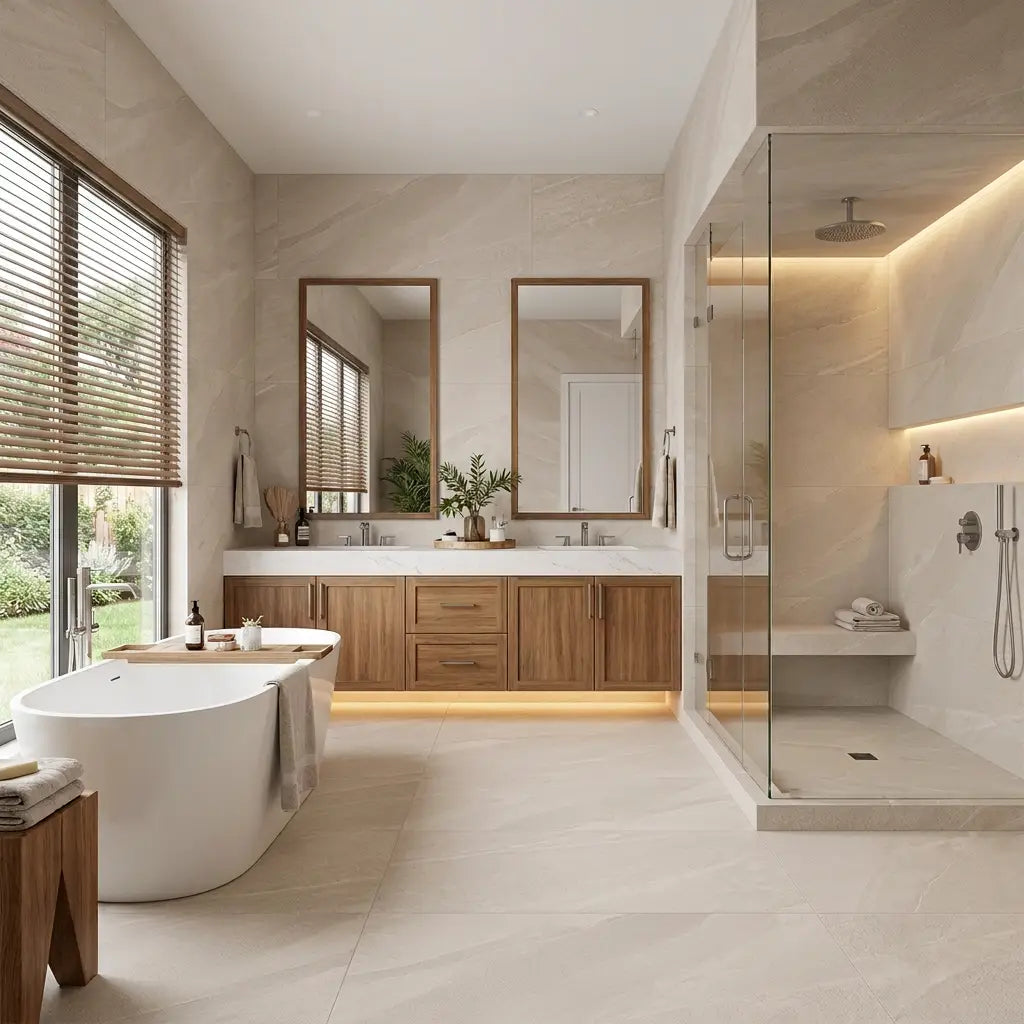
Travertine, limestone and sandstone looks remain firm favourites, but in 2027 they’re warming up. Think chalk, almond, biscuit, putty and pale tobacco in place of colder more clinical concrete greys. These inviting shades pair beautifully with character rich brushed brass, aged bronze, timber vanity units and off-white sanitaryware.
Stone-effect porcelain is a smart choice when you want visual character with consistent, easy-care performance. Carefully designed graphics, veining and subtle texture give it natural appeal, while a more controlled finish can simplify everyday upkeep. Large formats create a calm, seamless impression by reducing grout lines. For a wonderful large scale natural stone porcelain take a look at the Derwent collection. Available in three calming shades, this 100cm x 100cm tile delivers a seamless nature inspired design.
2. Matt, honed and made to be touched
Gloss still earns its place on walls, especially where a little extra light reflection is welcome. Even so, the mood is shifting towards honed, soft-matt and gently textured finishes. They soften the light, ease away that clinical feel and lend even a plain colour a more architectural presence. For those subtle textures Kentmere Blancoweaves soft neutral matt tones that will lighten a room beautifully.
In wet areas, a finish must do more than look good. For shower floors and other splash zones, check that the tile is technically suitable for the intended use, including its slip resistance. Smaller tiles can work particularly well underfoot: their extra grout joints can help improve grip and follow the floor’s falls towards the drain. Choose for performance as carefully as for appearance.
3. Wall tiles that turn light into a feature
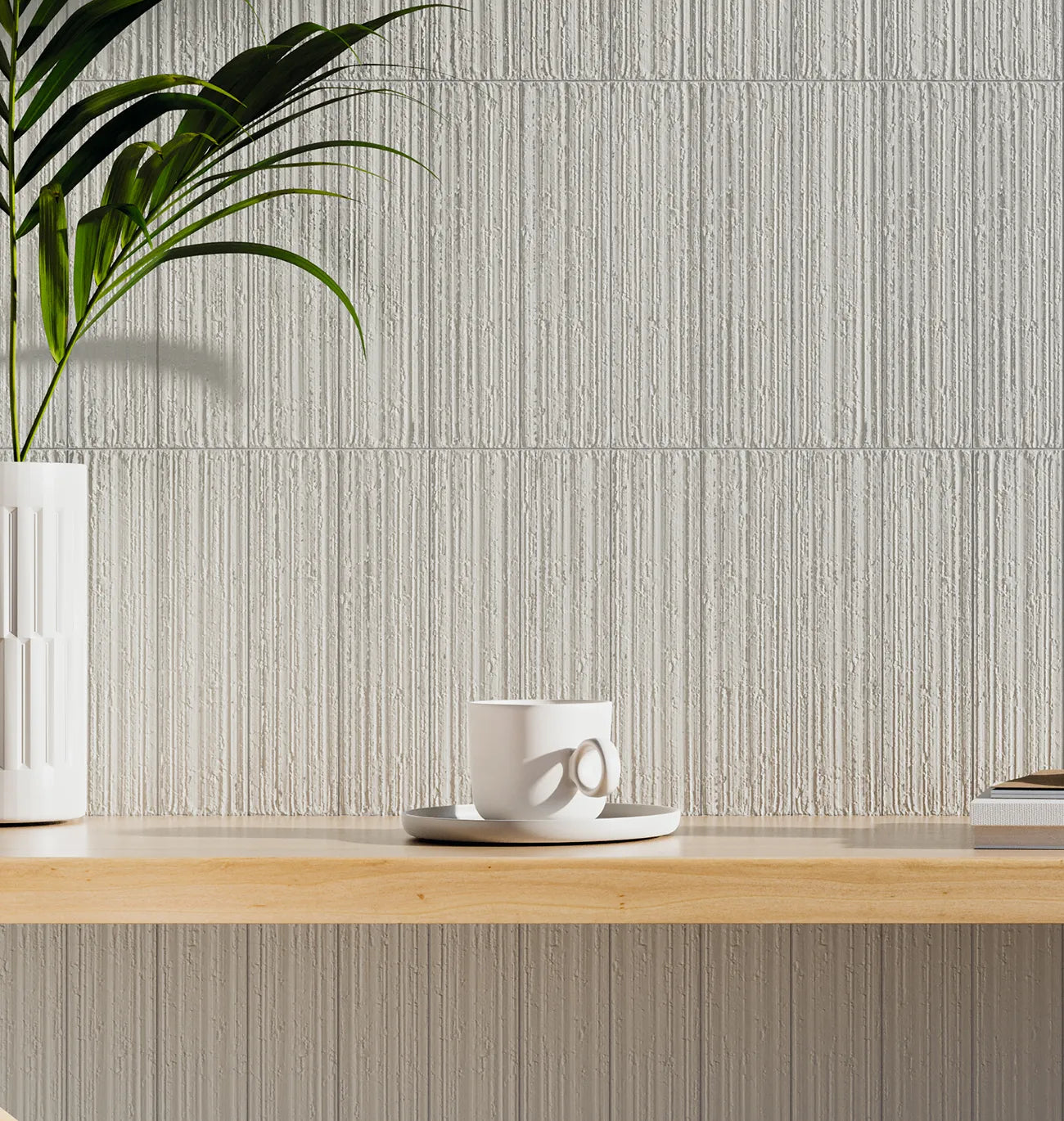
Fluted and ribbed tiles like our Kit-Kat range are broadening their horizons. Rounded grooves, gentle geometric relief and irregular, handmade-style faces bring a play of light and shadow to the wall. They can give a simple vanity area or bath surround real presence without relying on a bold printed pattern.
A little goes a long way. Deep relief across every wall may feel visually busy in a smaller bathroom. Try a single feature wall, a recessed shelf or the space behind the basin instead. For a calm, flowing effect, choose grout close to the tile colour. If you want the pattern of the joints to stand out, make contrast a deliberate part of the design.
4. Colour with depth, not just volume
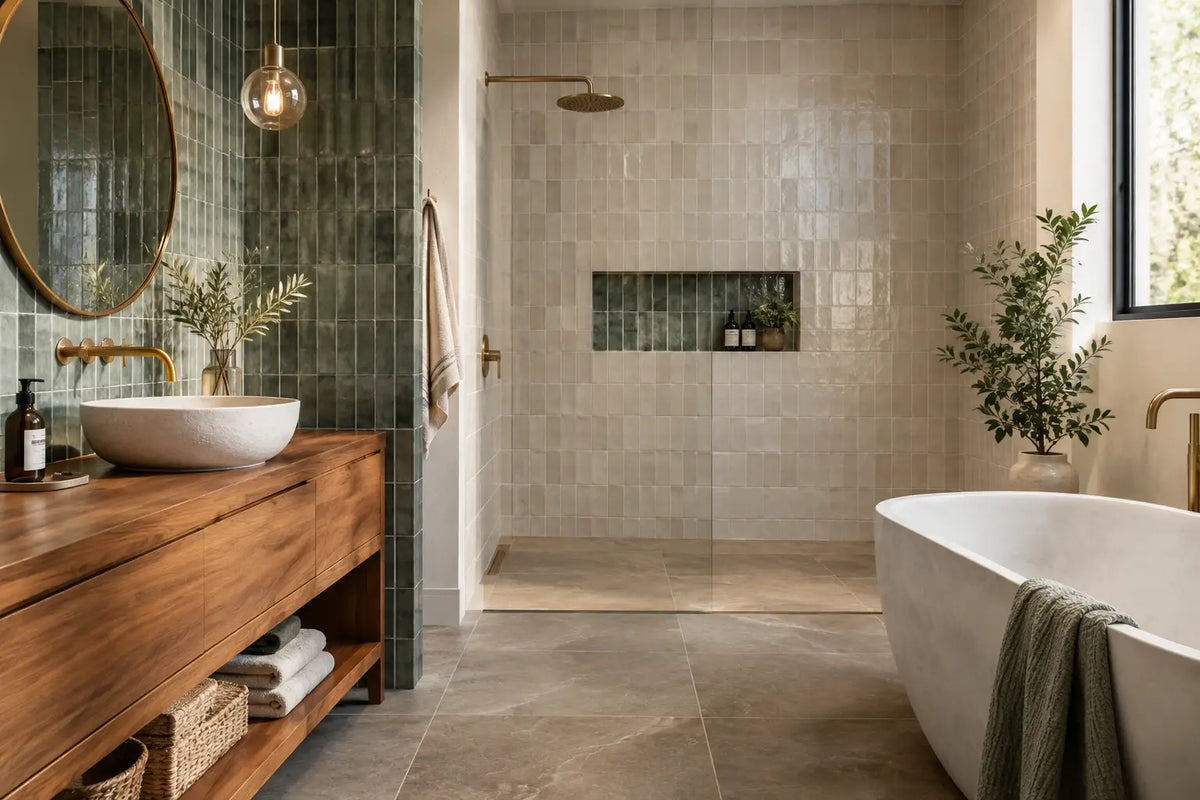
Colour is becoming more considered. Rather than covering everything in one solid shade of green, blue or beige, 2027 schemes build a palette of related tones across tiles, walls and joinery. Dusty olive paired with olive-grey stone, for instance, has a gentler, more enduring feel than a saturated green used everywhere. Clay pink, mineral blue, tobacco brown and deep aubergine are also finding their place in thoughtfully designed homes and hospitality spaces. The Della Collection effortlessly creates a layered tonal design of tranquil colour and golden lustre.
Placement makes all the difference. A darker floor can anchor the room, while lighter wall tiles help keep the area around mirrors and shower glass feeling bright. If natural daylight is limited, bring home samples and look at them throughout the day. Showroom lighting, a north-facing window and warm LED bulbs can each change how a tile appears.
5. Checkerboard, minus the harsh contrast
Pattern is back, but it’s taking a softer approach. Instead of stark black and white, expect combinations such as cream and tan, pale green and chalk, or muted red-brown with warm white. Pieces like the Pachino wall and floor tile is a great choice for a patterned yet delicate style. Squares, elongated hexagons and geometric mosaics can give a bathroom floor a welcome dose of character without taking over the room.
Let the floor have its moment by keeping the walls quieter. Scale matters, too: a small mosaic or lively motif can make a tiny cloakroom feel full of intent, while a larger family bathroom may suit a broader repeat or a border that doesn’t break up the floor. In commercial spaces, think ahead about future repairs and how easily a patterned tile can be replaced.
6. Layouts that look considered from every angle
Tile layout is stepping out of the background and into the design. Straight stack bonds, vertical brick patterns, offset grids and framed shower zones are giving bathrooms a more tailored finish. A vertical arrangement of rectangular tiles can make a low ceiling seem taller; horizontal lines can help a narrow room feel wider.
Before settling on a format, plan the tile set-out around niches, windows, shower valves and vanity units. A centred layout with balanced edge cuts often feels more polished than a row of awkward slivers in the corner. The design may also help determine whether 300 x 600 mm, 600 x 600 mm or a larger format will make the best use of the room.
7. A seamless look from floor to wall
Running the same porcelain tile across the floor and selected walls remains a favourite for walk-in showers and contemporary bathrooms. The result is a calm, connected backdrop that can make the room feel more spacious. Stone-effect porcelain like the Snowden White tile is particularly effective here: its natural variation keeps a continuous surface from looking flat.
There’s no need to tile every wall to achieve the effect. Carry the floor tile into the shower and onto its rear wall, then introduce a complementary ceramic wall tile—such as Milano Menta 6.9 x 24 cm—elsewhere. You’ll keep the visual connection while managing both budget and overall impact. If one tile is going on floors as well as walls, confirm its finish is suitable for both.
8. The finishing touches: grout, metal and trim
The smallest details can make a tile scheme feel truly complete. Brushed brass and bronze sit naturally alongside warm stone and clay tones, while brushed nickel is an adaptable partner for cooler or more contemporary palettes. Tile trims can quietly blend in, echo the brassware or create a crisp, dark outline.
Grout deserves equal thought. A close colour match gives large-format stone effects a smooth, restful finish; a subtle contrast can bring handmade-look wall tiles into sharper focus. In busy bathrooms, choose grout designed for the conditions and agree joint widths with the installer. Very narrow joints may look sleek, but tile tolerances, edge profiles and substrate movement all need to be taken into account.
Make the look work in the real world
A bathroom can feel on-trend and still suit the home, the people using it and the conditions it will face. Before committing, order samples and compare them with your paint and brassware in the room’s own light. Check your coverage, allow for cuts and sensible wastage, and make sure the adhesive, grout, waterproofing system, trims and backer boards are right for the substrate and wet zones.
For a larger renovation, settle the tile format and layout before finalising plumbing positions. Aligning a shower niche or basin with the tile grid may seem like a small detail, but it can make the finished room look beautifully resolved. Smart Tiles can help bring design and technical decisions together, from exploring European-led porcelain and ceramic collections to estimating quantities and completing the installation specification.
Choose a look you’ll love living with, then give it the right finish, format and fitting materials. That’s the secret to capturing the spirit of bathroom tile trends for 2027—without letting a passing fashion dictate your bathroom’s future.