Article: Are Porcelain Tiles Waterproof in Bathrooms?
Are Porcelain Tiles Waterproof in Bathrooms?
A bathroom can have beautifully specified porcelain on every wall and still suffer moisture problems if the installation behind it has been treated as an afterthought. Porcelain tiles waterproof performance is excellent, but a tiled finish is not automatically a waterproof system. The distinction matters when choosing materials for showers, wet rooms, kitchen floors and high-use commercial interiors.
Porcelain is one of the most reliable surface choices for rooms exposed to water, humidity and regular cleaning. It is dense, durable and available in design-led stone, concrete, marble, timber and decorative finishes. Yet the tile is only one part of the finished surface. Grout joints, movement joints, wall boards, adhesives, falls to drainage and waterproofing preparation all influence whether the completed installation can manage water properly.
Are porcelain tiles waterproof?
Porcelain tiles are generally classed as impervious or very low-absorption tiles. Products manufactured to porcelain standards typically have water absorption of 0.5% or less. In practical terms, this means the body of a quality porcelain tile does not readily take in water, making it well suited to bathrooms, shower areas, kitchens, utility rooms, entrance halls and many commercial settings.
This is different from saying that every tiled wall or floor is fully waterproof. Water can pass through grout joints, around pipe penetrations, at internal corners and through poorly sealed edges. A cracked grout line or unprotected wall board may allow moisture behind tiles even where the porcelain itself remains unaffected.
For most bathroom walls outside the direct shower area, a correctly prepared background, compatible adhesive and properly finished grout joints will provide a dependable result. In a shower enclosure, wet room or other continuously wet area, the substrate should normally be protected with a suitable tanking system before tiling. This creates the waterproof layer beneath the decorative finish, where it is needed.
Why porcelain performs so well in wet areas
The density of porcelain gives it a clear advantage over more absorbent wall and floor materials. It is fired at high temperatures, producing a compact tile body that resists moisture, staining and everyday wear. This makes porcelain particularly attractive where a premium appearance must also stand up to busy family use, guests or commercial cleaning regimes.
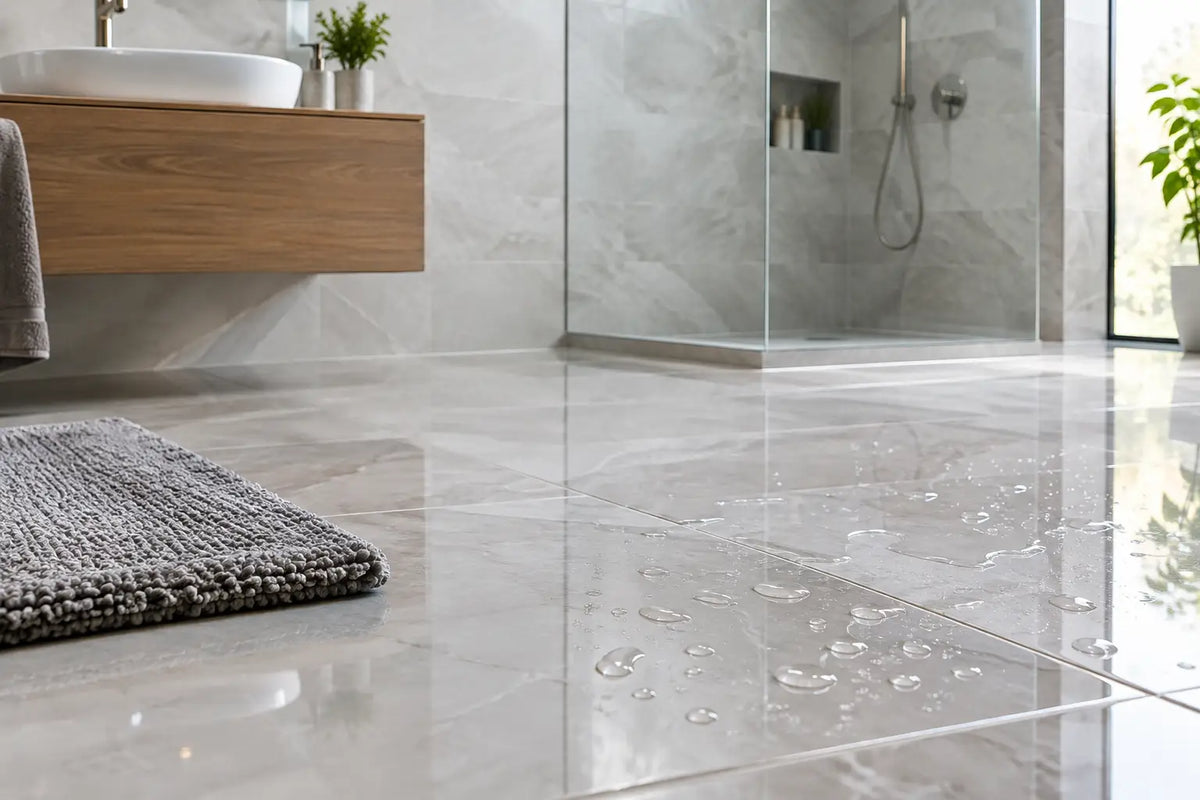
Its low water absorption also supports use in areas where temperature and humidity change frequently. Bathroom steam, splashes around basins and regular mopping are unlikely to affect a correctly selected porcelain tile. Glazed porcelain can offer another layer of surface protection, while through-body and full-body porcelains are often selected for demanding floors because their appearance carries through the tile body.
However, performance varies by product. A polished marble-effect porcelain may be ideal for a statement bathroom wall but need more careful consideration on a shower floor, where slip resistance is a priority. A textured or matt porcelain can be a more practical choice for wet floors, especially in family bathrooms, hotel washrooms, spa spaces and entrance areas exposed to rainwater.
Tile finish matters as much as tile material
When specifying a floor, consider the finish alongside the porcelain classification. Smooth polished tiles can feel luxurious and reflect light beautifully, but they may become slippery when wet. Matt, structured and grip-rated finishes offer more traction, although heavily textured surfaces can require more attention during cleaning.
For shower trays and wet room floors, smaller-format porcelain is often useful because the additional grout joints help create grip and allow the floor to follow the falls towards the drain. Large-format tiles can work in a wet room, but the layout, tile thickness, drain type and required floor gradient should be planned carefully before ordering.
The tile is not the waterproofing system
A successful wet-area installation is a coordinated system rather than a single product decision. The porcelain tile forms the visible, hard-wearing finish. Adhesive secures it to the background, grout finishes and supports the joints, sealant deals with changes of plane, and tanking protects the substrate where water exposure is high.
Cement-based grout is suitable for many tiled areas and can be highly water resistant when mixed, applied and maintained correctly. It should not be relied upon as the only barrier preventing water from reaching the substrate. In shower zones and wet rooms, waterproofing membranes, tapes and sealing collars should be installed behind the tiles in accordance with the chosen system instructions.
Silicone sealant is also essential at internal corners, wall-to-floor junctions, around shower trays and baths, and where tiles meet sanitaryware. These are movement points. Grout is rigid and can crack when different surfaces move independently, whereas a high-quality sanitary silicone is designed to accommodate small movement while maintaining a sealed finish.
Substrate preparation decides the result
Even premium Italian or Spanish porcelain will only perform as well as the surface beneath it. Walls should be flat, stable and suitable for tiling. Floors need to be sound, level where appropriate, or formed with accurate falls in wet rooms. Damp, dusty, weak or flexible backgrounds should be addressed before adhesive is applied.
Standard plasterboard is not a suitable background for direct tiling in a shower area. Tile backer boards or another approved substrate are typically a more dependable choice, followed by the relevant waterproofing treatment. On timber floors, movement must be managed with an appropriate board or uncoupling solution. The correct approach depends on the construction of the floor, the tile format and the expected load.
Adhesive selection matters too. Large porcelain tiles, heated floors, timber-based backgrounds and busy commercial spaces may require a flexible adhesive with the right performance classification. Choosing a compatible grout, primer, trim and sealant at the same stage prevents avoidable delays once installation begins.
Where waterproof porcelain tiles are the right choice
Porcelain is an excellent option for most internal spaces where water, dirt or regular cleaning are part of daily life. In bathrooms, it allows wall and floor finishes to be coordinated for a considered, hotel-style look. In kitchens and utility rooms, it provides a practical floor with strong stain resistance. In hallways, porcelain can handle wet shoes, umbrellas and muddy paws while retaining a refined stone-effect or encaustic-inspired appearance.
For commercial projects, porcelain supports a broad range of specifications, from restaurant washrooms and hotel bathrooms to reception floors and changing areas. The required slip resistance, wear rating, tile thickness and maintenance regime should be assessed for the exact setting. A tile that is perfect for a private cloakroom may not be the right specification for a heavily used leisure facility.
Outdoor use requires a separate check. Many porcelain tiles are frost resistant and appropriate for external patios, but not every indoor porcelain range is designed for exterior installation. Outdoor projects also need suitable slip resistance, drainage, movement provision and a fixing system that suits the substrate and weather exposure.
How to specify porcelain for a shower or wet room
Start with the area rather than the appearance alone. A bathroom wall outside the splash zone has different requirements from a walk-in shower floor. Once the location is clear, assess the tile finish, format and installation system together.
For a shower wall, select porcelain in a size and finish that suits the room, then allow for tanking on the prepared substrate, a compatible adhesive, grout and flexible sealant at corners and fittings. For a wet room floor, confirm the drainage design and falls first. The tile needs enough grip for the setting and must be capable of being cut and laid accurately around the drain.
Before placing an order, it is sensible to confirm five practical details:
- the total tiled area, including a suitable allowance for cuts and wastage;
- whether the tile is intended for wall, floor, indoor, outdoor or wet-area use;
- the slip resistance needed for the location;
- the background and any tanking, backer board or levelling work required;
- the adhesive, grout, trims and sealants needed to complete the system.
Looking after porcelain in wet spaces
Porcelain itself is straightforward to maintain. Regular cleaning with a suitable pH-neutral cleaner and clean water is usually enough to keep it looking its best. Avoid harsh residues that can build up on the surface or affect grout over time, particularly in shower areas where soap and limescale are common.
Grout and silicone deserve periodic inspection. Replacing discoloured or damaged sealant early is far simpler than repairing moisture damage behind a tiled finish. If grout cracks, identify the cause rather than simply filling the line again. Movement in the substrate, missing movement joints or inadequate preparation may need attention.
Porcelain offers the confidence of a low-absorption, design-forward surface, but the right installation system turns that confidence into long-term performance. For a project where the details matter, Smart Tiles can help bring the tile, preparation products and finishing materials together before work starts.